


 CryptoSlate
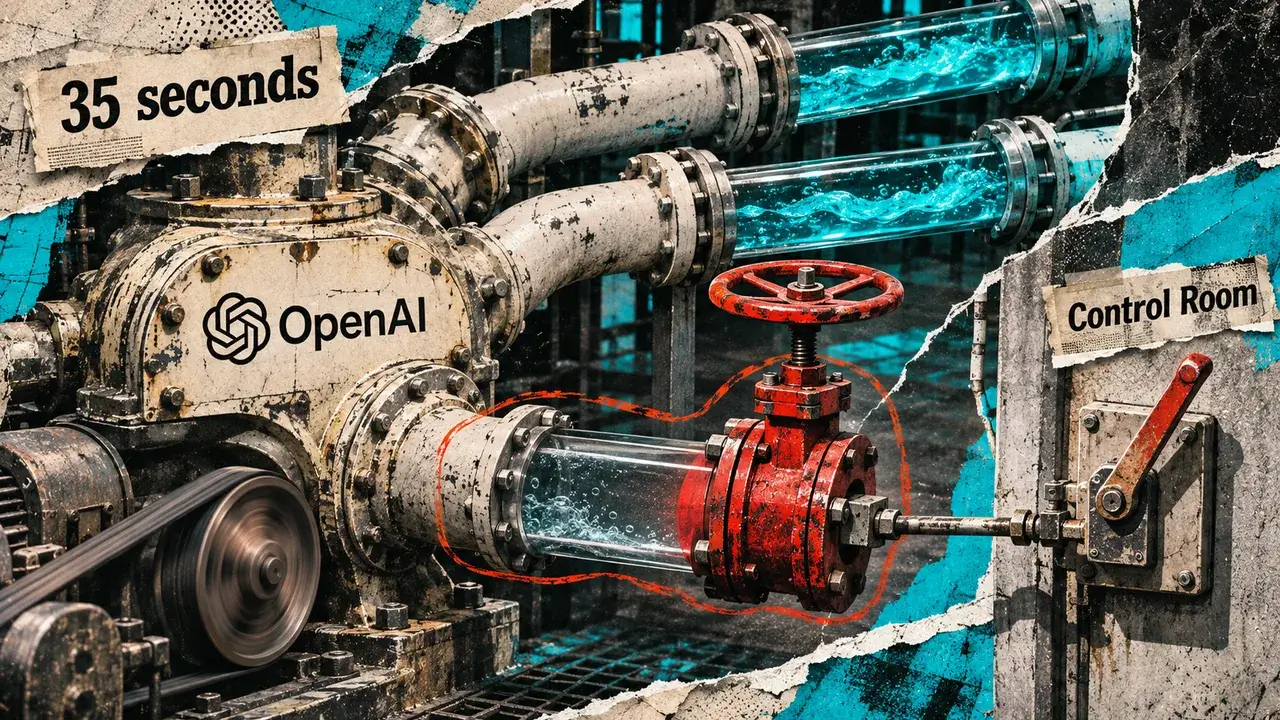

OpenAI says its Control Room system can block further model output from a research job within 35 seconds of receiving a stop instruction. The system is deployed across the company's research infrastructure, with the cutoff enforced by the software serving the model rather than the job's own code. The clock starts when the instruction arrives, not when a problem first emerges.
Why it matters
Each research workload attaches a job ID to its requests for model output. The inference engine checks whether Control Room still authorizes that job and, once it is marked as stopped, denies further output. Other authorized jobs can continue using the same engine, while the stopped process itself may remain alive.
OpenAI says research code changes frequently and is spread across teams, making the more centralized inference layer a common enforcement point. Cached authorizations account for the delay before a stop takes effect. The company says it also searches for engines with Control Room checks missing or disabled.
Detection, investigation and the decision to intervene happen before the 35-second clock starts. Some critical alerts can automatically pause workloads, while other responses vary by workload and severity. Cutting off model access also does not reverse actions already taken in external systems.
Market impact
The disclosure gives businesses evaluating advanced AI a clearer view of one safeguard in OpenAI's research infrastructure, though it does not describe a customer-facing shutdown tool. At disclosure, fail-closed protection was active for all frontier model research workloads: if Control Room went down, engines would deny inference requests. OpenAI said remaining research workloads would receive that protection over the following few days.
Frequently asked questions
-
When does OpenAI's 35-second cutoff clock start?
The clock begins when Control Room receives a stop instruction. Detecting and investigating a problem and deciding to intervene happen before that.
-
How does Control Room identify a research job to stop?
A workload attaches a job ID to its model-output requests. The inference engine checks whether Control Room still authorizes that ID before providing output.
-
Does the cutoff stop the research process or undo its actions?
No. The process may remain alive, and cutting off model access does not undo actions already taken in external systems.
-
Can other research jobs keep using the same inference engine?
Yes. The engine can deny output to the stopped job while continuing to serve other authorized jobs.
-
What happens to frontier research workloads if Control Room goes down?
At disclosure, fail-closed protection was active for all frontier model research workloads, meaning engines would deny inference requests if Control Room went down.
 CoinDesk
 Lookonchain
 WuBlockchain
 Crypto News
 CoinTelegraph
 WatcherGuru