


 CryptoSlate


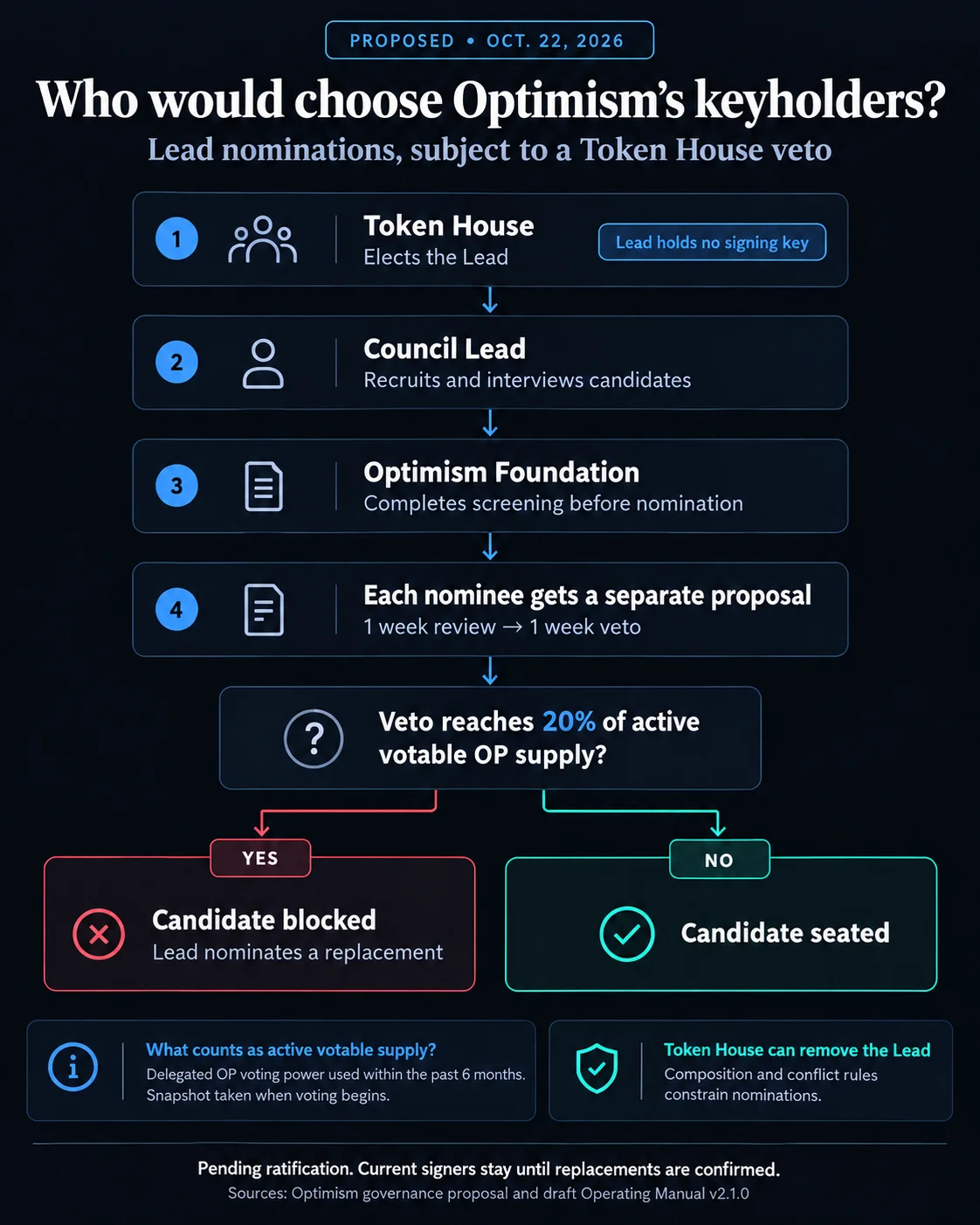

Optimism’s Foundation proposes replacing Security Council cohort elections with a system led by an elected Security Council Lead. The Lead would recruit, interview and nominate members individually, while tokenholders could block each nominee with a veto backed by 20% of active votable OP. Each candidate would face one week of review and one week of voting.
Why it matters
The draft changes the default from affirmative tokenholder elections to appointment unless opposition can organize in time. Delegates would no longer choose between competing candidates for each seat. They would need to identify a concern, coordinate voting power and reach the veto threshold before the nominee is seated.
The Lead would remain a non-keyholder and face limits on conflicts, affiliations and council composition. At least half of the members would need to come from outside Optimism Core Development teams, no more than one participant could be directly associated with a single entity, and geographic concentration would be restricted. The Foundation would conduct private screening, while public nomination statements would disclose qualifications, conflicts and the selection process.
Market impact
The proposal has not yet taken effect. As of Oct. 25, the linked rewrite remained marked Draft and the main Operating Manual was still v2.0.0. Ratification would come before a Lead election, with the new process beginning alongside that election. Existing signers would remain until replacements were confirmed.
The governance change matters because the Security Council implements approved upgrades and can take defined emergency actions. L2BEAT’s current OP Mainnet assessment says regular and emergency upgrades require Security Council and Foundation approval, while regular upgrades have no delay. That makes the appointment process relevant to protocol security even though the Lead would not hold signing keys.
Tokenholders would retain the ability to remove the Lead through a separate process requiring 30% quorum and 51% approval among yes-or-no votes. The immediate test would be whether delegates can review each nomination and assemble enough active OP to veto candidates they oppose.

Frequently asked questions
-
How would Optimism’s proposed Security Council appointments work?
An elected Security Council Lead would recruit, interview and nominate members individually. Each nominee would take the seat unless tokenholders reach the 20% veto threshold.
-
What OP threshold would block a nominee?
A veto would require 20% of active votable OP. Active supply is delegated voting power used in governance during the previous six months, with voting power measured when the voting period begins.
-
How long would tokenholders have to challenge a nominee?
Each candidate would receive one week for review followed by one week for veto voting. A successful veto would require the Lead to submit a replacement nomination.
-
What constraints would apply to the Security Council Lead?
The Lead would remain a non-keyholder and could not nominate someone associated with the Lead or someone involved in an undisclosed conflict. Composition, geographic and independence requirements would also apply.
-
Can tokenholders remove the elected Lead?
Yes. A Representative Removal proposal would require 30% quorum measured against active votable supply and 51% approval among yes-or-no votes.
 Lookonchain
 WuBlockchain
 Crypto News
 Crypto Rank News
 TheBlock
 CoinDesk