








 WuBlockchain
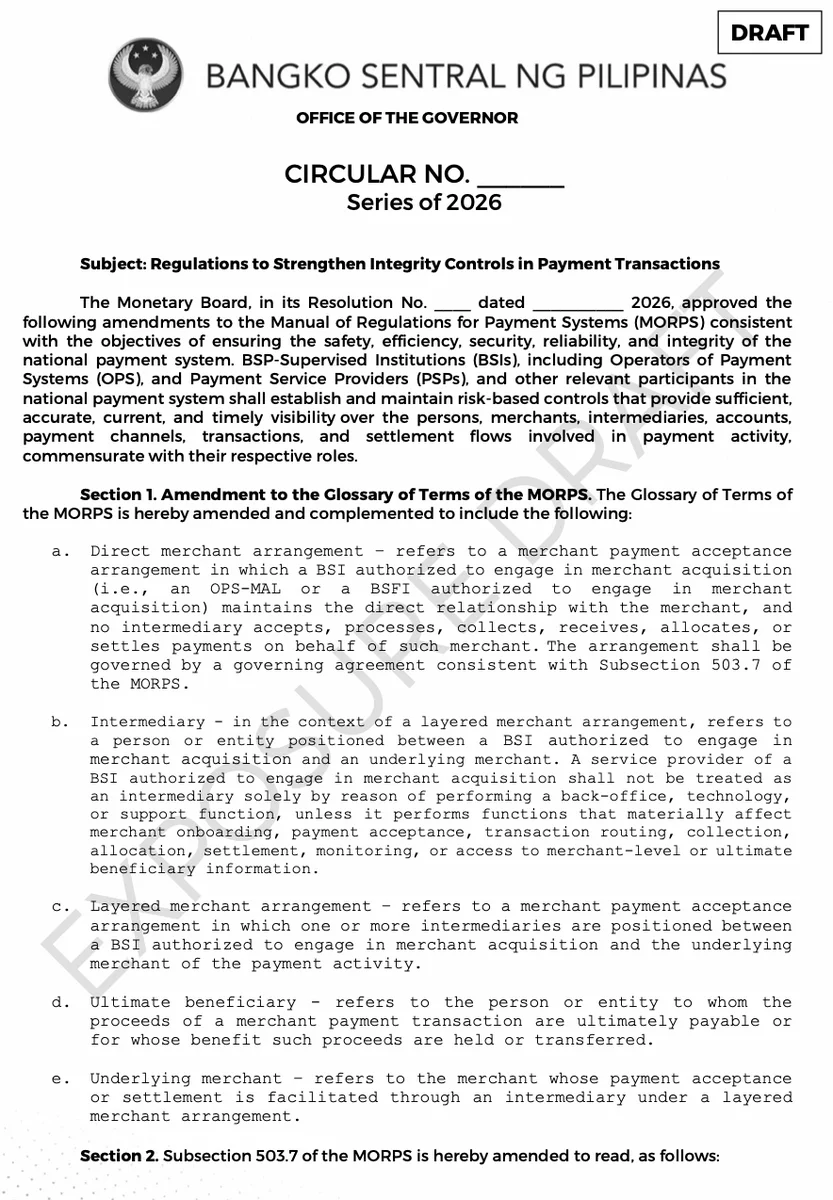

The Bangko Sentral ng Pilipinas has proposed a 12-month suspension on all new Operator of Payment System registrations while it conducts a comprehensive review of the country's licensing framework. The draft circular would take effect 15 days after publication in the official gazette, putting an immediate ceiling on market entry for any new payments player seeking a BSP licence.
Why it matters
The freeze is not a routine administrative pause. It signals that Philippine regulators believe the current licensing architecture is insufficiently equipped to handle the pace of growth in digital payments and virtual asset activity. By halting new entrants, the BSP buys itself a full year to redesign the framework before the next wave of applicants arrives, a move that could reshape the competitive landscape for both domestic fintechs and foreign payment operators eyeing the Philippine market.
For crypto specifically, the draft imposes a new compliance layer on any regulated institution that serves virtual asset businesses through merchant acquiring arrangements. Those institutions would be required to apply enhanced due diligence, continuous transaction monitoring, and hard limits on transaction and settlement volumes, controls that go materially beyond what is currently required.
Market impact
The immediate effect is a closed door for new payment operators, which limits competition and locks in incumbents for at least a year. For virtual asset service providers already operating in the Philippines, the tighter merchant acquiring rules raise operational costs and may force some smaller players to restructure or exit.
Frequently asked questions
-
Why is the Bangko Sentral ng Pilipinas freezing new payment operator registrations?
The BSP believes its current licensing architecture is insufficiently equipped for the pace of growth in digital payments and virtual asset activity. The 12-month pause gives regulators time to redesign the framework before accepting new applicants.
-
How quickly would the proposed Philippine payment operator freeze take effect?
The draft circular would take effect 15 days after publication in the official gazette, meaning the entry door for new payment operators closes rapidly once the rules are finalised.
-
What new obligations would crypto-serving institutions face under the draft rules?
Regulated institutions serving virtual asset businesses through merchant acquiring arrangements would be required to apply enhanced due diligence, continuous transaction monitoring, and hard limits on transaction and settlement volumes.
-
How does the freeze affect virtual asset service providers already operating in the Philippines?
Existing operators are not shut down, but the tighter merchant acquiring compliance rules raise their operational costs and may force smaller virtual asset service providers to restructure or exit the market.
-
Could the Philippine regulatory move influence other Southeast Asian crypto markets?
The BSP's shift toward a stricter, more gatekept payments environment is a leading indicator for the region. Neighbouring regulators have historically followed the Philippines' direction on digital payments and virtual asset oversight.
 WatcherGuru
 Crypto News
 CryptoSlate
 TheBlock
 CoinTelegraph
 CoinDesk