








 CoinDesk
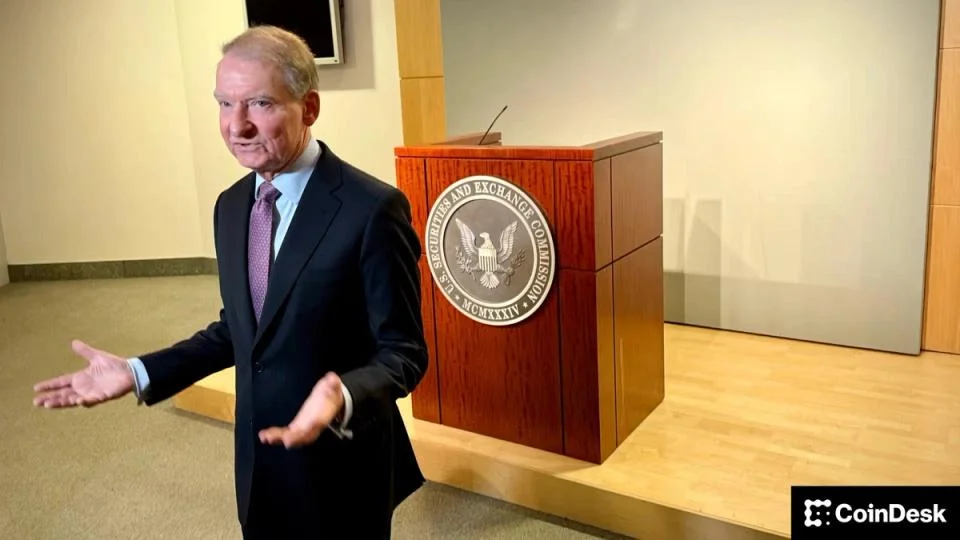



The U.S. Securities and Exchange Commission is preparing what Chairman Paul Atkins has called an "innovation exemption" — a narrow, time-limited carve-out that would let certain firms tokenize securities and trade them onchain without triggering the full weight of securities law. Atkins unveiled the approach in March, framing it as a proving ground for a longer-term regulatory framework. But former SEC lawyers canvassed by CoinDesk say the policy will sit lower in the agency's hierarchy of durability than a formal rulemaking, even though reversing it may prove politically and economically difficult once tokenized products are live.
Commissioner Hester Peirce, who has led much of the agency's crypto work, told CoinDesk the SEC does not have to act through notice-and-comment rulemaking. "We can do it as a rule, but we don't have to do it as a rule," she said. The commission's standing exemptive authority — long used across other areas of securities regulation — gives the agency a faster lever than the 12-to-18-month rulemaking timeline former SEC lawyer Patrick Daugherty described.
Why it matters
The choice of instrument signals how much certainty the crypto industry should expect. A full rule, after multiple rounds of public comment, is the closest the SEC can come to carving policy in stone; an exemption is commission-level action that carries more heft than staff statements but remains easier to walk back. Thoreau Bartmann, a former co-chief counsel in the SEC's Division of Investment Management now at K&L Gates, noted that the agency may lack explicit rulemaking authority for crypto under existing law, making the exemptive route "actually make more sense." Charles Riely, a former assistant regional director in SEC enforcement now at Jenner & Block, called the exemption "a step toward" the real end goal — a statute or durable rule.
Market impact
The exemption's narrow scope is also where the market impact is contested. Atkins has acknowledged the SEC's framework still rests on 1930s-era law and said Congress must "speak to this area" for permanence. Until then, large institutions will price the policy's reversibility into their go-decisions.
Frequently asked questions
-
What is the SEC's "innovation exemption" for tokenization?
It is a forthcoming, narrow and time-limited policy under which the SEC would use its standing exemptive authority to let certain firms tokenize securities and trade them onchain without triggering the full weight of federal securities law.
-
Why isn't the exemption as durable as a formal SEC rule?
A formal rule requires multiple rounds of notice-and-comment rulemaking, a 12-to-18-month process former SEC lawyer Patrick Daugherty described. An exemption is a commission-level action that still carries more weight than staff statements but is easier to revisit or reverse.
-
What did SEC Commissioner Hester Peirce say about the approach?
Peirce told CoinDesk the agency "can do it as a rule, but we don't have to do it as a rule," noting that the SEC routinely uses its broad exemptive authority across other areas of securities regulation.
-
Why does Chairman Paul Atkins still want Congress to act?
Atkins has said the SEC's legal backbone rests on 1930s-era law and that the agency needs a statute to "future-proof" crypto policy. Without legislation like the Digital Asset Market Clarity Act, the exemption's permanence is limited.
-
How does the exemption affect TradFi firms weighing tokenized products?
Large institutions will price the policy's reversibility into their decisions. Former SEC counsel Ashley Ebersole said legislation is "the only way of obtaining the permanence demanded by some players to enter the crypto space or offer certain products in the U.S."
 WatcherGuru
 CryptoSlate
 CoinTelegraph
 Crypto Capital Venture