


 Glassnode
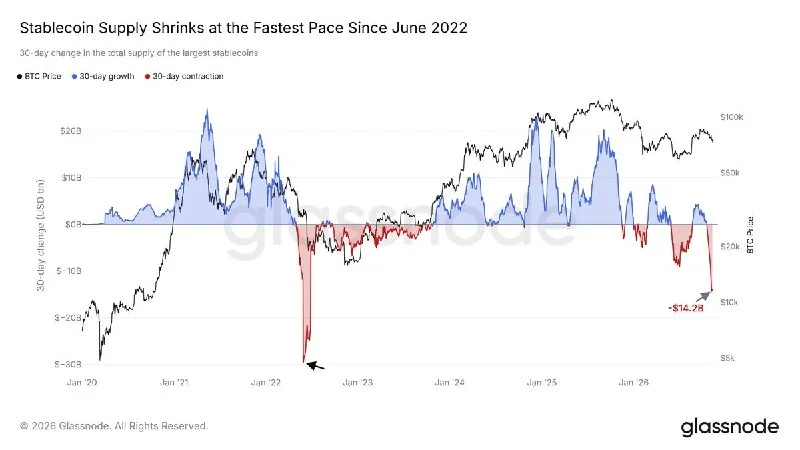
Total stablecoin supply fell $14.2 billion over 30 days, its fastest contraction since June 2022. The decline marks a pullback in the supply of tokens widely used to move funds and trade across crypto markets.
Why it matters
Stablecoins serve as a bridge between conventional currencies and digital assets, and are used as trading collateral and in decentralized lending. A shrinking supply reduces the pool of these tokens available across the market, although the figure alone does not establish where the funds went.
Market impact
The contraction is a negative liquidity signal, but it does not by itself show how much selling pressure has hit any particular asset. The Week On-chain report identifies a return to stablecoin supply growth as a first sign of new money entering the market.
Frequently asked questions
-
How quickly did stablecoin supply contract?
Total stablecoin supply fell $14.2 billion over 30 days, the fastest contraction since June 2022.
-
Why does stablecoin supply matter for crypto liquidity?
Stablecoins are used to move funds, trade and provide collateral across crypto markets. A shrinking supply reduces the pool of these tokens available in the market.
-
Does the supply decline show where the funds went?
No. The supply figure alone does not establish where the funds went.
-
Does the contraction measure selling pressure on a specific asset?
No. The decline is a negative liquidity signal, but it does not by itself show how much selling pressure has hit any particular asset.
-
What would signal new money entering the market?
The Week On-chain report identifies a return to stablecoin supply growth as a first sign of new money entering the market.
 Crypto News
 WuBlockchain
 WatcherGuru
 CoinTelegraph
 CryptoSlate
 Lookonchain
 Whale Alert
 TheBlock