








 Lookonchain
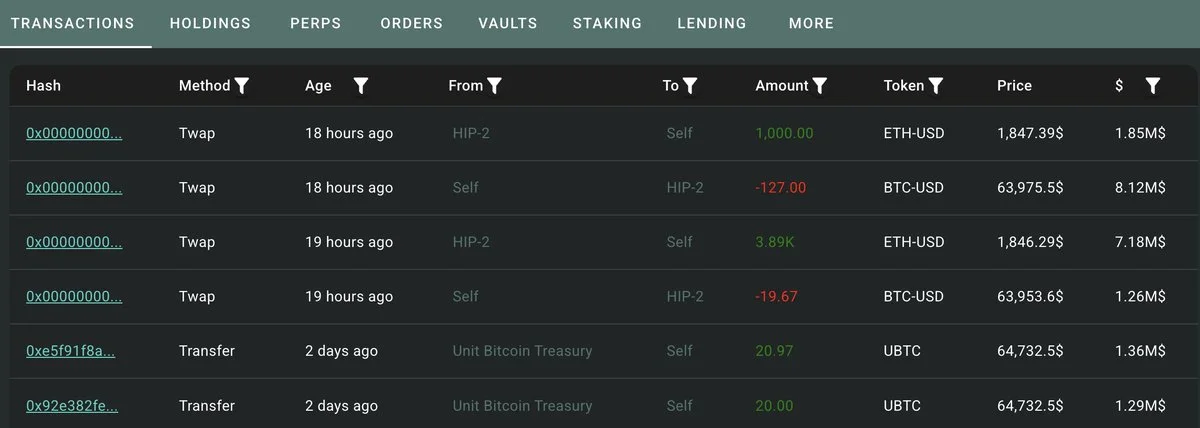
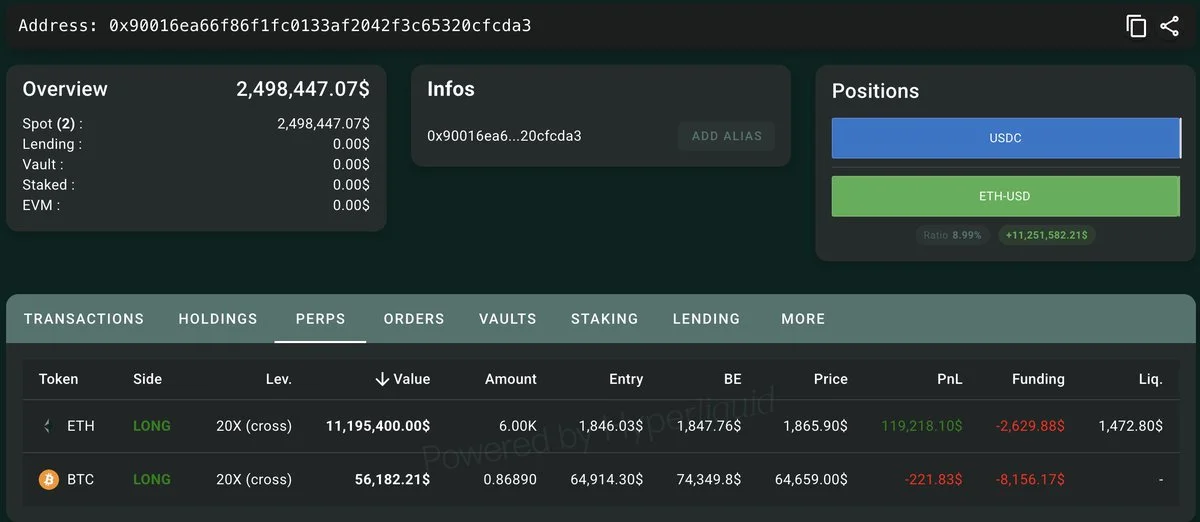
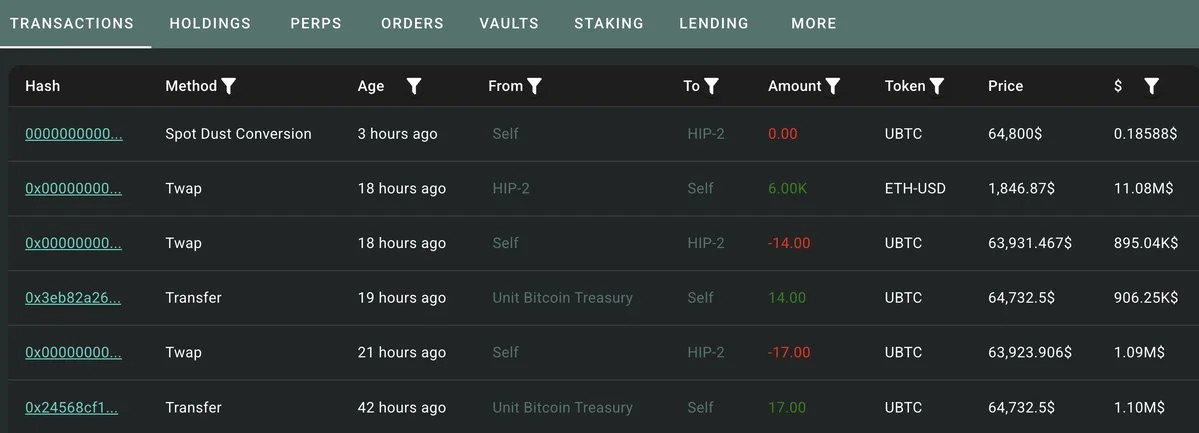
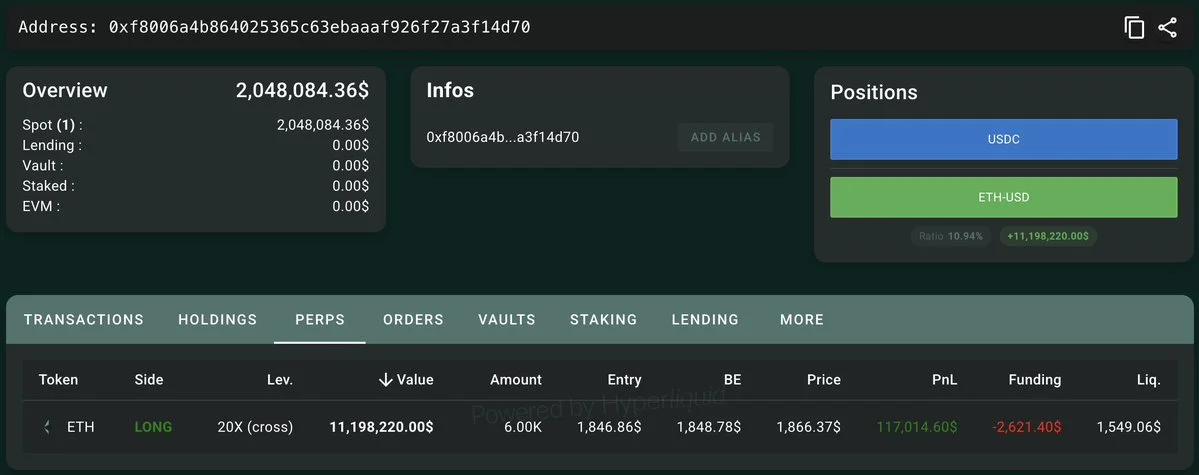
Two newly created wallets sold 72 BTC, worth roughly $4.66M, and rotated the proceeds into 20x leveraged long positions on 12,000 ETH, worth about $22.4M, according to HypurrScan data.
Why it matters
The structure of the trade is the signal, not just the size. Funding a leveraged ether long with freshly sold bitcoin, rather than stablecoins, signals a directional tilt: the wallets are expressing a view that ETH will outperform BTC over the trade horizon, and they are willing to take the basis risk that comes with holding perps instead of spot. A 20x leverage setting also means a roughly 5% adverse move liquidates the position, so this is a high-conviction, short-horizon bet rather than a passive carry trade.
Market impact
Wallet age is the second tell. Newly created addresses acting in concert on the same block suggest either a single entity splitting exposure or coordinated whales reading the same setup. On-chain watchers flagged similar patterns ahead of prior ETH-led moves, though past correlation is not a forecast. Liquidation levels around the entry sit close enough that even modest price action in either direction will draw attention.
Source: [HypurrScan Beta](https://hypurrscan.io/address/0x90016ea66f86f1fc0133af2042f3c65320cfcda3#perps)


Frequently asked questions
-
What did the whale wallets actually do?
Two newly created wallets sold 72 BTC, worth about $4.66M, and opened 20x leveraged long positions on 12,000 ETH, worth roughly $22.4M, according to HypurrScan data.
-
Why does funding the long with BTC matter?
Using freshly sold bitcoin instead of stablecoins to fund a leveraged ether long signals a directional view: the wallets expect ETH to outperform BTC over the trade horizon and accept the basis risk of holding perps rather than spot.
-
How risky is a 20x leveraged ETH position?
At 20x leverage, an adverse move of roughly 5% against the entry price liquidates the position, making this a high-conviction, short-horizon bet rather than a passive carry trade.
-
What does it mean that the wallets are newly created?
Fresh addresses acting in concert on the same block suggest either a single entity splitting exposure across wallets or coordinated whales responding to the same setup. Neither is conclusive from on-chain data alone.
-
Has this pattern predicted ETH moves before?
On-chain watchers have flagged similar whale rotation patterns ahead of prior ETH-led moves, but past correlation is not a forecast. Liquidation levels around the entry are close enough that even modest price action will draw attention.
 Whale Alert
 WuBlockchain
 Glassnode
 CoinTelegraph
 TheBlock