








 Lookonchain

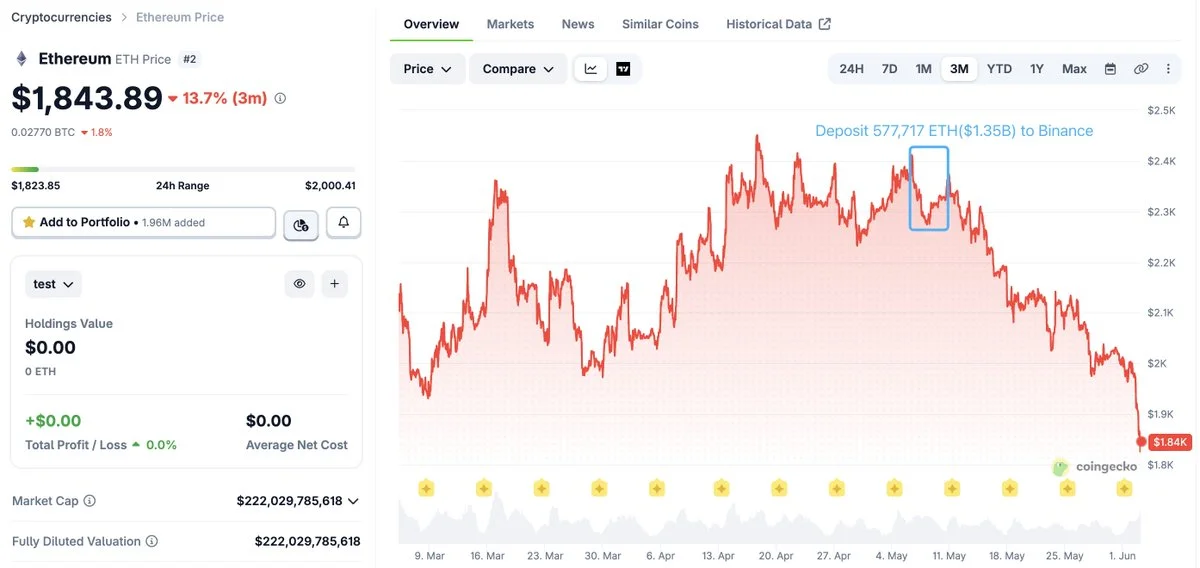
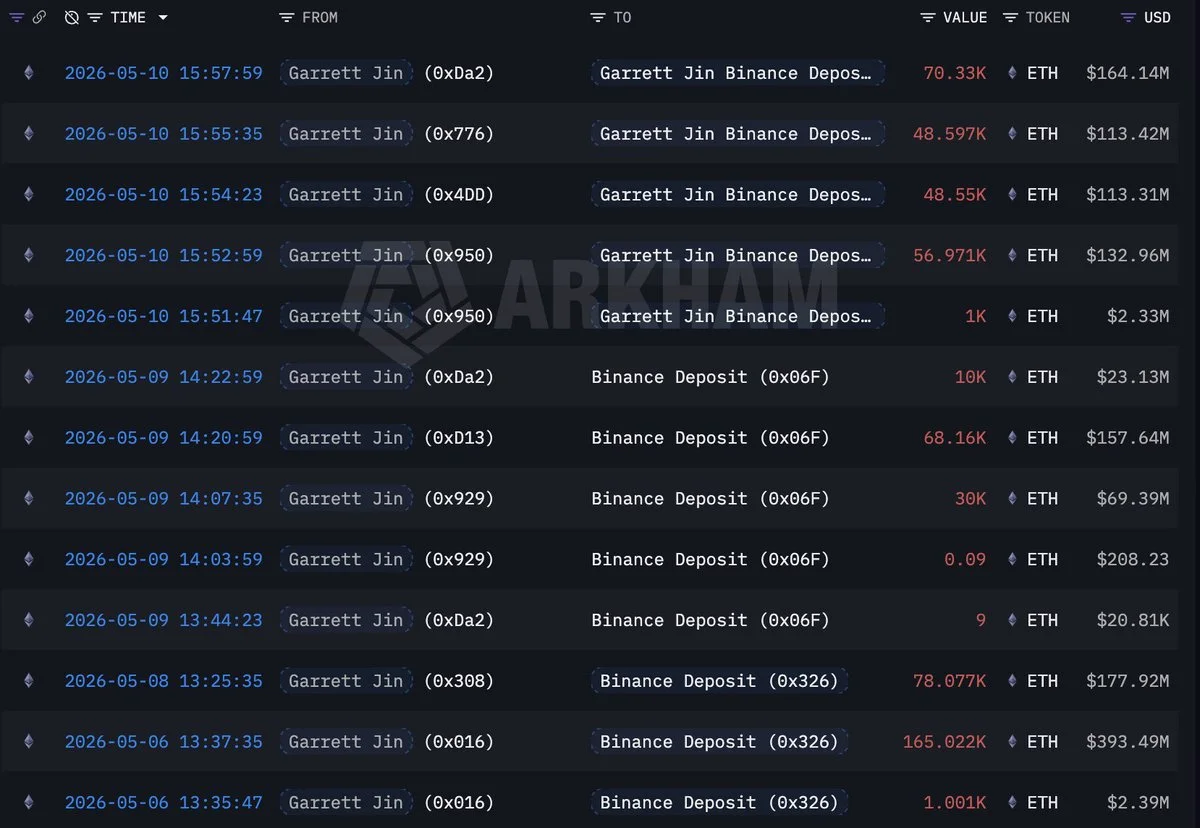
Trader Garrett Jin deposited 577,717 ETH worth roughly $1.35 billion into Binance between May 6 and May 10 at an average price of $2,337, days before Ethereum slid more than 20%, according to on-chain data he shared publicly.
Why it matters
The timing puts the deposit squarely at the local top. Moving that much ETH onto a centralized venue ahead of the leg down is consistent with distribution rather than accumulation, and the average price line — $2,337 — lines up with the resistance zone ETH rejected from before the free fall began. Jin has publicly tracked similar pre-rally and pre-crash flows in past cycles, and the May deposit is now being read as another correctly-timed call.
Market impact
ETH is trading well below the deposit average, and the deposit itself adds to a broader pattern of large-holder rotation through exchanges during the drawdown. Traders are now watching whether subsequent on-chain moves from the same wallet confirm the read or if this was a one-off liquidation event.

Frequently asked questions
-
Who is Garrett Jin and why does his trading matter?
Garrett Jin is a trader known for publicly tracking large on-chain wallet flows and flagging pre-rally and pre-crash moves in past cycles. His correctly-timed calls have made his on-chain reads a market signal in their own right.
-
How much ETH did Garrett Jin deposit to Binance?
He deposited 577,717 ETH, worth roughly $1.35 billion at the time, between May 6 and May 10 at an average price of $2,337 per ETH.
-
When did ETH start dropping after the deposit?
The deposit window ran May 6 to May 10, and ETH entered a free fall shortly after, shedding more than 20% from the deposit-period highs.
-
Why does a large exchange deposit matter for price?
Moving a large position onto a centralized venue ahead of a leg down is typically read as distribution rather than accumulation, since the ETH is now available to be sold into the order book.
-
Is this a sell signal for ETH right now?
The deposit confirms one correctly-timed top call, but traders are watching subsequent wallet activity to see if the same read holds or if the move was a one-off liquidation event.
 WatcherGuru
 Glassnode
 Crypto Rank News
 Crypto News
 CoinDesk
 CoinTelegraph