








 CoinDesk

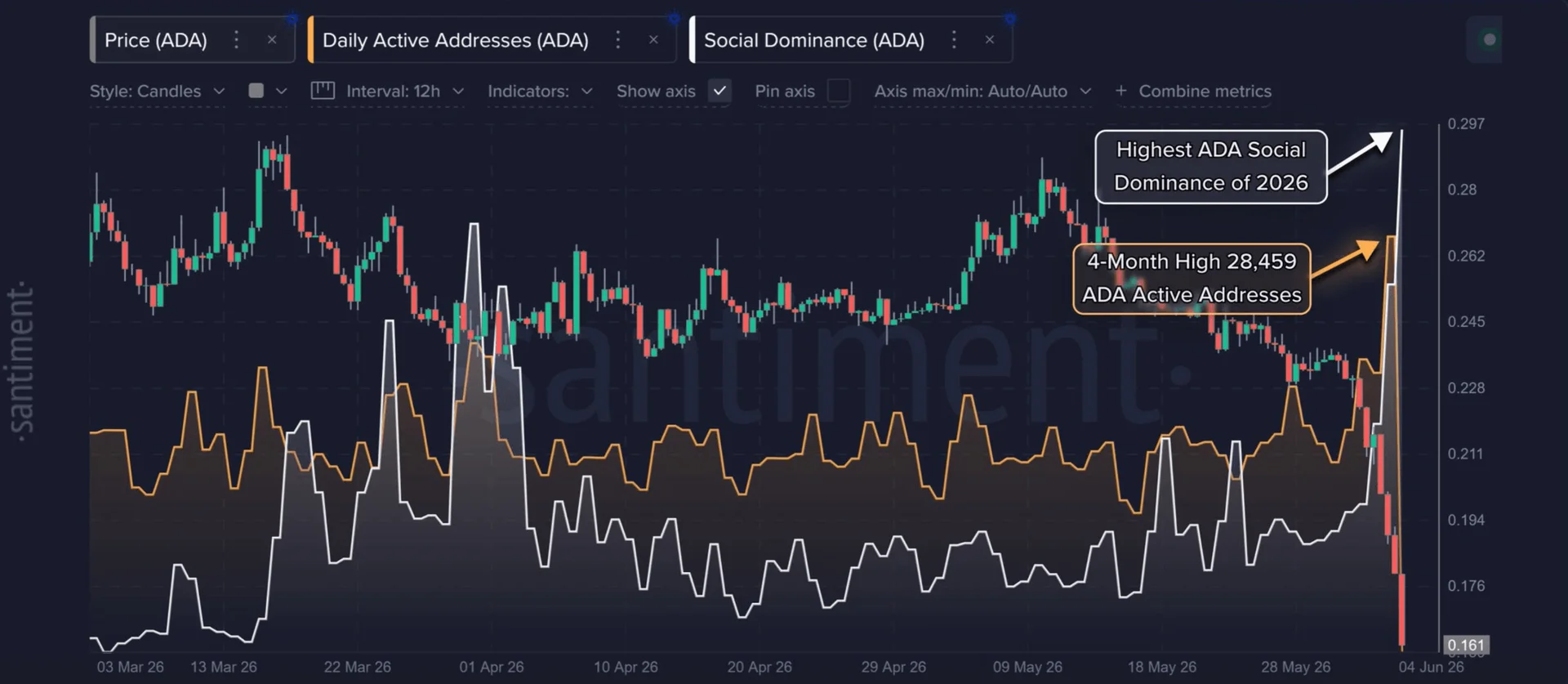


Cardano's ADA token fell to roughly $0.16 on Thursday, down nearly 30% over the past week and more than 75% over the past year, hitting its lowest level since December 2020. The slide accelerated after founder Charles Hoskinson said he was "taking a break" and warned of a potential "wave of failures" across the Cardano ecosystem, comments that landed just after analytics platform TapTools said it would shut down after four years and the community voted against funding the 2026 Cardano Summit in Singapore. CoinDesk data show the token briefly traded below $0.16 before stabilizing near that level.
Why it matters
The catalyst is structural, not technical. Three things hit the community inside one week: a high-profile project shutdown, a failed treasury vote for a flagship event, and the founder publicly stepping back with a "wave of failures" framing. That combination has turned what had been a quiet drawdown into an open question about whether the ecosystem's core builders and capital providers are still aligned with the chain's stated roadmap. Cardano still runs a meaningful retail base, but retail loyalty alone has not historically been enough to anchor a cycle low for a top-10 token.
Market impact
Santiment data show the social signal diverging sharply from the price signal. ADA's social dominance reached about 0.52%, a 2026 high, meaning more than one in every 190 crypto-related discussions across tracked social channels now reference Cardano. Daily active addresses climbed to 28,459, the highest in four months — users are moving funds, checking positions, and engaging the network even as the chart bleeds. That kind of activity into a selloff is genuinely two-sided: an engaged base can mark capitulation and a turn, but attention driven by distress, project shutdowns, and a founder stepping back rarely brings durable bids. ADA is cheap by late-2020 standards, but cheap on its own is not a catalyst — the next leg now depends on whether the ecosystem can show survivors, funded development, and reasons for users to do more than defend the chain online.

Frequently asked questions
-
How low did ADA go and how does that compare to past cycles?
ADA fell to roughly $0.16 on Thursday, briefly trading below that level — its lowest price since December 2020. The token is down nearly 30% in a week and more than 75% over the past year, per CoinDesk data.
-
What triggered the latest Cardano selloff?
Founder Charles Hoskinson said he was "taking a break" and warned of a potential "wave of failures" across the ecosystem. The remarks came the same week analytics platform TapTools announced it would shut down after four years and the community voted against funding the 2026 Cardano Summit in Singapore.
-
What did Santiment's data show about Cardano social activity?
Santiment said ADA's social dominance reached about 0.52%, a 2026 high, meaning more than one in every 190 crypto-related discussions across tracked social channels focused on Cardano. Daily active addresses also climbed to 28,459, the highest level in four months.
-
Why is high social activity during a selloff significant?
Rising engagement into a downturn cuts two ways. On one side it can mark an engaged, non-capitulated community that could fuel a turn. On the other, the attention is being pulled in by project shutdowns, failed funding votes, and a founder stepping back — catalysts that historically do not produce durable bids.
-
What would Cardano need to do to find a price bottom?
Cheap valuation alone is not a catalyst. Cardano needs evidence of working applications, surviving ecosystem projects, and productive treasury deployment that gives users reasons to do more than defend the chain on social channels.
 WuBlockchain
 Crypto News
 WatcherGuru
 CoinTelegraph
 CryptoSlate
 Crypto Rank News