








 CoinDesk
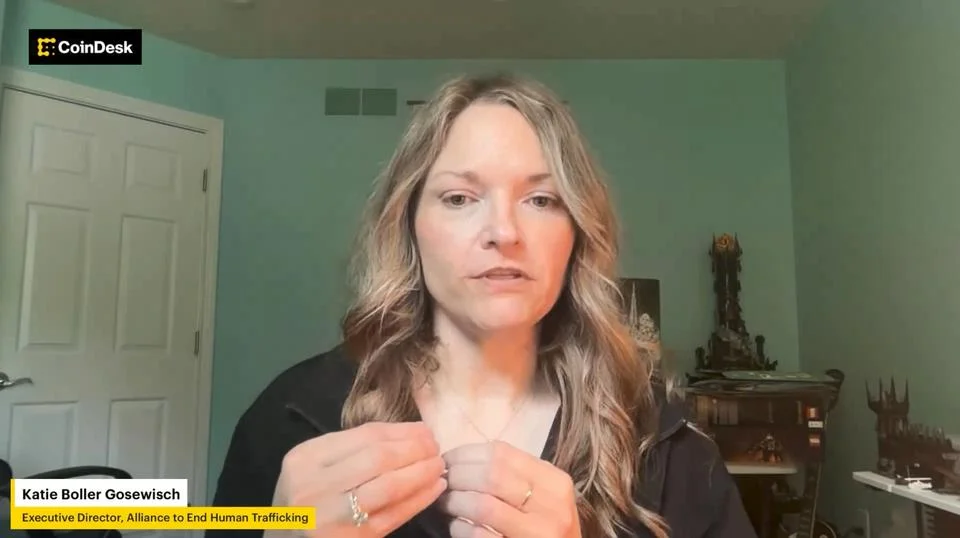



The Alliance to End Human Trafficking is urging Senate leaders John Thune and Chuck Schumer to revisit Section 604 of the Clarity Act, arguing the provision could make it harder to hold crypto platform developers accountable when their software is used to facilitate human trafficking. Executive director Katie Boller Gosewisch told CoinDesk's The Policy Protocol that her group's primary concern is language stating that developers who do not control user funds are not money transmitters, a framing she said could let third-party builders "hide behind" a lack of liability when trafficking-related payments flow through their tools.
Rebecca Rettig, a policy-side counterweight on the same panel, pushed back hard. She argued Section 604 reflects longstanding U.S. anti-money-laundering policy rather than creating a new legal shield, and that it merely codifies that developers who do not control customer assets are not money transmitters under the Bank Secrecy Act and FinCEN guidance. Rettig also pointed to 18 U.S.C. § 1956 and other criminal statutes as the real teeth prosecutors retain against any developer who knowingly facilitates criminal activity.
Why it matters
The argument is not whether Section 604 is a new shield, it is whether today's clarification becomes tomorrow's reasonable-doubt defense. Boller Gosewisch acknowledged she is not an attorney but said sophisticated defendants could lean on the statutory language to muddle intent in trafficking prosecutions, and she analogized the duty-of-care question to civil suits against hotels that fail to intervene in on-premises exploitation. The Alliance and Catholic Charities recently sent a joint letter to Senate leadership flagging these concerns as the bill moves through Congress.
Market impact
The substantive fight is over who sits inside the money-transmitter perimeter, not over the core crypto rails. Rettig noted that blockchain's transparency has become a meaningful investigative tool because transactions are traceable on public ledgers, and she argued that preserves enforcement reach even as Section 604 narrows the developer definition.
Frequently asked questions
-
What is Section 604 of the Clarity Act and why is it controversial?
Section 604 of the Clarity Act states that crypto developers who do not control user funds are not money transmitters. Anti-trafficking advocates say that language could let third-party builders evade accountability when their tools are used to facilitate criminal payments.
-
Who is Katie Boller Gosewisch and what does her group want?
Katie Boller Gosewisch is executive director of the Alliance to End Human Trafficking. Her group, alongside Catholic Charities, has asked Senate leaders John Thune and Chuck Schumer to revisit Section 604 and tighten developer-liability language.
-
How did Rebecca Rettig defend Section 604?
Rebecca Rettig argued Section 604 reflects longstanding U.S. AML policy rather than creating a new shield, and said it merely clarifies that non-custodial developers are not money transmitters under the Bank Secrecy Act and FinCEN guidance. She also pointed to 18 U.S.C. § 1956 as existing leverage against developers…
-
Could Section 604 actually help criminals in court?
Boller Gosewisch warned that sophisticated defendants could use the statutory language to manufacture reasonable doubt in trafficking prosecutions, even if that is not Congress's intent. Rettig countered that other criminal statutes still expose developers who knowingly aid criminal activity.
-
What happens next on Clarity Act developer liability?
Lawmakers continue to debate Section 604 as the Clarity Act moves through Congress, while courts separately weigh cases involving developers of decentralized protocols. Both sides in the panel agreed stronger trafficking enforcement is needed regardless of how the statutory language lands.
 CoinTelegraph
 WatcherGuru
 CryptoSlate
 Altcoin Daily
 TheBlock
 Crypto News