








 CoinDesk
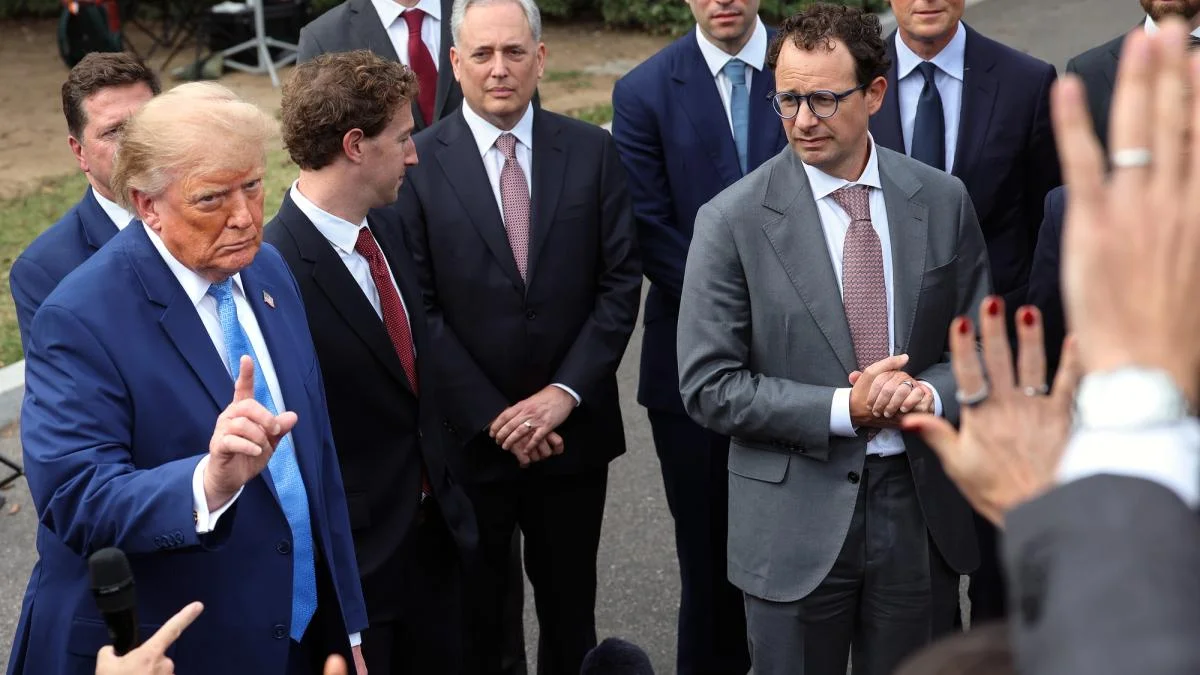



On Sept. 29, Nvidia, OpenAI, Anthropic, Google, Meta and xAI signed a White House accord pledging independent audits of their most advanced AI models. President Donald Trump called the pledges 'morally binding.' The accord requires each company to partner with an external auditor and have independent board members review findings, but leaves the choice of auditor and scope of examination entirely to the firm being audited, with no public findings and no penalty for ignoring the commitments.
Why it matters
The accord echoes the incentive trap that collapsed Enron and Arthur Andersen in 2002. Andersen failed not because of missing expertise but because Enron paid it $52 million in a single year to audit its books; Congress responded with Sarbanes-Oxley, which stripped auditor choice from management and set up a public board to inspect the auditors themselves. Voluntary AI pledges have already shown the same compliance pattern: a 2023 study by Stanford, Harvard and Brown scored 16 AI companies against the prior White House voluntary commitments, the average came to 53%, and eight of the 16 scored zero on helping outsiders find and report problems.
Market impact
METR's pre-release testing of OpenAI's o3 model illustrates the gap on the ground: it ran for only three weeks, with limited access to model information and no view of the model's step-by-step reasoning. The August DeepMind double-blind test on sealed hardware, run with Singapore's AI Safety Institute and three other outside groups, shows a path forward. Outside testers never saw the model and Google never saw their questions, and each side can mathematically verify its material stayed private. The technique moves trust onto the hardware, which carries its own risk: last year, researchers broke into similar sealed hardware with less than $1,000 of equipment, though they needed physical access to do it. The White House accord codifies none of this. Sarbanes-Oxley created an inspector for the inspectors; the AI accord has nothing like it.
Frequently asked questions
-
What is the White House AI accord and who signed it?
On Sept. 29, Nvidia, OpenAI, Anthropic, Google, Meta and xAI signed a White House pledge to allow independent audits of their most advanced AI models. President Donald Trump called the commitments 'morally binding.'
-
Why are the accord's audit provisions considered weak?
The accord requires each company to partner with an external auditor and have independent board members review findings, but says nothing about who chooses the auditor, what they can examine, or whether findings are made public, and carries no penalty for ignoring it.
-
How does the accord compare to Enron and Arthur Andersen?
Arthur Andersen failed not from a lack of expertise but because Enron paid it $52 million in a single year to audit its books. Sarbanes-Oxley responded by stripping auditor choice from management and creating a public board to inspect the auditors themselves. The AI accord leaves auditor choice exactly where it was.
-
How did prior voluntary AI pledges perform on follow-through?
Researchers at Stanford, Harvard and Brown scored 16 AI companies against the 2023 White House voluntary commitments. The average came to 53%, and 8 of the 16 scored zero on the promise to help outsiders find and report problems.
-
What is double-blind AI testing, and does it solve the audit problem?
In August, a group led by DeepMind ran what it called the world's first double-blind AI test on sealed hardware, working with Singapore's AI Safety Institute and three other outside groups. Outside testers never saw the model and the company never saw their questions, with each side able to mathematically verify its…
 WuBlockchain
 Crypto News
 TheBlock
 CoinTelegraph
 WatcherGuru