


 CryptoSlate


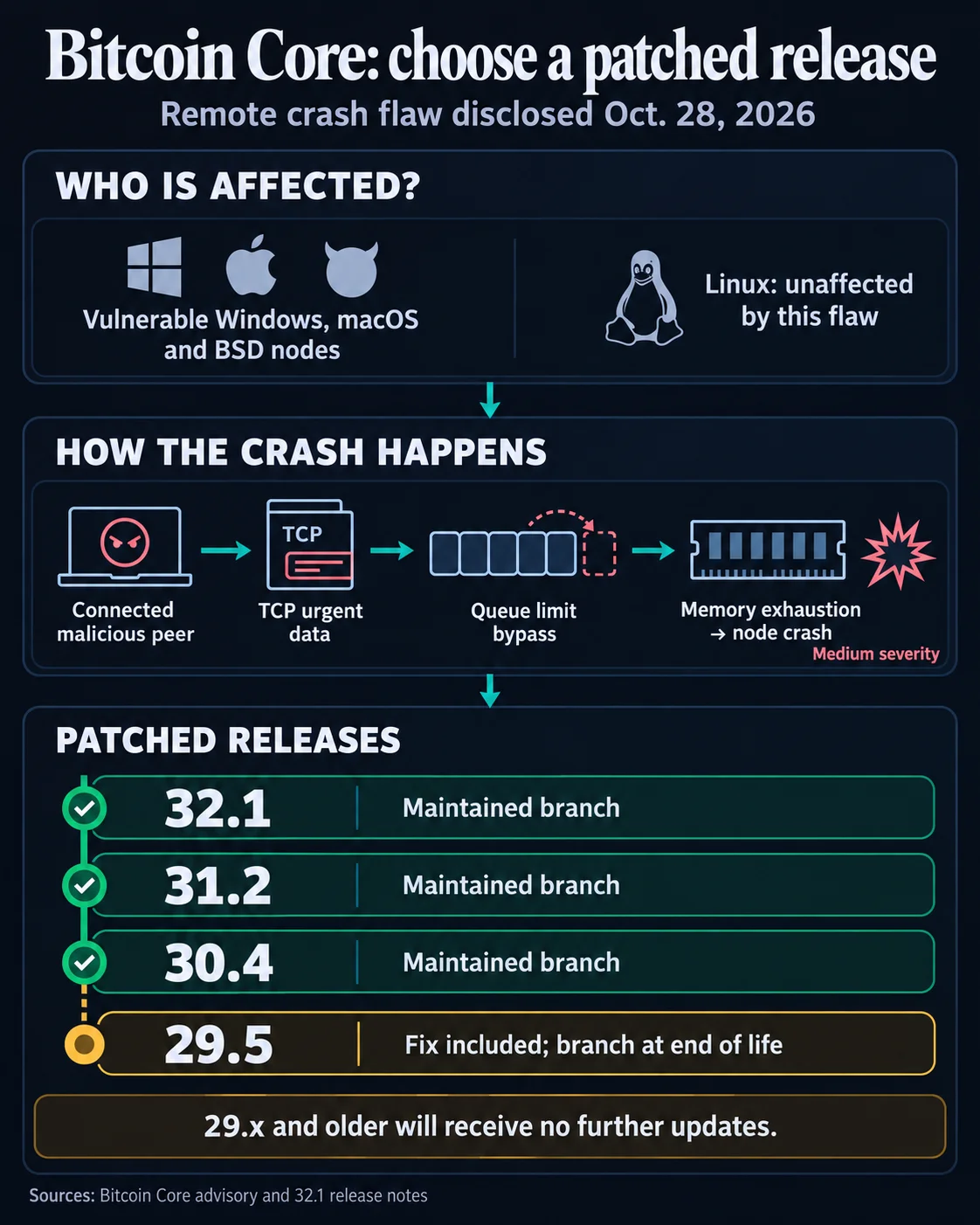

Bitcoin Core disclosed three vulnerabilities identified by automated AI-assisted scanning, including two memory-exhaustion flaws that could crash nodes. A malicious peer could remotely disrupt some Windows, macOS and BSD systems, while a separate issue could steadily consume memory through connections to older peers.
Developers released fixes in versions 29.5, 30.4, 31.2 and 32.1. The third flaw could overflow files used during blockchain reorganizations, but Bitcoin Core rated it low severity because exploitation on conventional 64-bit systems would require thousands of specially constructed blocks and a precisely engineered reorganization.
Why it matters
Bitcoin nodes validate transactions and help maintain network connections. A crash or memory exhaustion can interrupt those functions for an affected operator. The advisories did not report active exploitation, but the findings show how automated AI scanning can uncover weaknesses in widely used cryptocurrency infrastructure.
The vulnerabilities were found through Project Loupe, an automated LLM-based security scanning initiative developed by Elias Rohrer at Spiral. Gregory Sanders validated the findings and alerted Bitcoin Core's security team. The discoveries occurred between July 8 and Oct. 23; patches were completed Oct. 26 and released over the following two days.
Market impact
The advisories make software maintenance a practical concern for Bitcoin node operators. Bitcoin Core said 32-bit systems and nodes storing blockchain data on FAT32 remain susceptible to the file-overflow issue under specific conditions. The fixes do not remove those exposures.
Version 29.x and older branches are end of life and will not receive future security updates. Operators considering version 32.1 also need macOS 14 or newer, or Windows 10 version 1903 or newer. The disclosures put renewed focus on keeping Bitcoin infrastructure patched as AI-assisted scanning expands.

Frequently asked questions
-
What could the two memory-exhaustion vulnerabilities do to Bitcoin nodes?
Malicious peers could consume node memory until affected systems crash. One flaw could remotely disrupt some Windows, macOS and BSD nodes; Linux is unaffected by that particular issue.
-
Which Bitcoin Core releases include fixes for the disclosed flaws?
Developers released fixes in Bitcoin Core versions 29.5, 30.4, 31.2 and 32.1.
-
Are the vulnerabilities being actively exploited?
The advisories did not report active exploitation.
-
Which systems remain exposed to the file-overflow vulnerability?
Bitcoin Core warned that 32-bit systems and nodes storing blockchain data on FAT32 remain susceptible under specific conditions.
-
Why are Bitcoin Core 29.x and older releases a concern for operators?
Those branches are end of life and will not receive future security updates. Operators moving to version 32.1 also need a supported operating system.
 CoinDesk
 WuBlockchain
 Crypto News
 TheBlock