








 CoinDesk
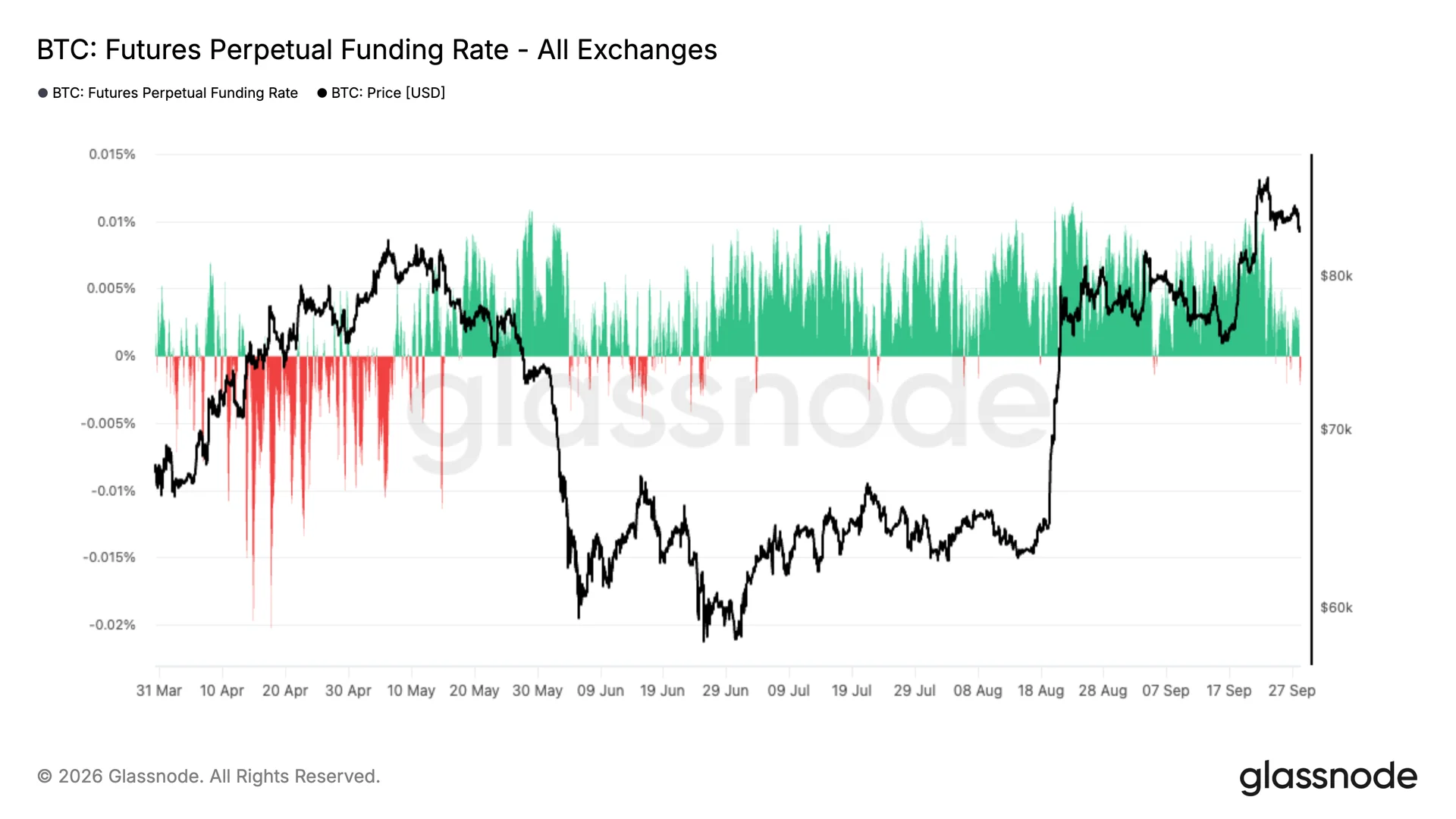
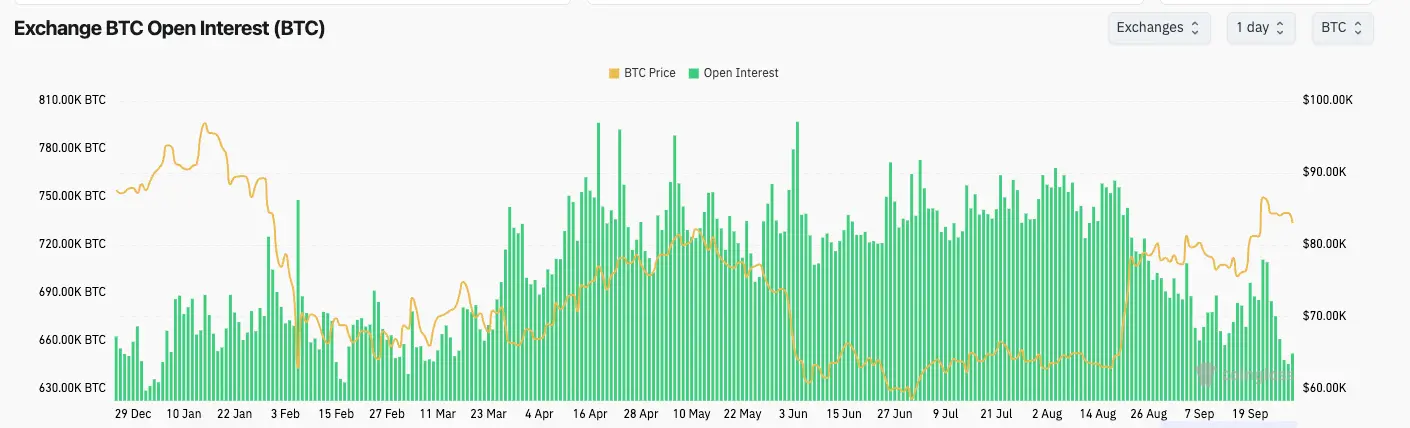


Bitcoin fell more than 2% in 24 hours to about $82,800 as futures open interest dropped to 652,000 BTC, among its lowest levels this year, from a peak of 800,000. Perpetual funding turned negative, averaging minus 0.3% across major exchanges, meaning short sellers are paying longs to keep bearish positions open.
The decline followed President Donald Trump declining to rule out further strikes on Iran before the U.S. midterm elections. Bitcoin remains more than $20,000 above its summer cycle low and was still the best-performing asset of the third quarter, but the derivatives data show weaker demand for leveraged exposure.
Why it matters
Open interest tracks active futures positions, while funding rates indicate which side is more willing to pay to maintain its position. Falling open interest alongside negative funding suggests traders are closing positions as sentiment weakens, with the remaining leveraged exposure tilted toward shorts. It does not establish how spot-market investors are positioned.
The pressure is not limited to Bitcoin. Gold fell 3% to about $4,150 an ounce, while the dollar index climbed above 101 as U.S. Treasury yields rose. Higher yields can make income-bearing assets more attractive than Bitcoin and gold, which pay no income.
Market impact
The 10-year Treasury yield moved above 5.2% and the 30-year yield above 5.51%. The long-duration Treasury ETF TLT fell to about $79, an all-time low, as higher yields weighed on bond prices. A resilient U.S. economy may be supporting the dollar and yields, while persistent inflation concerns may also be pushing borrowing costs higher.
The next signal is whether Bitcoin's open interest and funding stabilize. Until then, the data point to weak leveraged demand and a market where bearish futures positions are paying to remain open, while rising yields add competition for non-yielding assets.

Frequently asked questions
-
What does negative Bitcoin perpetual funding indicate?
It indicates short sellers are paying longs to keep their bearish positions open, reflecting stronger demand to hold shorts.
-
How low did Bitcoin futures open interest fall?
Open interest stood at 652,000 BTC, among its lowest levels this year. It had peaked at 800,000 earlier in the year.
-
What event preceded Bitcoin's 24-hour decline?
The decline followed President Donald Trump declining to rule out further strikes on Iran before the U.S. midterm elections.
-
How are rising Treasury yields affecting Bitcoin and gold?
Higher yields can make income-bearing assets more attractive relative to Bitcoin and gold, which pay no income.
-
What happened to the long-duration Treasury ETF TLT?
TLT fell to about $79, an all-time low, as rising yields weighed on bond prices.
 Crypto News
 TheBlock
 WatcherGuru
 Altcoin Daily
 Whale Alert