








 CoinDesk
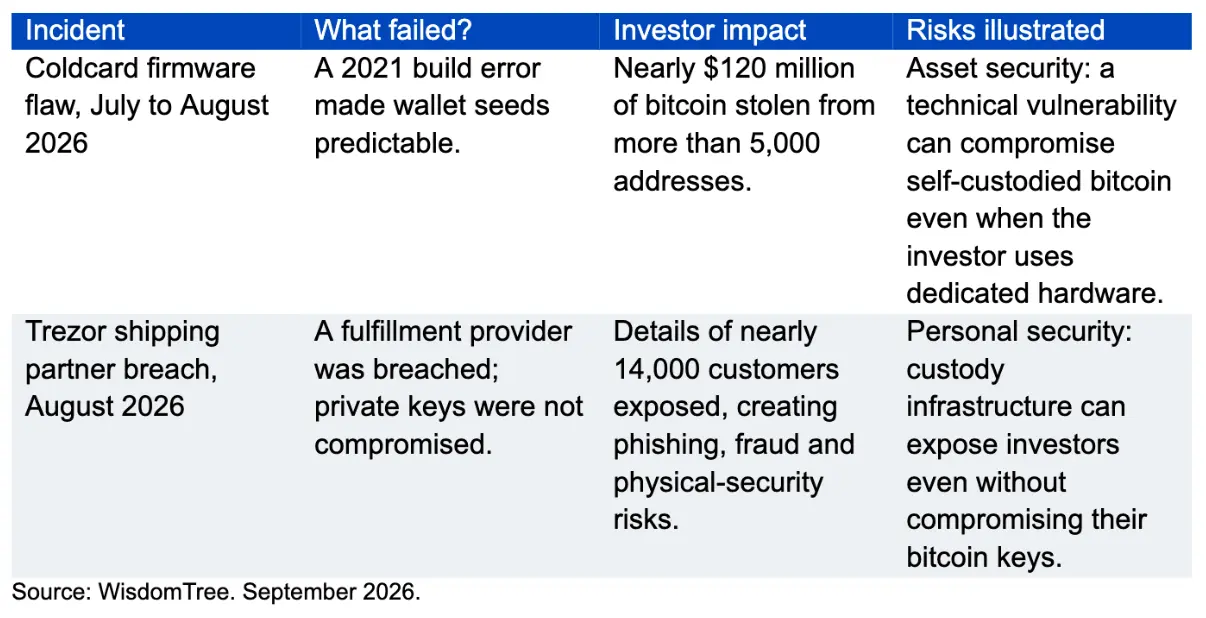


Self-custody gives Bitcoin investors direct control, but it also makes them responsible for private keys, recovery phrases, wallet security, transactions and inheritance planning. The trade-off is especially relevant for advisors weighing modest portfolio allocations against the operational demands of direct ownership.
Why it matters
The central distinction is between wanting Bitcoin exposure and wanting to manage Bitcoin directly. Lost recovery phrases cannot be reset, mistaken transactions generally cannot be reversed, and hardware wallets do not eliminate risks involving backups, personal data, software updates or transaction hygiene.
Bitcoin ownership also carries protocol responsibilities. Software upgrades, wallet compatibility issues and chain splits can force holders to assess security, liquidity, wallet support, replay risk and tax treatment. Those tasks do not increase Bitcoin's expected return, but they remain part of the direct ownership model.
Market impact
Professionally managed exchange-traded products can provide Bitcoin exposure while delegating custody, key management and protocol-event decisions to specialists. They do not remove Bitcoin's price volatility, but they can separate portfolio allocation from the creation of a personal crypto-security operation.
The failed CLARITY Act vote adds a separate layer of regulatory uncertainty for the broader digital-asset market. Bryan Courchesne of DAiM said the outcome delays market-structure clarity but does not fundamentally change Bitcoin's long-term investment thesis, given its regulated futures, spot ETFs and established custody infrastructure.
Advisors still need to assess an investment vehicle's structure, custody arrangements, fees and policies for forks or other protocol events. The practical question is whether a client wants Bitcoin exposure, direct ownership, or the operational responsibilities that come with holding the asset themselves.

Frequently asked questions
-
What risks does Bitcoin self-custody add for investors?
Self-custody makes investors responsible for private keys, recovery phrases, wallet software, transaction accuracy, security and inheritance planning. Lost phrases generally cannot be reset and mistaken transactions cannot usually be reversed.
-
Do hardware wallets eliminate Bitcoin security risks?
No. Hardware wallets can reduce certain risks, but backups, personal data, software updates and transaction hygiene remain part of the security process.
-
Why can Bitcoin protocol events matter to direct holders?
Software upgrades, compatibility issues and chain splits can require holders to assess security, liquidity, replay risk, tax treatment and whether to claim assets on competing networks.
-
How do spot Bitcoin ETFs differ from direct ownership?
Spot ETFs can provide Bitcoin market exposure while delegating custody, key management and protocol-event decisions to specialists. They do not remove Bitcoin price volatility.
-
Did the failed CLARITY Act vote change Bitcoin’s long-term investment thesis?
Bryan Courchesne of DAiM said the vote delays regulatory clarity for the broader digital-asset market but does not fundamentally change Bitcoin’s thesis, given its established institutional infrastructure.
 Lookonchain
 WuBlockchain
 CryptoSlate
 CoinTelegraph
 Glassnode
 Crypto Rank News