








 CoinDesk
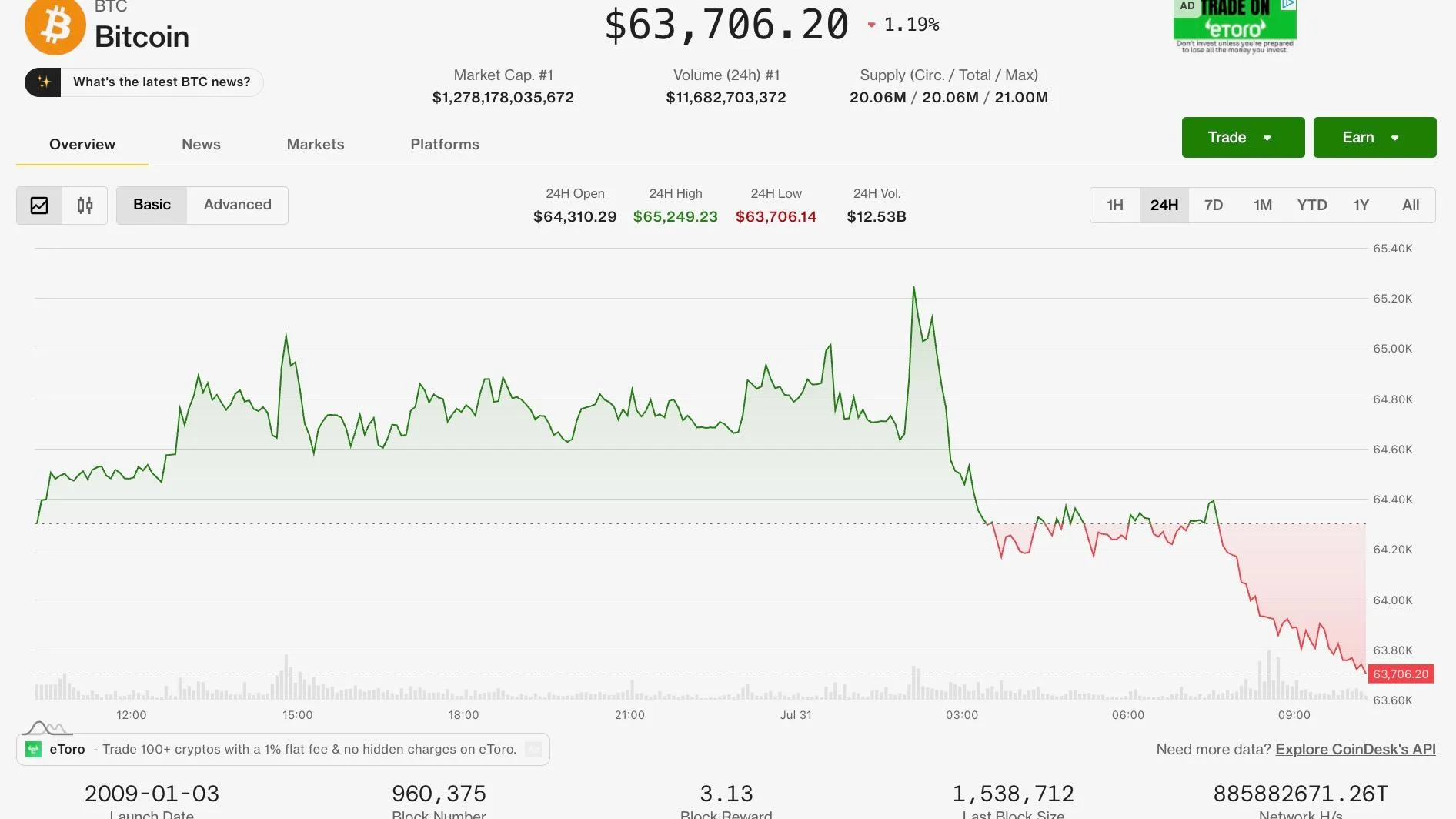



Bitcoin slipped 1.31% to $63,870 and ether fell 1.40% to $1,890 in the final session of July, while South Korea's Kospi surged more than 15% and Nasdaq 100 futures climbed 1.23%. The divergence is sharp: equities caught a bid on global risk appetite, but crypto closed the month on its back foot, with the CoinDesk 20 Index down 2.34% since Monday though still up 8.7% from June, its strongest monthly print since July 2025. UNI and ADA led the alts, with UNI up 9.30% on Robinhood layer-2 momentum and ADA gaining 4.09%.
Why it matters
The cross-asset divergence is the read worth sitting with. Hawkish Fed commentary and renewed Middle East tension this week have dented the recovery thesis, yet stocks are rotating higher on a softer-dollar narrative that has so far failed to translate into crypto. The result is a tape where the monthly headline looks healthy but the last 48 hours tell a different story, and that intraday/monthly gap is what traders will be watching into August.
Market impact
Derivatives positioning points to more downside risk. The taker long-short futures volume ratio continues to lean bearish, XRP open interest climbed to 2.27 billion tokens even as price fell from $1.13 to $1.07, a combination that historically confirms downtrends, and most majors are flashing negative OI-adjusted cumulative volume delta. BTC open interest has sat static near 750K all month, signalling that leveraged capital is staying on the sidelines while spot chops between $62K and $65K. On Deribit, $10B in BTC and ETH options expired early Friday, and the remaining distribution shows a $60,000 put as the single most popular strike through June 2027, a clear defensive lean. Bitcoin's 30-day implied volatility, the BVIV, fell to 37%, its lowest since May, and prior visits to that floor have preceded a bounce in the fear index, which since 2024 has correlated negatively with spot. UNI is the lone bright spot in positioning, with OI rising to 75.80M tokens for a third straight day, the highest since February, as the BlackRock tokenized Treasury fund launch on Uniswap continues to pull risk on.





Frequently asked questions
-
Why are bitcoin and ether falling while equities rallied on the last day of July?
Hawkish Federal Reserve commentary and renewed Middle East tensions this week dented crypto's recovery thesis, even as South Korea's Kospi surged 15% and Nasdaq 100 futures climbed 1.23%. The cross-asset divergence left the CoinDesk 20 down 2.34% since Monday despite an 8.7% monthly gain.
-
What does the derivatives positioning say about the next move?
The taker long-short futures volume ratio leans bearish, XRP open interest climbed to 2.27 billion tokens while price fell from $1.13 to $1.07, and most majors are flashing negative 24-hour OI-adjusted CVD. BTC open interest has sat static near 750K all month, showing leveraged capital is staying sidelined.
-
Why is a $60,000 put the most popular strike on Deribit?
After $10 billion in BTC and ETH options expired early Friday, the remaining distribution through June 2027 shows the $60,000 put as the single most popular bet. A put is a bearish position, and the concentration signals that options traders are bracing for further downside rather than fading it.
-
What does falling bitcoin implied volatility mean for price?
Bitcoin's 30-day implied volatility, the BVIV, dropped to 37%, the lowest since May. Prior visits to that floor have preceded a bounce in the fear index, and since spot BTC ETFs debuted in 2024 the correlation between BVIV and spot has been negative, meaning any volatility rebound could come with fresh downside.
-
Why is UNI outperforming while the broader market sells off?
UNI rose 9.30% on continued momentum from its Robinhood layer-2 integration, and its open interest climbed to 75.80 million tokens for a third straight day, the highest since February 14. BlackRock's decision to debut its tokenized Treasury fund on Uniswap is keeping risk-on flow heading into the token despite the…
 Glassnode
 CryptoSlate
 WatcherGuru
 Lookonchain
 Crypto News