








 CoinDesk
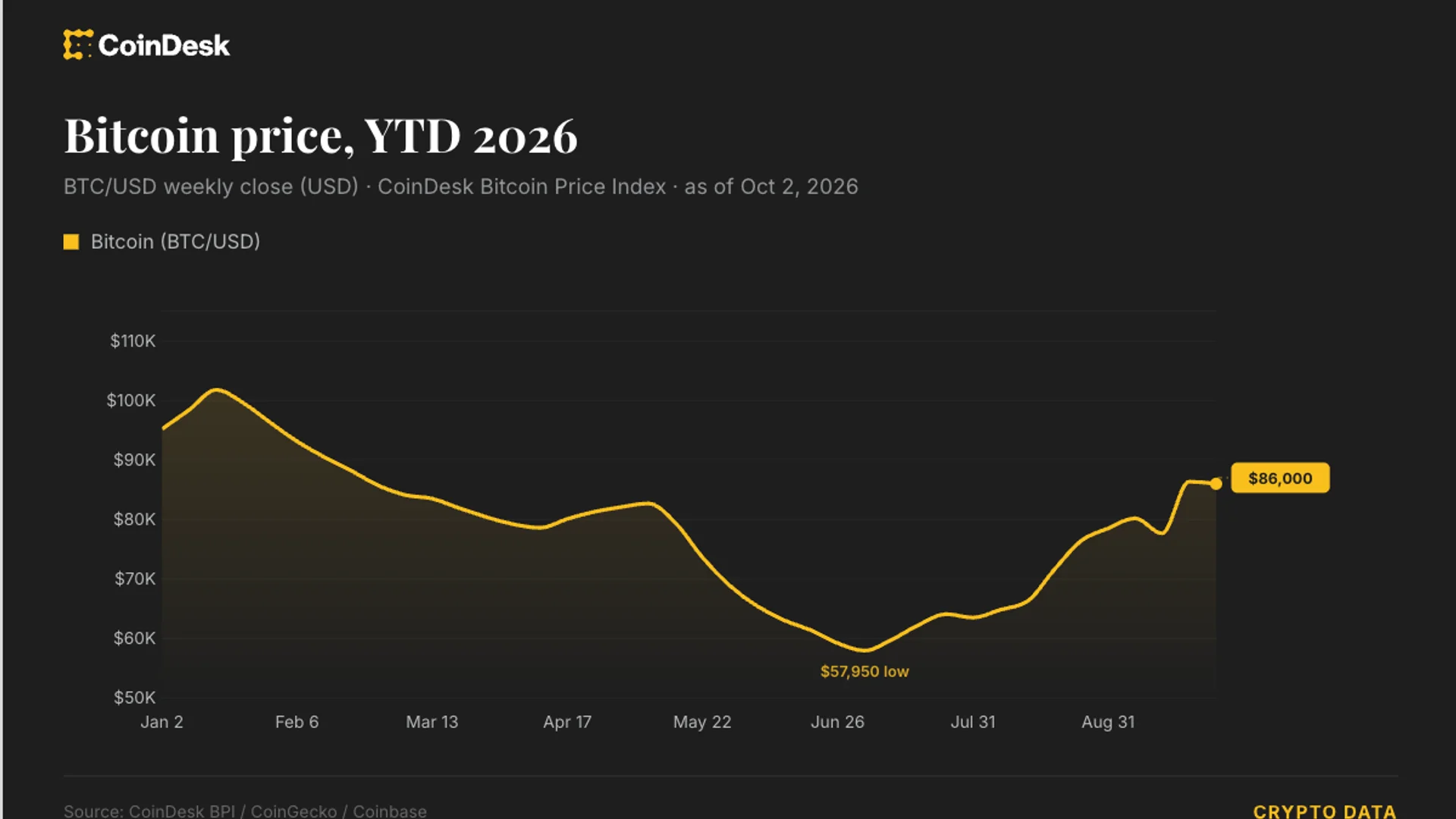



Bitcoin punched through $86,000 overnight, briefly tagging $86,885 as traders positioned ahead of Friday's September U.S. jobs report. The largest cryptocurrency by market capitalization eased to around $86,000 but held a 1.5% daily gain, extending an October advance to roughly 3%. The move is notable for what it overcame: a 10-year Treasury yield at a multi-decade peak of 5.34% and a U.S. Dollar Index that briefly cleared 102, both of which would normally pressure risk assets.
Why it matters
Bitcoin spent most of the week pinned in the $82,000-$85,000 range while yields climbed and the dollar strengthened, the inverse correlation macro traders expect. Friday's breakout suggests positioning is shifting ahead of the payrolls print, with consensus expecting nonfarm payrolls to rise by 90,000 (down sharply from 162,000 in August) and unemployment to hold at 4.1%. A softer number would reinforce the case for further Federal Reserve easing, while a hot print risks reigniting the bond selloff that has anchored the broader risk-off mood across equities and credit.
Market impact
The divergence between Bitcoin and traditional risk indicators is the underlying story. Bitcoin is increasingly trading on its own liquidity and ETF flow narrative, less tethered to the DXY-yield reaction that has historically driven its correlation to risk assets. The euro fell to around $1.12, its weakest level since May 2025, while France's borrowing premium over Germany hit a 14-year high and French 5-year credit default swaps climbed to multiyear highs. French yields have now overtaken those of Italy and Greece, as Bloomberg's Lisa Abramowicz noted, a structural European fiscal concern. If Bitcoin holds the breakout into Friday's print, the macro-correlation thesis loses another brick.

Frequently asked questions
-
Why is Bitcoin at $86,000 ahead of the September jobs report?
Traders are positioning ahead of Friday's U.S. nonfarm payrolls release. Consensus expects +90K jobs, down from 162K in August, with unemployment steady at 4.1%. A softer number would reinforce Federal Reserve easing expectations and has historically been bullish for risk assets.
-
How are rising Treasury yields affecting Bitcoin's price?
The 10-year U.S. Treasury yield hit a multi-decade high of 5.34% this week, which has historically pressured risk assets. Bitcoin was pinned between $82,000 and $85,000 for most of the week before breaking out overnight.
-
What is the DXY and why does it matter for crypto?
The U.S. Dollar Index (DXY) measures the dollar against a basket of major currencies. It briefly cleared 102 for an 18-month high, a level that typically pressures risk assets including Bitcoin, though $BTC continued to advance.
-
Why is the France-Germany bond spread relevant to a Bitcoin story?
France's borrowing premium over Germany hit a 14-year high this week as French yields overtook those of Italy and Greece. The euro fell to its weakest level since May 2025, a structural European fiscal stress signal Bitcoin is increasingly trading past.
-
What would a hot jobs report do to Bitcoin?
A stronger-than-expected payrolls print would likely push Treasury yields higher and reinforce dollar strength, both of which have historically pressured risk assets. That combination could test whether Bitcoin's overnight breakout above $86,000 holds into the weekend.
 Benjamin Cowen
 Crypto Rank News
 WatcherGuru
 WuBlockchain
 Lookonchain
 TheBlock
 Crypto News
 Glassnode