


 CoinDesk
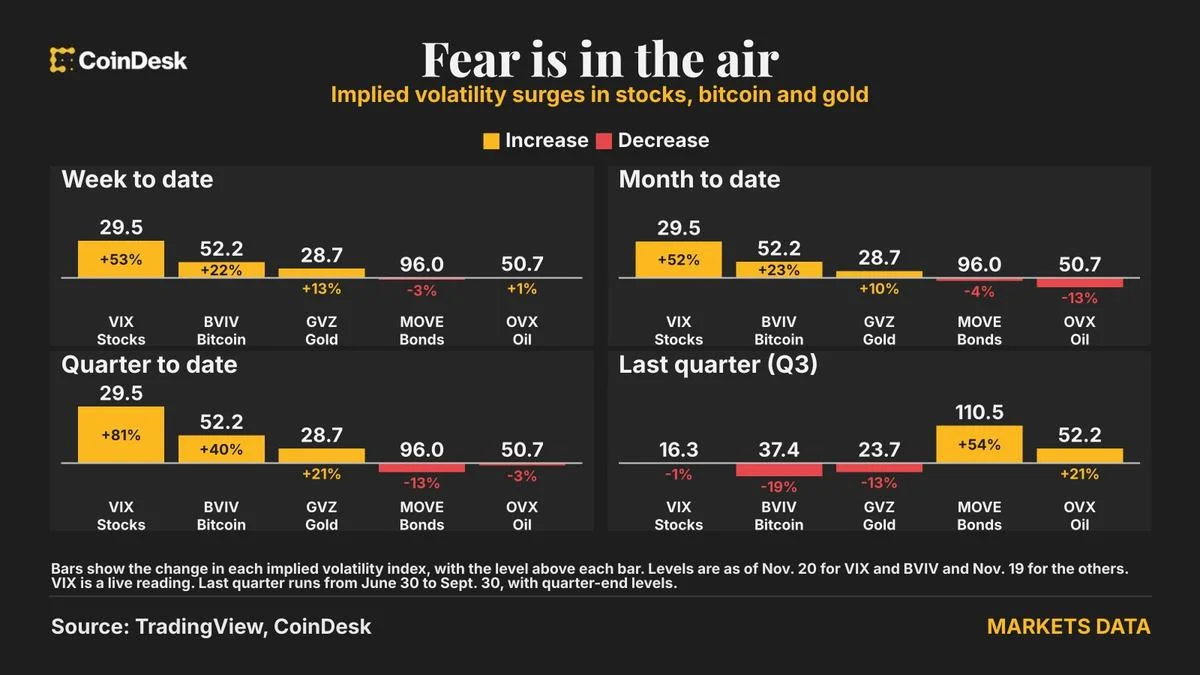


Bitcoin's implied volatility index rose 23% this month to 52.2, while spot Bitcoin ETFs recorded more than $580 million in net outflows on Thursday, according to SoSoValue. Bitcoin fell to nearly $61,300, its lowest level since early July, as stocks and commodities also declined.
Why it matters
The selloff extends across asset classes. The VIX, a gauge of expected 30-day S&P 500 volatility, climbed 52% this month to 29.5, its highest level since March. Gold's volatility index rose 10% to 28.7. Implied volatility gauges reflect the size of price moves traders expect, with demand for protective options tending to increase when investors are nervous.
The shift follows a third quarter in which the MOVE index of U.S. Treasury volatility rose 54%. Higher Treasury market volatility can tighten financial conditions globally and contribute to risk aversion elsewhere.
Market impact
The Bitcoin ETF outflows coincided with Anthropic's Nasdaq debut, challenging a narrative that its IPO would prompt money to rotate back into Bitcoin and the wider market. Bitcoin is down about 28% for the quarter, while gold dropped nearly 3% to $3,514.
Crypto trades around the clock, leaving it exposed to weekend trading while traditional markets are closed. Speeches from Federal Reserve governors Chris Waller and Lisa Cook are also in focus: a softer policy tone could ease pressure on the dollar and risk assets.

Frequently asked questions
-
How much did Bitcoin ETFs lose in net outflows?
Spot Bitcoin ETFs recorded more than $580 million in net outflows on Thursday, according to SoSoValue.
-
How does Bitcoin's volatility increase compare with the VIX?
Bitcoin's implied volatility index rose 23% this month to 52.2. The VIX climbed 52% to 29.5, its highest level since March.
-
What happened to Bitcoin's price during the selloff?
Bitcoin fell to nearly $61,300, its lowest level since early July. It was down around 28% for the quarter.
-
Why are Treasury volatility and financial conditions connected?
Higher volatility in the U.S. Treasury market can tighten financial conditions globally and contribute to risk aversion in other markets.
-
Why are traders watching speeches from Waller and Cook?
A softer Federal Reserve policy tone could ease pressure on the dollar and risk assets. Governors Chris Waller and Lisa Cook are due to speak.
 CryptoSlate
 Crypto News
 TheBlock
 Altcoin Daily
 WatcherGuru