








 CoinDesk
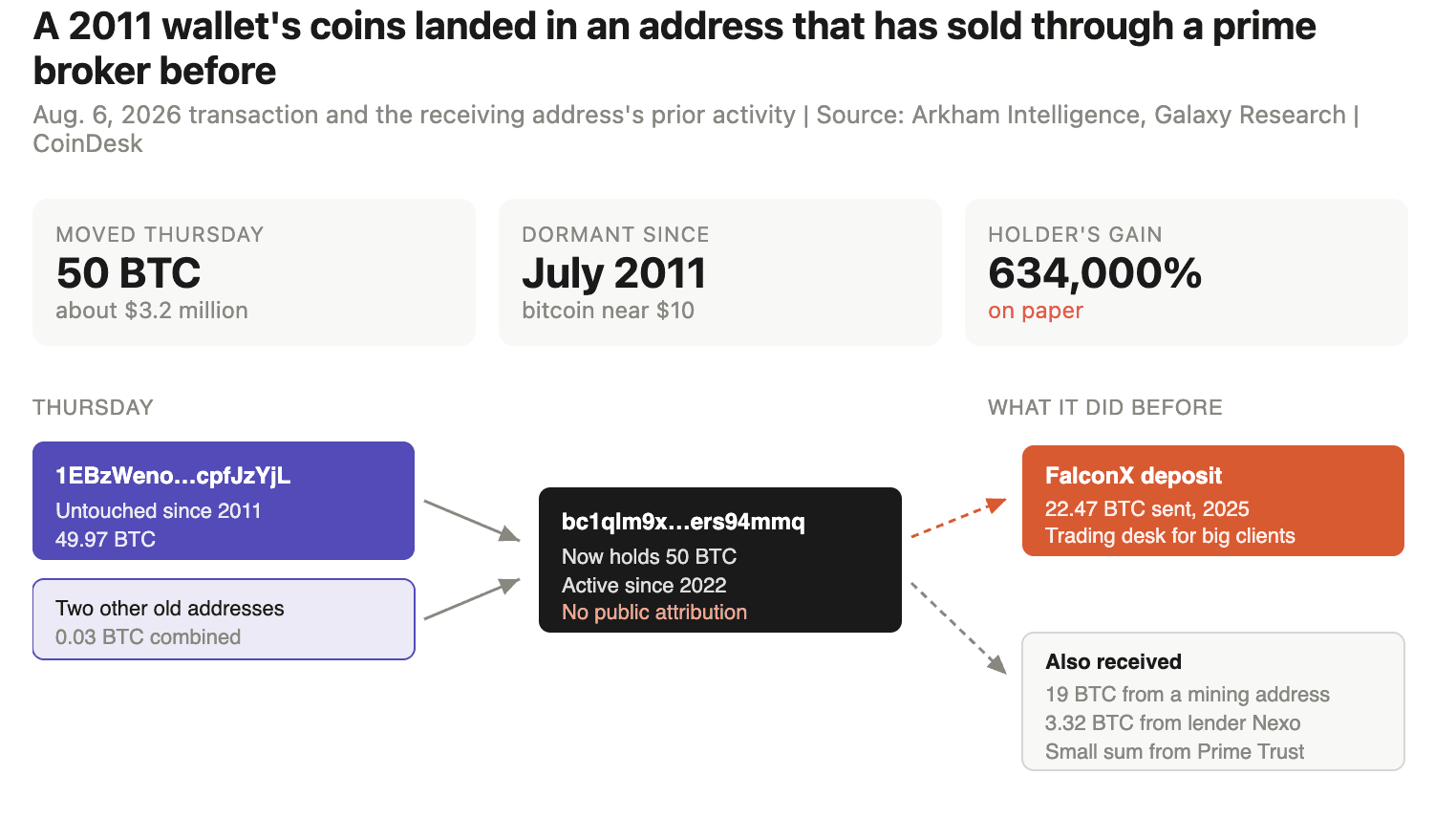


A bitcoin wallet dormant since July 2011 moved 49.97 BTC, roughly $3.2 million, on Thursday, sending the coins to a SegWit address with a prior track record of funnelling bitcoin into institutional brokerage FalconX. The transaction landed in block 961331 at 20:14 UTC on Aug. 6, combining four inputs from the dormant address with two smaller inputs from other wallets to deliver exactly 50 BTC to the destination. The wallet originally received the coins on July 16, 2011, when bitcoin traded near $10, and had not spent them in more than 14 years. The 50 BTC remained parked at the receiving address as of Friday morning, with no on-chain evidence yet that the coins have been forwarded to FalconX or any other venue.
Why it matters
The destination address is not a fresh wallet. Arkham data show it has previously sent 6.336 BTC and 16.131 BTC to addresses labelled as FalconX deposits, and received funds from wallets tagged as a Nexo hot wallet and Prime Trust custody, a footprint that places the recipient on the institutional deposit rail rather than on a personal cold-storage address. That history is why traders are reading the move as positioning toward a sale or OTC desk, though it could equally reflect a custody reshuffle or wallet upgrade.
The timing lands awkwardly with the worst cold-wallet exploit to hit Bitcoin in years. Coinkite, maker of the Coldcard hardware wallet, disclosed a firmware flaw dating to 2021 that could expose keys generated by affected devices, and attackers have swept as much as $114 million from vulnerable wallets since July 30 across four waves of thefts. Coinkite is urging affected users to migrate funds off vulnerable devices.
Market impact
There is no evidence linking the 2011 wallet to the Coldcard issue; the address predates the device by years and the SegWit destination sits well outside the vulnerable firmware window. But the disclosure has nevertheless pushed long-term holders back to check old storage setups, and dormant-coin movements tend to draw extra attention because the original owners accumulated at fractions of today's price.

Frequently asked questions
-
How much bitcoin did the dormant 2011 wallet move and when?
The wallet moved 49.97 BTC, roughly $3.2 million, on Thursday in a transaction recorded in block 961331 at 20:14 UTC on Aug. 6, combining four dormant inputs with two smaller inputs from other addresses.
-
Has the 50 BTC already reached FalconX?
No. The coins were sent to a SegWit address that previously routed funds to FalconX, but the 50 BTC was still parked at that address as of Friday morning with no on-chain evidence of a further transfer.
-
What is the Coldcard exploit and how much has been stolen?
Coinkite disclosed a firmware flaw dating to 2021 that can expose keys generated by affected Coldcard devices. Attackers have swept as much as $114 million from vulnerable wallets since July 30 across four waves of thefts.
-
Is the 2011 bitcoin wallet connected to the Coldcard flaw?
No evidence links the two. The wallet predates the Coldcard device by years and the SegWit destination sits outside the vulnerable firmware window, so the transfer is being read as a separate event.
-
Why do dormant bitcoin wallets draw so much attention when they move?
Owners accumulated these coins when bitcoin traded at a fraction of today's price, so even small movements are read as potential profit-taking and tend to move sentiment, particularly when the receiving address sits on an institutional rail.
 Crypto News
 Whale Alert
 TheBlock
 Glassnode
 CoinTelegraph
 WatcherGuru
 WuBlockchain
 Benjamin Cowen