








 CoinDesk

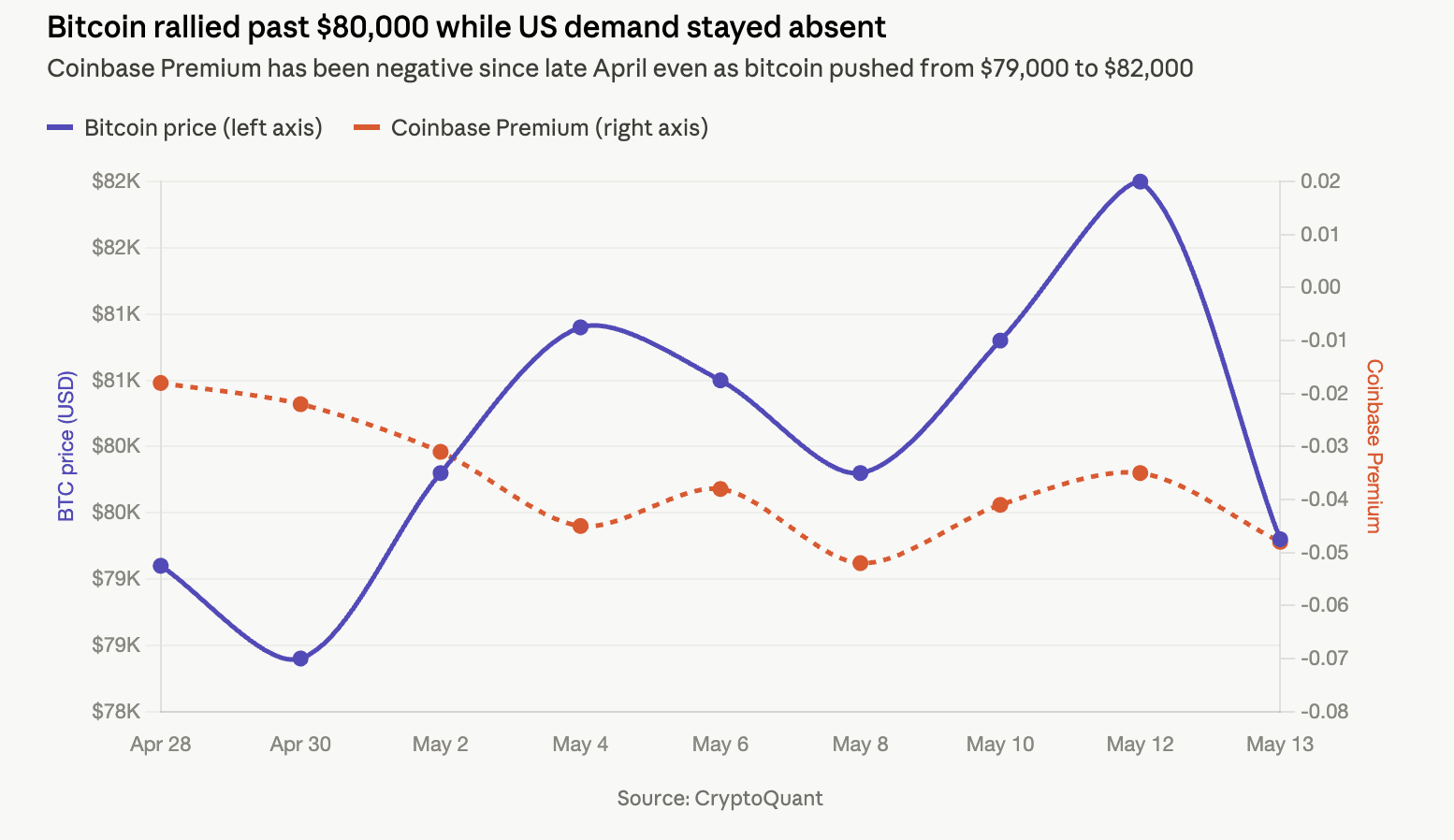

Bitcoin's push from roughly $80,000 toward $82,000 broke above a level where the Coinbase Premium had already flipped negative, a signal that offshore traders, not U.S. institutions, were paying up for the move. CryptoQuant data show the premium has stayed negative since late April, the same window in which CoinDesk flagged a $5.97 billion spike in realized losses from underwater holders selling into the rally.
Apparent demand, which CryptoQuant measures as new bitcoin absorbed relative to mining issuance and changes in dormant supply, has narrowed from -91,000 BTC in April to roughly -11,000 BTC today. That is an improvement from heavy supply overhang toward near balance, but the figure is still negative, meaning spot absorption is not yet meeting supply-side pressure. The narrowing has come from perpetual futures positioning rather than spot accumulation, with leverage magnifying the move but leaving the order book thinner than a spot-led breakout would.
Why it matters
A Coinbase Premium that stays negative through a 5% rally is the opposite of what a U.S.-institutional-led breakout looks like; Coinbase is the primary on-ramp for American capital, so a positive premium normally signals domestic demand outpacing the rest of the world. Persistent negative readings mean offshore traders are paying more than U.S. investors are willing to pay, and the price is being driven higher without the structural support of spot bids.
Futures-led rallies also tend to unwind faster. Perpetual funding flips and cascading liquidations can drain the bid quickly, while spot accumulation tends to sit on the order book longer. The setup has the signature of a relief bounce rather than a fresh accumulation phase.
Market impact
CryptoQuant drew a parallel to March 2022, when bitcoin rallied 43% before stalling near its 200-day moving average and resuming its downtrend. The current move is up roughly 37% from the April lows, and unrealized profit margins are at similar levels to that episode.

Frequently asked questions
-
What is the Coinbase Premium and why does it matter here?
It measures the gap between bitcoin's price on Coinbase versus offshore exchanges. A positive reading signals U.S. institutional demand is outpacing the rest of the world; a negative reading means offshore traders are paying more than U.S. investors, which is what held through this rally.
-
Why is a futures-led bitcoin rally considered less durable?
Perpetual futures bids can unwind quickly when funding rates flip or liquidations cascade, while spot accumulation sits on the order book longer. CryptoQuant notes rallies driven by futures positioning rather than spot demand have historically reversed faster.
-
What does CryptoQuant's apparent demand metric show right now?
Apparent demand has narrowed from -91,000 BTC in April to roughly -11,000 BTC today. That is an improvement from heavy supply overhang toward near balance, but still negative, meaning spot absorption is not yet meeting supply-side pressure.
-
What is the $70,000 level CryptoQuant flagged as key support?
It is the Traders' On-chain Realized Price, the average cost basis of short-term holders. It is the level where unrealized profit margins compress back toward zero and the structural incentive to keep selling fades.
-
How does the current setup compare to March 2022?
CryptoQuant drew a parallel in which bitcoin rallied 43% before stalling near its 200-day moving average and resuming its downtrend. The current move is up roughly 37% from April lows, with unrealized profit margins at similar levels, and BTC has already slipped back below $80,000.
 Lookonchain
 CryptoSlate
 Crypto News
 Crypto Rank News
 TheBlock