








 CoinDesk
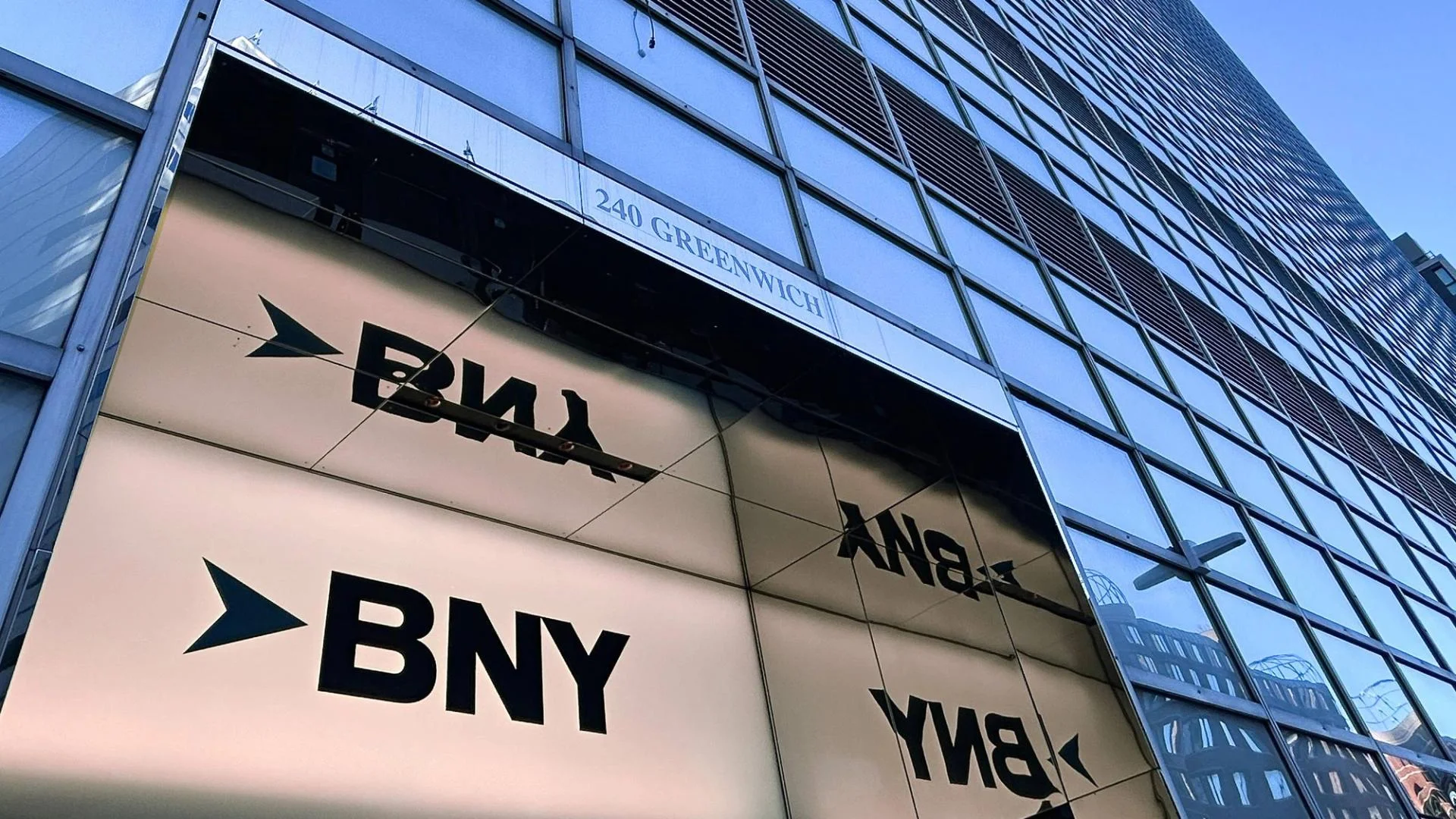



Bank of New York Mellon, the world's largest custodian with $59 trillion in assets under custody and administration, is moving one of its core record-keeping businesses onto blockchain rails, the Financial Times reported Thursday. The bank services about $8.6 trillion in transfer agency assets across 7.6 million accounts and will create a single on-chain ledger of ownership for tokenized funds, cutting out the need for multiple intermediaries.
The first wave of clients includes Baillie Gifford, BlackRock and BNY's own Dreyfus unit. Baillie Gifford, which runs more than $261 billion, will use the service for what the companies describe as the first fully native U.K.-regulated tokenized fund. BlackRock and Dreyfus are expected to follow with planned tokenized products. Carolyn Weinberg, BNY's chief product and innovation officer, said the bank is "modernizing a function that sits behind every single fund transaction by bringing the books and records onchain."
Why it matters
A transfer agent sits behind every mutual fund, ETF and money-market share issued in the U.S. and U.K., recording who owns what. Putting that ledger on chain means the same record that fund admins, custodians and transfer agents currently reconcile across siloed systems becomes a single shared source of truth. It is the unglamorous plumbing underneath the tokenized-fund story that BlackRock, Franklin Templeton and others have been pushing for years, and a custodian of BNY's scale moving it natively is a step-change for institutional adoption.
Market impact
BNY's global head of asset servicing Emily Portney acknowledged that "trillions and trillions of dollars' worth of funds... will continue to exist on traditional rails," and the bank will keep its existing transfer agent running. Smart-contract bugs and bridge exploits remain live risks. But the launch lineup is the headline: BlackRock, Franklin Templeton and the broader tokenized money-market sector just got a settlement layer built by the 242-year-old incumbent custodian, not a crypto-native newcomer. RWA infrastructure is consolidating around the banks, and BNY is planting its flag at the center.

Frequently asked questions
-
What is BNY Mellon moving onto blockchain?
BNY is moving its transfer agency record-keeping business onto blockchain to create a single on-chain ownership ledger for tokenized funds, starting with clients including Baillie Gifford, BlackRock and Dreyfus.
-
How large is BNY's transfer agency book?
BNY services about $8.6 trillion in transfer agency assets across roughly 7.6 million accounts, and holds more than $59 trillion in total assets under custody and administration.
-
Which firms are the first clients?
Baillie Gifford, BlackRock and BNY's own Dreyfus unit. Baillie Gifford will use the service for what the companies describe as the first fully native U.K.-regulated tokenized fund, with BlackRock and Dreyfus planned to follow.
-
Will traditional fund rails go away?
No. BNY said it will keep its existing transfer agent running and expects trillions of dollars in funds to remain on traditional rails for years, citing ongoing cyber and smart-contract risks on chain.
-
Why does this matter for tokenization?
A custodian of BNY's scale natively building the back-office plumbing underneath tokenized funds gives BlackRock, Franklin Templeton and other asset managers a settlement layer from a 242-year-old incumbent rather than a crypto-native startup, accelerating institutional adoption.
 Crypto Rank News
 Crypto News
 CryptoSlate
 CoinTelegraph