








 WatcherGuru

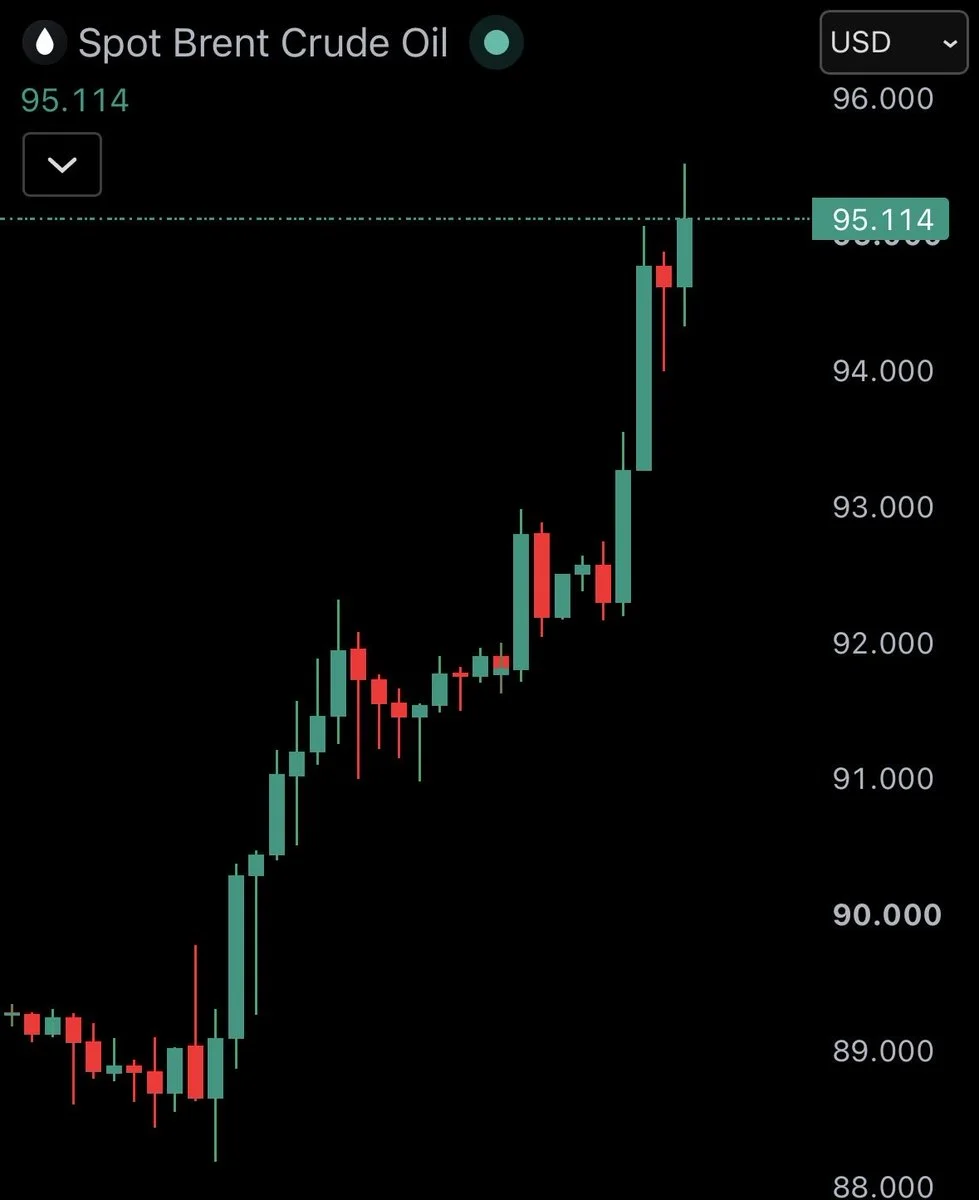
Brent crude oil broke above $95 per barrel, marking its highest level in six weeks and signalling a sharp shift in energy market sentiment. The move ends a period of relative calm in oil prices and puts energy back at the centre of the macro conversation.
Why it matters
A sustained push above $95 complicates the inflation picture for the Federal Reserve and other major central banks. Energy is a direct input into headline CPI, and a renewed oil rally gives policymakers less room to pivot toward rate cuts. Markets had been pricing in a softer energy backdrop as a tailwind for disinflation; that assumption is now under pressure.
Market impact
Energy equities and commodity-linked assets stand to benefit in the near term, while risk assets with rate-sensitive valuations face headwinds if the move forces a repricing of the rate-cut timeline. Traders will be watching whether Brent can hold above $95 on a closing basis, as a confirmed breakout could open the door to a retest of the $100 level that last capped prices in late 2023.
Frequently asked questions
-
Why does Brent crude rising above $95 matter for inflation?
Oil prices feed directly into headline CPI through fuel and transport costs. A sustained move above $95 risks reversing the disinflation progress central banks have relied on, potentially delaying rate cuts.
-
What is the next key technical level traders are watching after this breakout?
The $100 per barrel level is the next major ceiling, which last capped Brent prices in late 2023. A confirmed daily close above $95 would be seen as opening the door to that target.
-
How does a Brent crude rally affect Federal Reserve rate policy?
Higher oil prices complicate the Fed's path to rate cuts by keeping headline inflation elevated. Markets had priced in softer energy as a disinflation tailwind; a sustained rally forces a repricing of the rate-cut timeline.
-
Which asset classes benefit and which face headwinds from oil above $95?
Energy equities and commodity-linked assets stand to gain in the near term. Rate-sensitive growth assets and bonds face headwinds if the move pushes back expectations for central bank easing.
-
Is the surge above $95 considered a structural shift or a positioning-driven spike?
That remains the key question. A failure to hold $95 on a closing basis would suggest the move is positioning-driven, while a confirmed breakout would indicate a more structural shift in supply-demand dynamics.
 CoinTelegraph
 Crypto Capital Venture
 Crypto Rank News
 CoinDesk
 TheBlock