








 CoinDesk



Bitcoin's stabilization since the June 1 selloff stalled below $58,000 has not lifted the rest of the crypto market. Only 29 of the top 100 coins, including the two largest, currently trade above their 50-day simple moving averages, a breadth read that looks decisively bearish even as BTC itself holds the line. The Nasdaq 100 paints a healthier picture: 47 of its constituents sit above the same trend gauge, underscoring how thin crypto participation remains despite the calm headline.
Why it matters
Breadth is the metric that separates a real risk-on bid from a few large-cap names masking weakness underneath. With less than a third of major coins above their 50-day SMA while half the Nasdaq 100 clears that bar, the consolidation looks like BTC-specific rotation rather than a market-wide accumulation phase. Ether has recently outperformed bitcoin, which bulls read as a potential leading indicator that a broader altcoin move is forming, but the SMA breadth print argues the rotation has not yet turned into a tide. Matthew Ryan, head of market strategy at Ebury, framed the next catalyst as the Federal Reserve's Wednesday interest-rate decision, noting that a September hike is now fully priced in by futures, so the bar for a hawkish surprise that meaningfully boosts the dollar is high.
Market impact
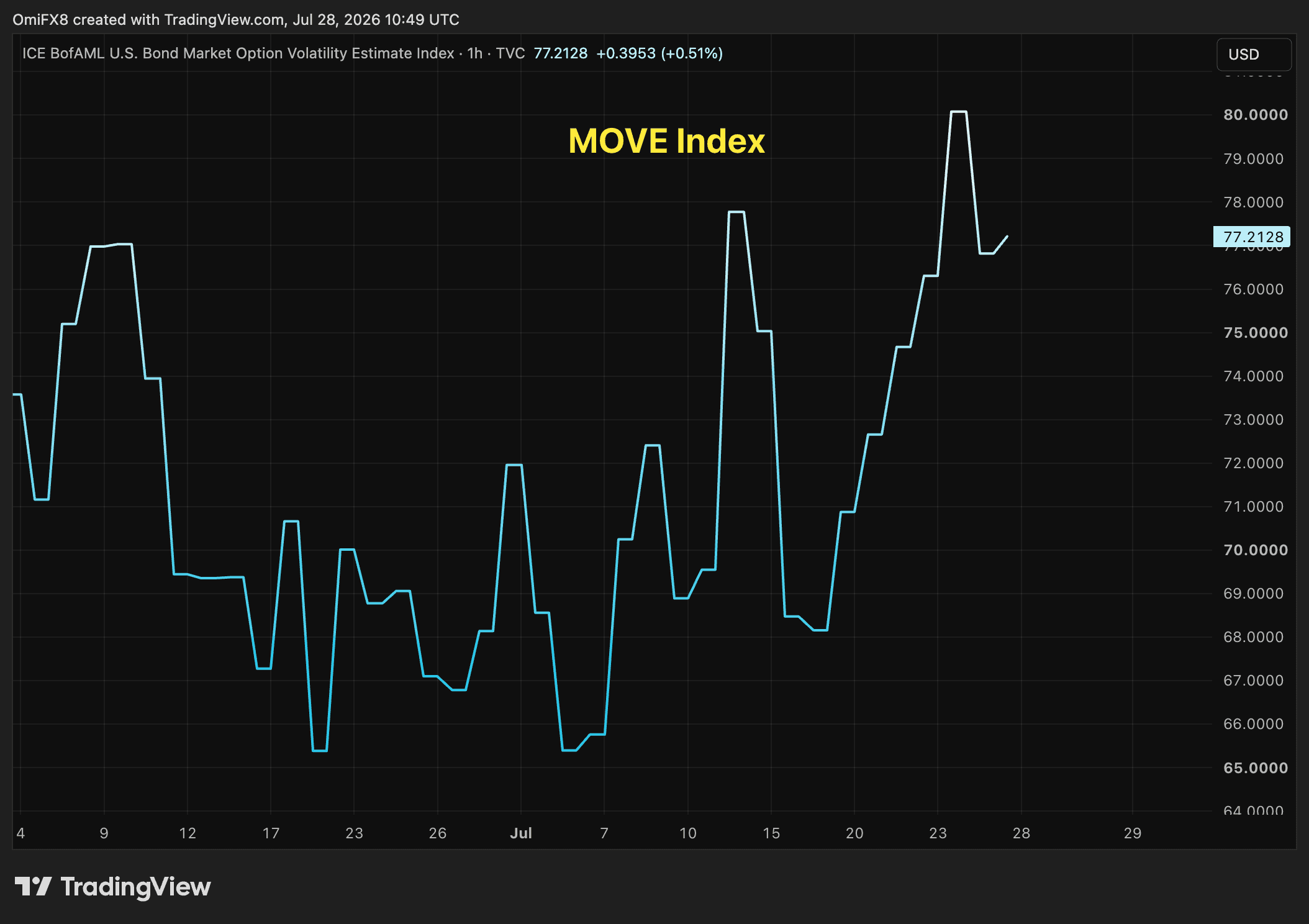
The asymmetry heading into the FOMC is clear: a hawkish surprise would likely hit BTC hardest because BTC and the Dollar Index are inversely correlated, while a dovish lean would do little to lift alts that are already failing breadth. Two more crosscurrents sit on the same tape: the U.S. Senate shelved the CLARITY Act to prioritize a Russia sanctions bill, parking the catalyst institutional buyers had been waiting on as a vote now looks unlikely before the August recess, and the MOVE Index, the bond market's equivalent of the VIX, has jumped from 65 to 77 points, signaling rising Treasury volatility that historically tightens financial conditions and disincentivizes risk-taking. Marex analysts flagged upcoming U.S.


Frequently asked questions
-
What is the 50-day SMA breadth signal showing right now?
Only 29 of the top 100 coins, including the two largest, currently trade above their 50-day simple moving averages, a decisively bearish breadth read. The Nasdaq 100 fares better, with 47 of its constituents above the same trend gauge.
-
Why hasn't Bitcoin's stability lifted altcoins?
Despite BTC holding the line since the June 1 selloff stalled below $58,000, the rotation has not spread: less than a third of major coins sit above their 50-day SMAs, suggesting the consolidation is BTC-specific rather than a market-wide accumulation phase.
-
Could Ether's recent outperformance be a leading indicator for alts?
Bulls read ETH's recent outperformance versus BTC as a possible leading indicator that a broader altcoin move is forming. The breadth print argues the rotation has not yet turned into a tide, but the directional cue is a positive one.
-
What happened to the CLARITY Act and why does it matter?
The U.S. Senate shelved the Digital Asset Market Clarity Act to prioritize a Russia sanctions bill, making a vote unlikely before the August recess. Marex analysts called it the one crypto-specific prop the market had been leaning on for institutional buying.
-
How does the MOVE Index rising affect crypto risk assets?
The MOVE Index, the bond market's equivalent of the VIX, has jumped from 65 to 77 points, signaling rising Treasury volatility. Higher Treasury volatility typically tightens financial conditions and disincentivizes risk-taking, posing a headwind for crypto.
 Whale Alert
 WatcherGuru
 CoinTelegraph
 TheBlock