








 CoinDesk
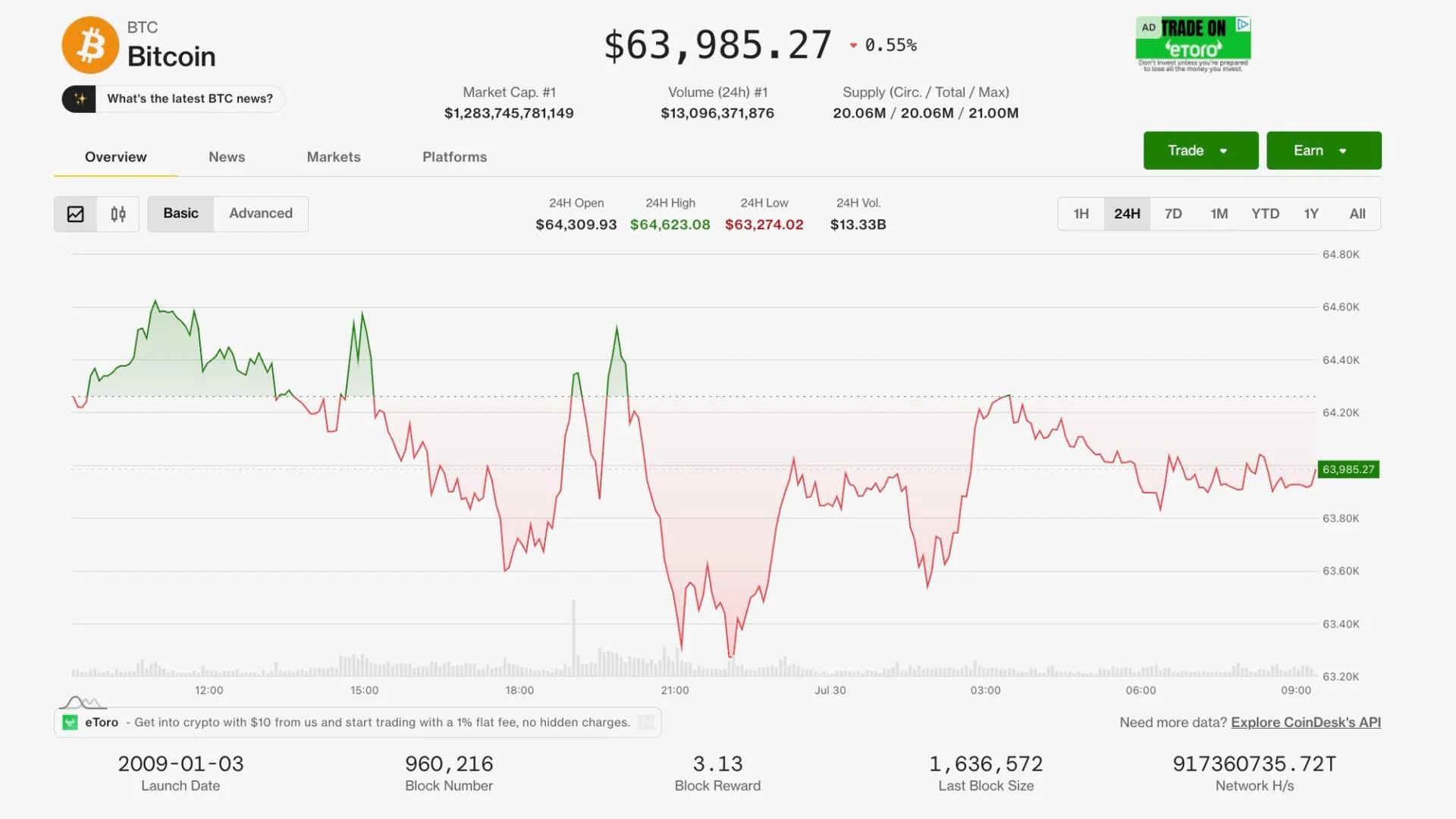



Bitcoin traded little changed at $63,915 on Thursday after a turbulent 24 hours that saw the Federal Reserve hold rates steady while three committee members voted for a hike, Iran launch ballistic missiles at U.S. troops, and oil surge roughly 8% overnight to erase Monday's losses. The Dow fell 2.2% and the Nasdaq slid to a three-month low in response, yet crypto absorbed the cross-asset shock with minimal spot damage. About $286 million in leveraged futures positions were liquidated over the session, with $186 million in longs and $100 million in shorts, a balance that signals a market whipped hard in both directions before settling back near flat.
Why it matters
The Fed dissent is the underappreciated beat. Three members voting to raise is a meaningful hawkish split, and Rabobank expects rate-hike speculation to resurge in coming weeks, which would normally weigh on risk assets. The geopolitical layer compounds it: Iran launched multiple ballistic missiles at U.S. troops, all intercepted, with President Trump vowing to respond hard. That pushed oil up 8% overnight, lifted inflation expectations at the margin, and forced a sharp re-rating in equities. Crypto's failure to break lower despite that two-front shock is what traders are watching: if the bid holds through a hawkish FOMC and an oil-driven risk-off, the structural accumulation thesis is intact.
Market impact
Derivatives positioning has tilted slightly defensive. The crypto futures long/short taker volume ratio now sits at 51% shorts, per CoinGlass, while Bitcoin open interest remains stuck near 750K BTC, unchanged since early June, and Ether OI has pulled back from a six-week high of 14.53M ETH to under 14M. Participation in the bounce is thin. Bitcoin's BVIV dropped below 38%, a level that has historically marked a volatility floor rather than a ceiling, raising the odds of a sharp move once direction reasserts. On Deribit, BTC calls at $70,000 and $75,000 strikes led 24-hour options volume, with Ether's top five traded bets all calls, a positioning skew that is bullish but contingent on rates and oil cooperating.





Frequently asked questions
-
Why did Bitcoin hold steady while stocks fell on Wednesday?
The crypto spot market absorbed a hawkish FOMC split, an 8% oil surge tied to Iran strikes, and a sharp equity selloff with minimal movement, settling near $63,915. Roughly $286M in leveraged futures were liquidated in the process, with longs and shorts both hit.
-
How hawkish was the latest Fed rate decision?
The Fed held rates steady, but three committee members voted to raise, a meaningful hawkish split. Rabobank expects rate-hike speculation to resurge in coming weeks as the dissent reads as a signal of where the committee may be heading.
-
What did Iran do that moved oil and equities?
Iran launched multiple ballistic missiles at U.S. troops hours after the FOMC decision. All were intercepted, but the strike pushed oil up roughly 8% overnight and prompted Trump to vow a hard response, dragging the Dow down 2.2%.
-
What does crypto derivatives positioning look like after the shock?
The crypto futures long/short taker volume ratio flipped to 51% shorts, per CoinGlass. Bitcoin open interest remains stuck near 750K BTC since early June, and Ether OI pulled back from a six-week high of 14.53M ETH to under 14M.
-
What does Bitcoin's BVIV drop below 38% signal?
Bitcoin's 30-day implied volatility index falling back below 38% is nearing levels that have historically served as volatility floors rather than ceilings. That raises the odds of a sharp directional move once price action reasserts, since volatility is mean-reverting.
 CoinTelegraph
 WatcherGuru
 TheBlock
 Benjamin Cowen