








 CoinDesk

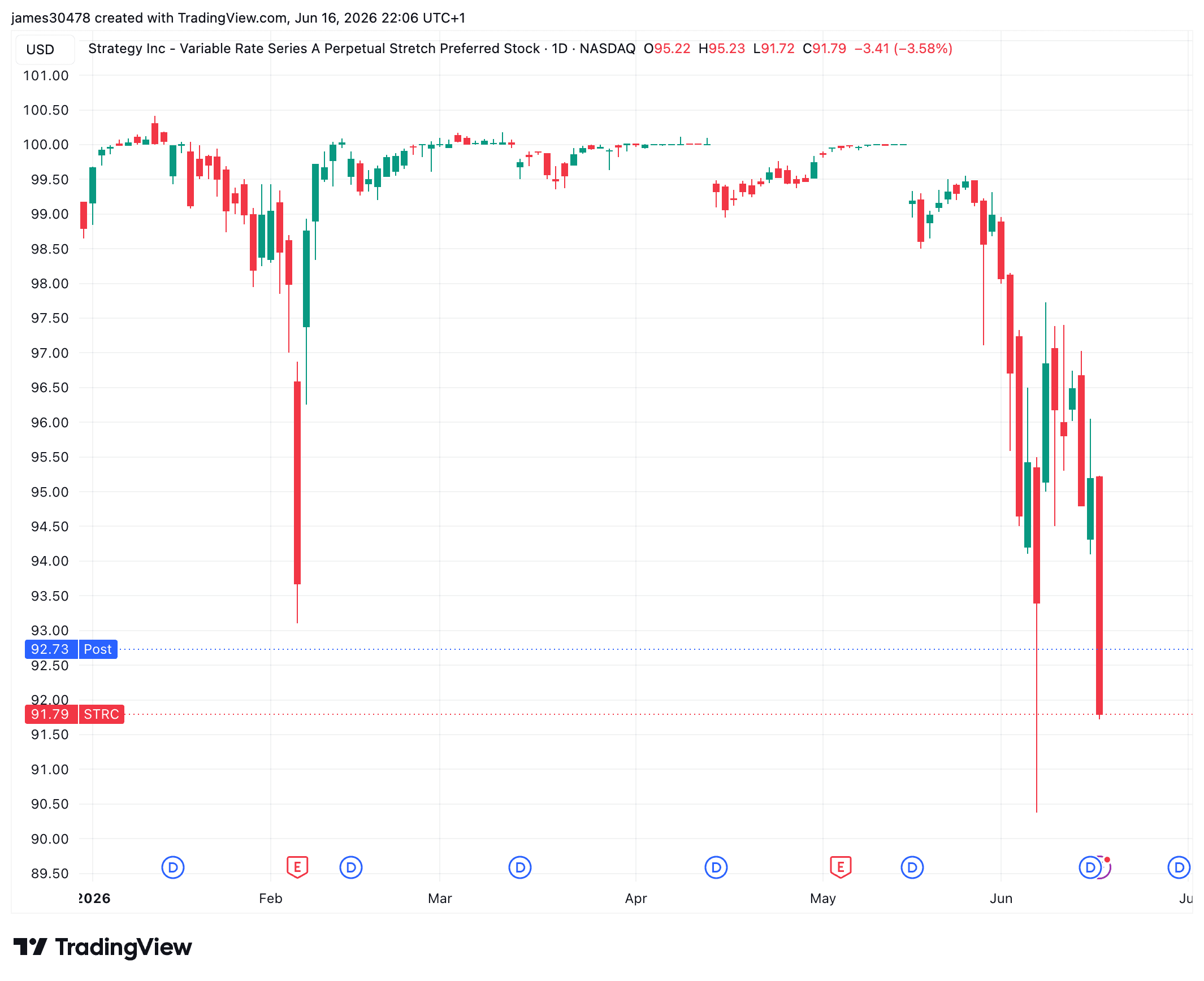


Strategy's dividend-paying preferred stock STRC closed at $91.79 on Tuesday, its third-lowest close since its July 2025 debut, trading nearly 8% below its intended $100 par value. The security has not touched par since its May 15 ex-dividend date, breaking the pattern of recovering toward $100 after each distribution date that defined its first ten months of trading. The only lower prints came in two sessions shortly after launch, when STRC briefly hit $88.60.
The weakness is no longer just a Bitcoin story. STRC trades roughly in line with BTC, which is hovering around $65,000 and sitting about 50% below its October all-time high. But the structural pressure is coming from a new competitor: Strive's SATA, a Bitcoin-backed preferred that pays a ~13% annualized yield on a debt-free capital structure, with daily rather than bi-monthly distributions. SATA still trades close to par at $99.99, leaving the STRC-SATA spread at roughly $8.20 — the widest gap on record. STRC's effective yield has climbed to ~12.53% as the price has fallen, and the market is signalling that the dividend rate likely needs a roughly 100bp bump to restore demand and pull the share price back toward $100.
Why it matters
A preferred stock designed to oscillate around par is failing to do so, and the cause isn't only the underlying asset — it's the comparable. SATA's appeal is structural: no convertible debt ahead of it in the cap stack, daily income, and a higher headline yield. For income-focused buyers comparing the two Bitcoin-treasury preferreds on a yield-and-safety basis, SATA is winning on every column. STRC's monthly cash dividend coverage has also thinned: Strategy used part of its reserves to retire $1.5B of convertibles, taking coverage from up to 24 months to roughly seven months of remaining payouts.
Market impact
The repricing splits Strategy's Bitcoin-credit story into two layers. The equity (MSTR) still trades as a leveraged BTC proxy, but STRC is now being valued as a yield instrument competing for capital with a structurally cleaner peer.

Frequently asked questions
-
Why is Strategy's STRC preferred stock trading below par?
STRC closed at $91.79 on Tuesday, its third-lowest close since launch. The drop is driven by Bitcoin weakness near $65K, thinner dividend coverage after a $1.5B convertible repayment, and aggressive competition from Strive's debt-free SATA preferred.
-
How does Strive's SATA compare to Strategy's STRC?
SATA trades at $99.99 with a ~13% annualised yield and pays daily dividends on a debt-free capital structure. STRC offers ~11.5% with bi-monthly payouts and sits behind convertible debt holders, leaving the spread between the two at a record ~$8.20.
-
How long can Strategy keep paying STRC's dividend?
After using part of its cash reserves to retire $1.5B in convertibles, Strategy has roughly seven months of STRC dividend coverage remaining, down from up to 24 months before the repayment.
-
What yield does STRC need to recover to par?
Based on the current price and dividend rate, STRC's effective yield is ~12.53%. The market is signalling the dividend rate would need to rise by roughly 100 basis points to restore demand and pull the share price back toward $100.
-
What is the difference between STRC and MSTR?
MSTR is Strategy's common equity and trades as a leveraged Bitcoin proxy. STRC is a separate dividend-paying preferred designed to trade near $100 par. The two now respond to different signals — BTC direction for MSTR, yield competition with SATA for STRC.
 WatcherGuru
 WuBlockchain
 CoinTelegraph
 CryptoSlate
 TheBlock
 Lookonchain
 Crypto Rank News