








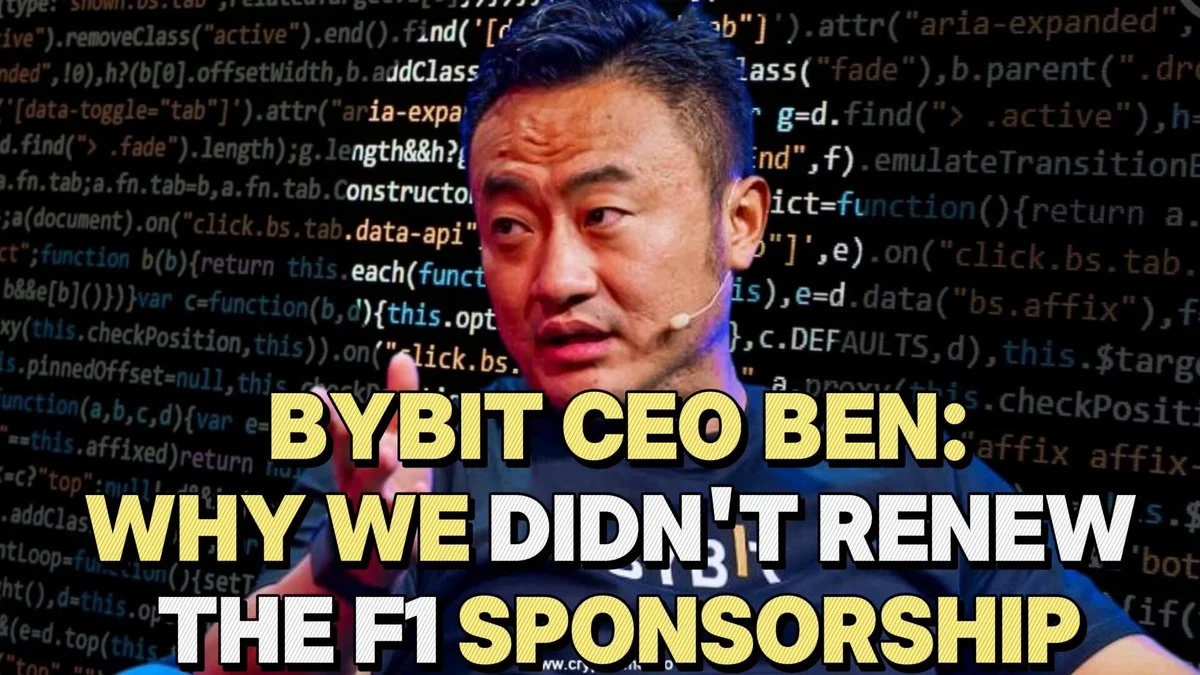

Bybit CEO Ben Zhou said the exchange did not renew its Red Bull Formula 1 sponsorship because the commercial value of the partnership was declining year over year, while the cost of activating the rights kept climbing. In an April 23 interview with When Shift Happens, Zhou noted that running the activation team alone can cost more than the sponsorship fee itself, putting a renewal well out of break-even territory.
Why it matters
F1 crypto sponsorships peaked in the 2021-2022 bull market, when a wave of exchanges — Bybit, Crypto.com, OKX, FTX (now defunct) — paid premium fees to associate with the world's most-watched motorsport series. Zhou's reasoning suggests the math has shifted: rights fees are sticky, activation costs scale with global race calendars, and the brand-return curve flattens once the novelty wears off. A sponsor that cannot convert logo impressions into active users is paying for hospitality as much as marketing.
Market impact
Zhou also flagged an unusual friction point — the same VIP guests were invited year after year, creating "relationship management" pressure and expectations that became a cost of its own. Bybit says it is now scouting branding opportunities with stronger value-per-dollar, likely a more targeted sports or regional play rather than another top-tier global series. The signal for the broader sponsorship market: tier-one deals are being re-evaluated on activation economics, not headline price.
Frequently asked questions
-
Why did Bybit drop its Red Bull F1 sponsorship?
CEO Ben Zhou said the commercial value of F1 sponsorship had been declining year over year, while the cost of activating the rights kept rising. He noted that running the activation team alone could exceed the sponsorship fee itself.
-
How much was Bybit paying for the F1 deal?
The interview did not disclose specific figures. Zhou framed the cost issue in relative terms — that the execution team can cost more than the sponsorship fee, putting renewal out of break-even territory.
-
What other crypto companies have F1 sponsorships?
The 2021-2022 wave of crypto F1 sponsorships included Crypto.com, OKX, and FTX alongside Bybit. FTX collapsed in November 2022 and its deal ended with the company.
-
What kind of sponsorship is Bybit looking for next?
Zhou said Bybit is scouting branding opportunities with better value-per-dollar, suggesting a more targeted regional or sport-specific play rather than another tier-one global series like F1.
-
What does this signal for the broader crypto sponsorship market?
It suggests tier-one sports deals are being re-evaluated on activation economics — the cost of executing global rights — rather than headline logo value. Sponsors are looking harder at user-conversion math.

 CoinTelegraph
 Crypto Capital Venture
 CryptoSlate
 WatcherGuru
 CoinDesk
 TheBlock
 Crypto Rank News
 Crypto News