


 CryptoSlate


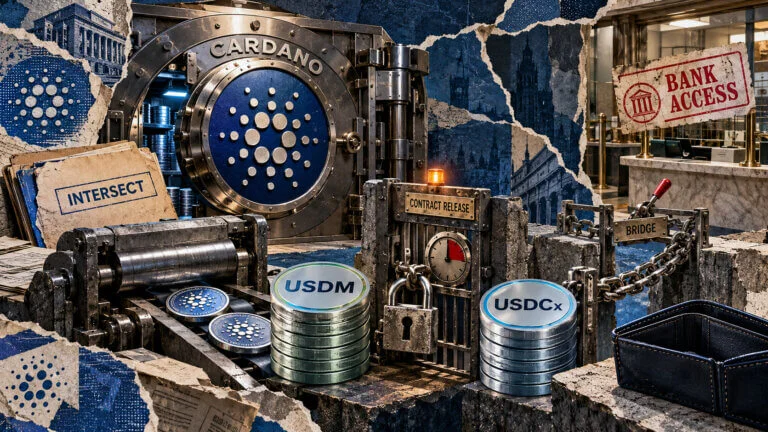
Charles Hoskinson is developing a new programming language for Cardano with Input Output Global engineer Lucas Rosa, focused on intent-based transactions and proof-carrying data using Groth16 proofs. The project has no launch date, while the Leios scalability upgrade is still awaiting deployment.
Cardano's technical ambitions contrast with its $63 million in DeFi deposits, less than $1 million in daily trading volume and about $70 million in stablecoins. Its $ADA market capitalization is about $8.3 billion, but Solana holds roughly $5.9 billion in DeFi deposits and processes more than 90 times Cardano's decentralized exchange volume.
The proposed language could simplify complex financial applications, automated execution and cryptographic verification. Leios targets a 10x to 65x throughput improvement, but the larger test is whether better infrastructure can attract developers, users and liquidity to Cardano.


Frequently asked questions
-
What is Hoskinson's new Cardano programming language designed to do?
It is designed for intent-based transactions and proof-carrying data using Groth16 cryptographic proofs.
-
How large is Cardano's current DeFi footprint?
Cardano's DeFi applications hold about $63 million in deposits, while daily decentralized exchange volume remains below $1 million.
-
How does Cardano compare with Solana in DeFi activity?
Solana holds roughly $5.9 billion in DeFi deposits and processes more than 90 times Cardano's decentralized exchange volume.
-
What is the expected impact of Cardano's Leios upgrade?
Leios targets a 10x to 65x improvement in transaction throughput, but it is still awaiting deployment.
-
Why does liquidity matter for Cardano's adoption?
Limited liquidity can increase slippage, weaken lending demand and make it harder for developers to sustain applications on the network.
 Glassnode
 CoinTelegraph
 WuBlockchain
 TheBlock
 Crypto Rank News
 Lookonchain
 CoinDesk
 Crypto News