








 Crypto News


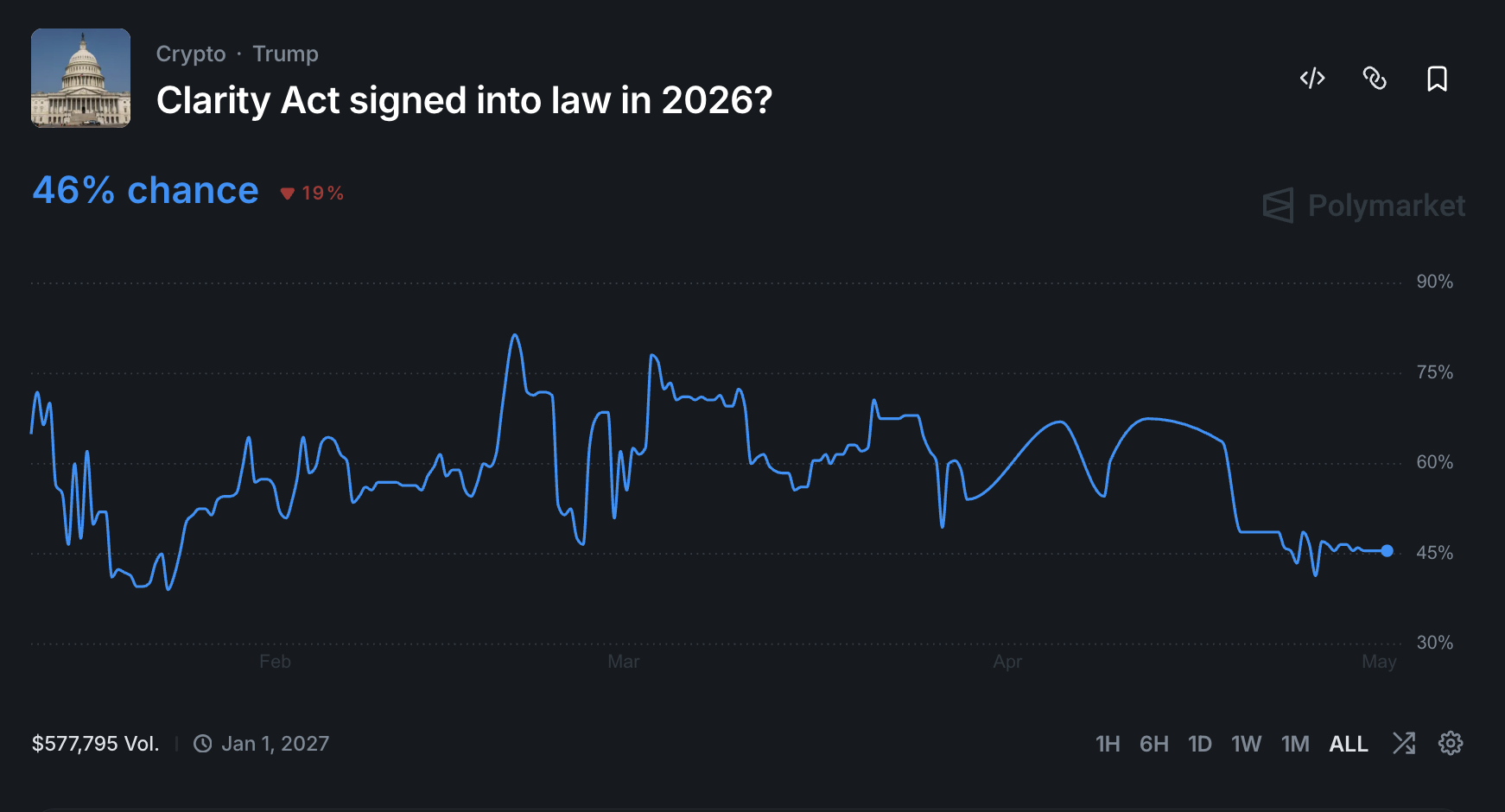
Senate Banking Committee Chairman Tim Scott is pushing the Coinbase-backed Digital Asset Market Clarity Act toward a presidential signature by summer 2026, with committee markup locked in for May and a potential Senate floor vote targeted for June or July. Senator Tom Tillis confirmed the May markup window, and over 100 industry groups have publicly demanded action.
The bill already cleared the House in July 2025 by a 294-134 bipartisan vote, but nearly a year of Senate friction over stablecoin yield rules, DeFi provisions, and ethics language has stalled momentum. Senator Cynthia Lummis now says the bill is "ready" for a hearing, and most of the stablecoin-yield negotiating friction has been resolved ahead of the May committee review.
Why it matters
The Clarity Act's core mechanic is a hard jurisdictional split: digital commodities fall under CFTC authority, while the SEC retains oversight of securities-classified tokens. That division ends the SEC-vs-CFTC turf war that has functioned as a de facto block on institutional adoption of US-domiciled crypto products, and explicitly covers spot trading, custody, DeFi protocols, and non-custodial developers.
Treasury Secretary Scott Bessent, SEC Chair Paul Atkins, and White House crypto adviser Patrick Witt are all publicly backing passage — an unusual degree of executive-branch alignment that earlier crypto bills lacked. The White House's broader legislative posture on crypto signals this is a coordinated policy push, not a standalone Senate exercise. On stablecoins specifically, the bill requires 1:1 backing with high-quality liquid assets and sets a federal floor for state-regulated issuers.
Market impact
Passage compresses the regulatory risk premium currently embedded in US-exposed crypto assets. On-chain data from prior periods of legislative progress showed $USDC minting accelerating 5–10% in anticipation of cleaner on- and off-ramps — institutional positioning begins before the ink is dry.
The downside window is narrow and closing.

Frequently asked questions
-
What does the Clarity Act actually do?
It draws a hard jurisdictional split between the SEC and CFTC over digital assets — digital commodities fall under CFTC authority, securities-classified tokens stay with the SEC. The bill also requires 1:1 stablecoin backing with high-quality liquid assets and sets a federal floor for state-regulated issuers.
-
When could the Clarity Act reach a Senate floor vote?
Senator Tom Tillis confirmed the bill could hit committee markup in May, with a potential Senate floor push by June or July 2026. Senate Banking Chairman Tim Scott is publicly targeting a presidential signature by summer.
-
Why is the SEC/CFTC jurisdictional split the core unlock?
The turf overlap has functioned as a de facto block on institutional adoption of US-domiciled crypto products. Until the boundary is drawn cleanly, banks and corporate treasuries cannot size positions with confidence on spot trading, custody, or DeFi protocols.
-
Which executive-branch figures are backing the bill?
Treasury Secretary Scott Bessent, SEC Chair Paul Atkins, and White House crypto adviser Patrick Witt are all publicly supporting passage. That cross-branch alignment is unusual and gives the bill institutional cover earlier crypto legislation lacked.
-
What happens if the May markup window is missed?
Senator Bernie Moreno warned that missing May could freeze progress for years, not months. Once 2026 midterm election dynamics take over, any bill touching DeFi or stablecoin yields becomes politically radioactive. Polymarket odds for 2026 passage have already slipped from 65% to 46% since January.
 Benjamin Cowen
 WatcherGuru
 CoinTelegraph
 TheBlock
 CryptoSlate
 Altcoin Daily
 WuBlockchain