








 CoinDesk

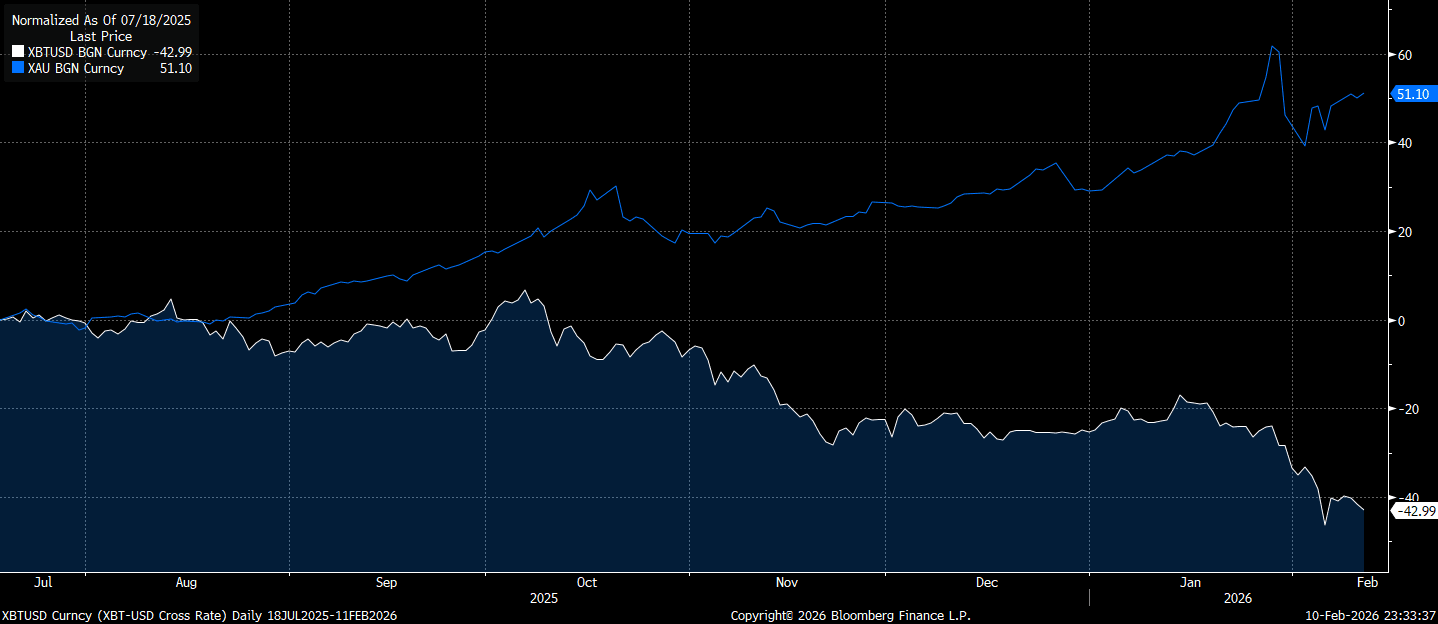
The Guiding and Establishing National Innovation for U.S. Stablecoins (GENIUS) Act, signed into law on July 18, 2025, regulated stablecoins with 100% reserves in U.S. dollars or Treasuries — and in doing so created a government-sanctioned alternative to bitcoin's dominant real-world function as a dollar-access rail in emerging markets. Stablecoin market cap went from roughly $211 billion in January 2025 to over $306 billion by October, up 45%, while monthly issuance doubled from about $6.6 billion pre-GENIUS to over $13 billion in the three months after the Act. Bitcoin fell 43% over the same window. Capital didn't leave crypto — it just stopped needing bitcoin to get where it was going.
Why it matters
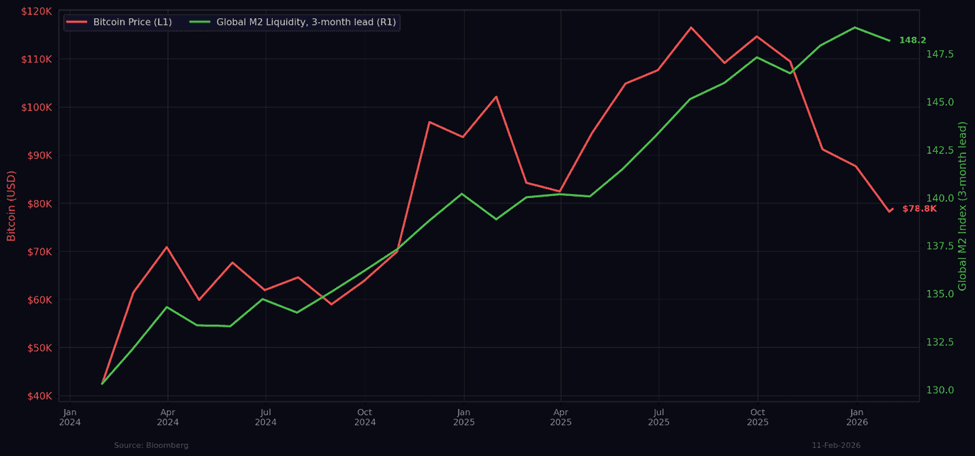
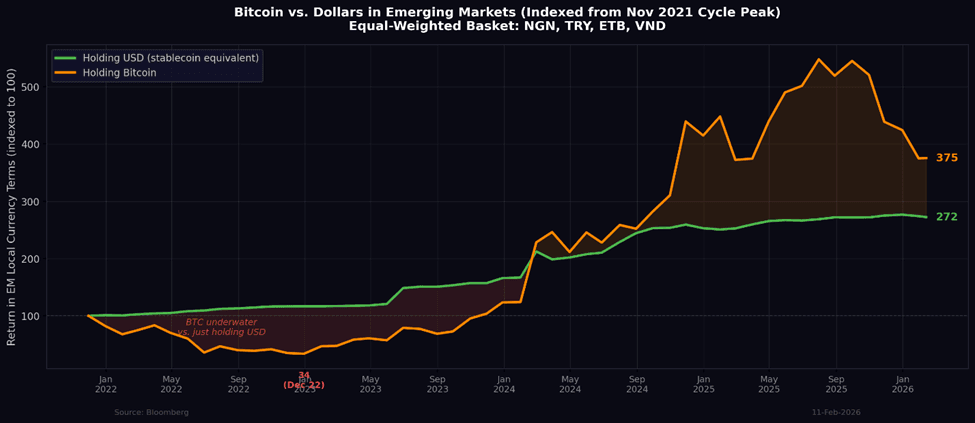
Ravi Tanuku of Natural Capital argues the standard "digital gold, dollar access, speculation" framing of bitcoin misses what actually anchored the asset. The top five crypto-adopting countries — Nigeria, Vietnam, Turkey, Argentina, Ethiopia — share capital controls and currency depreciation against the dollar, not sound-money ideology. That structural bid, not speculative flows, gave bitcoin its floor and its long-running correlation with global M2. With regulated stablecoins now capturing the same currency-depreciation tailwind without bitcoin's 68% annualized volatility and 66% drawdown, that bid is migrating. Gold has outperformed bitcoin by nearly 100% since July 18, 2025 in the same macro environment — the kind of divergence that only makes sense if the market is treating them differently, not cyclically.
Market impact
The cleaner macro test came in late 2025: cyclical reacceleration drove gold, silver and copper to new highs through January 2026, while bitcoin sold off alongside SaaS stocks. By Q4 2025 its quarterly correlation with the IGV ETF hit +0.64, the tightest since the 2022 bear market — bitcoin traded as long-duration growth, not as a monetary hedge. The CLARITY Act, which aims to classify bitcoin as a commodity, is the next inflection: commodity status could open pension and endowment allocation, but the test is whether bitcoin recouples with gold within one to two quarters of passage, or keeps trading with tech. The correlation regime — not the price — is the signal to watch.

Frequently asked questions
-
What did the GENIUS Act actually change for stablecoins?
Signed July 18, 2025, the Act required stablecoins to be backed 100% by U.S. dollars or Treasuries, creating a federally regulated digital dollar rail that competes directly with bitcoin's dollar-access use case in emerging markets.
-
Why has gold outperformed bitcoin since the GENIUS Act passed?
Per the source, gold has outperformed bitcoin by nearly 100% since July 18, 2025 in the same macro environment. The argument is that regulated stablecoins absorbed the dollar-access demand that previously anchored bitcoin, leaving it trading more like long-duration growth than a monetary hedge.
-
How much did the stablecoin market grow after the GENIUS Act?
Stablecoin market cap rose from roughly $211 billion in January 2025 to over $306 billion by October, up 45%. Monthly issuance doubled from about $6.6 billion pre-Act to over $13 billion in the three months after it passed.
-
What is the CLARITY Act and why does it matter for bitcoin?
The CLARITY Act aims to classify bitcoin as a commodity, which would resolve the regulatory limbo that keeps pension funds and endowments from treating it like gold or silver. The test is whether bitcoin recouples with gold within one to two quarters of passage.
-
What correlation is the market watching as the signal?
By Q4 2025 bitcoin's quarterly correlation with the IGV (large-cap SaaS) ETF hit +0.64, the tightest since the 2022 bear market. The thesis is that whether bitcoin trades with gold or with long-duration tech after CLARITY will determine whether the digital-gold thesis still holds.
 CoinTelegraph
 CryptoSlate
 WatcherGuru
 Altcoin Daily