








 CoinDesk
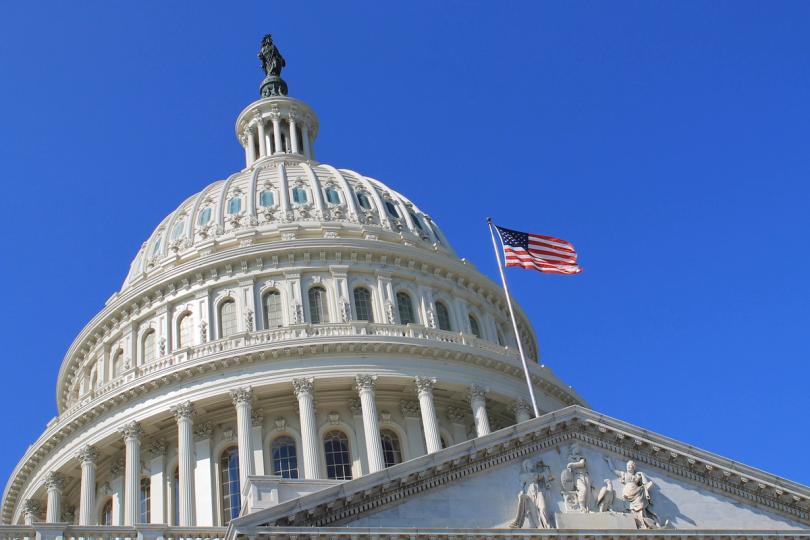
The U.S. Senate is set to mark up the Clarity Act later today, the most consequential digital-asset regulatory push of the year, and bitcoin barely blinked. BTC is holding below $80,000, options markets are pricing historically low implied volatility, and traders are treating the bill as a non-event even though more than 100 proposed amendments — including a ban on Federal Reserve master accounts for crypto firms — were submitted ahead of Wednesday's deadline.
The bill's draft, released May 11, would ban interest on stablecoin balances, impose penalties of up to $5 million for violations, and add the Treasury as a rule-making authority alongside the SEC and CFTC. Noelle Acheson, author of Crypto is Macro Now, warned that while progress is positive, "there is still much that could go wrong tomorrow" — the committee needs bipartisan support to move forward, and Polymarket puts passage this year at roughly 60%.
Why it matters
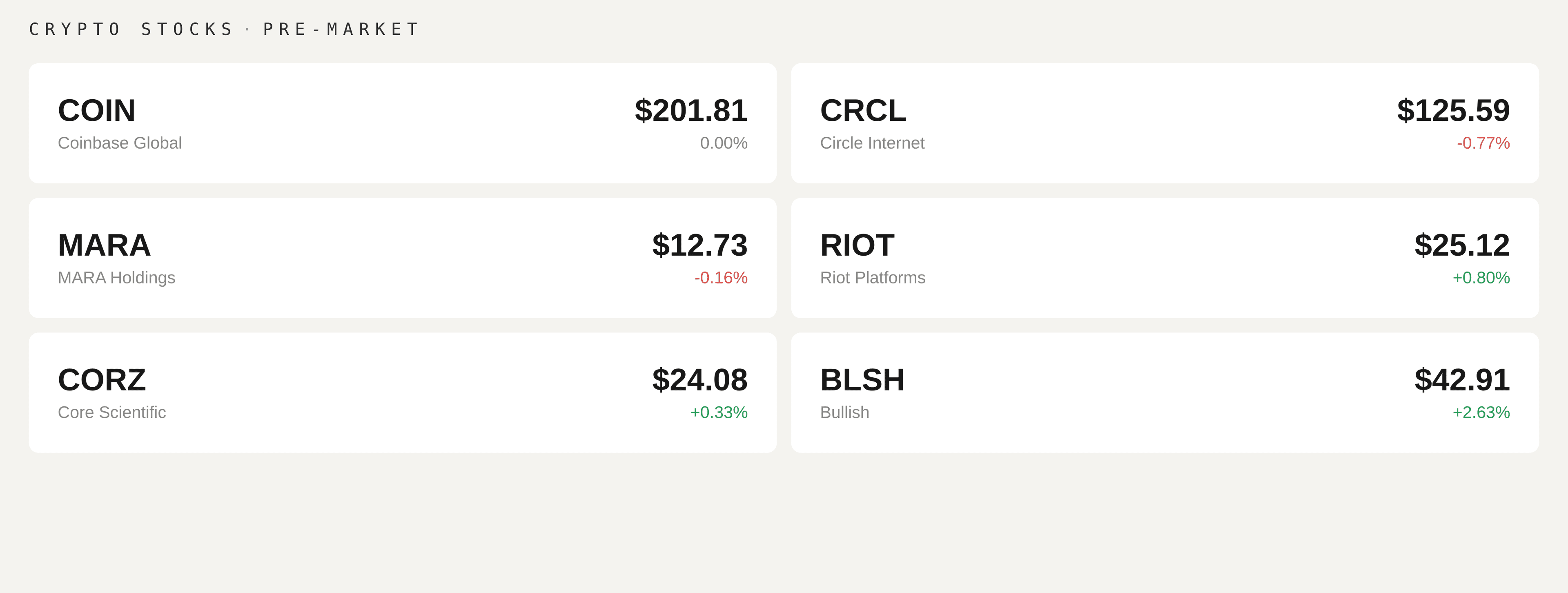
The markup is the first real stress test for comprehensive U.S. digital-asset legislation, and the market's complacency is itself a story. Andrew Melville and Thahbib Rahman of Block Scholes noted that short-dated BTC options are trading close to year-to-date lows with implied volatility at 30%, and there is "no obvious event risk priced-in by either BTC or altcoin options ahead of the Senate CLARITY Act markup." The one pocket of positioning is in Coinbase (COIN), where the May-15 contract carries an embedded implied-vol premium — traders are pricing the bill as a catalyst for companies that benefit from regulatory clarity, not for the underlying asset.
Can-Luca Köymen, investment strategist at Sygnum Bank, framed the longer-term thesis: "As the framework moves toward passage, BTC's case as a strategic allocation with unique diversification benefits in a balanced portfolio only strengthens."
Market impact
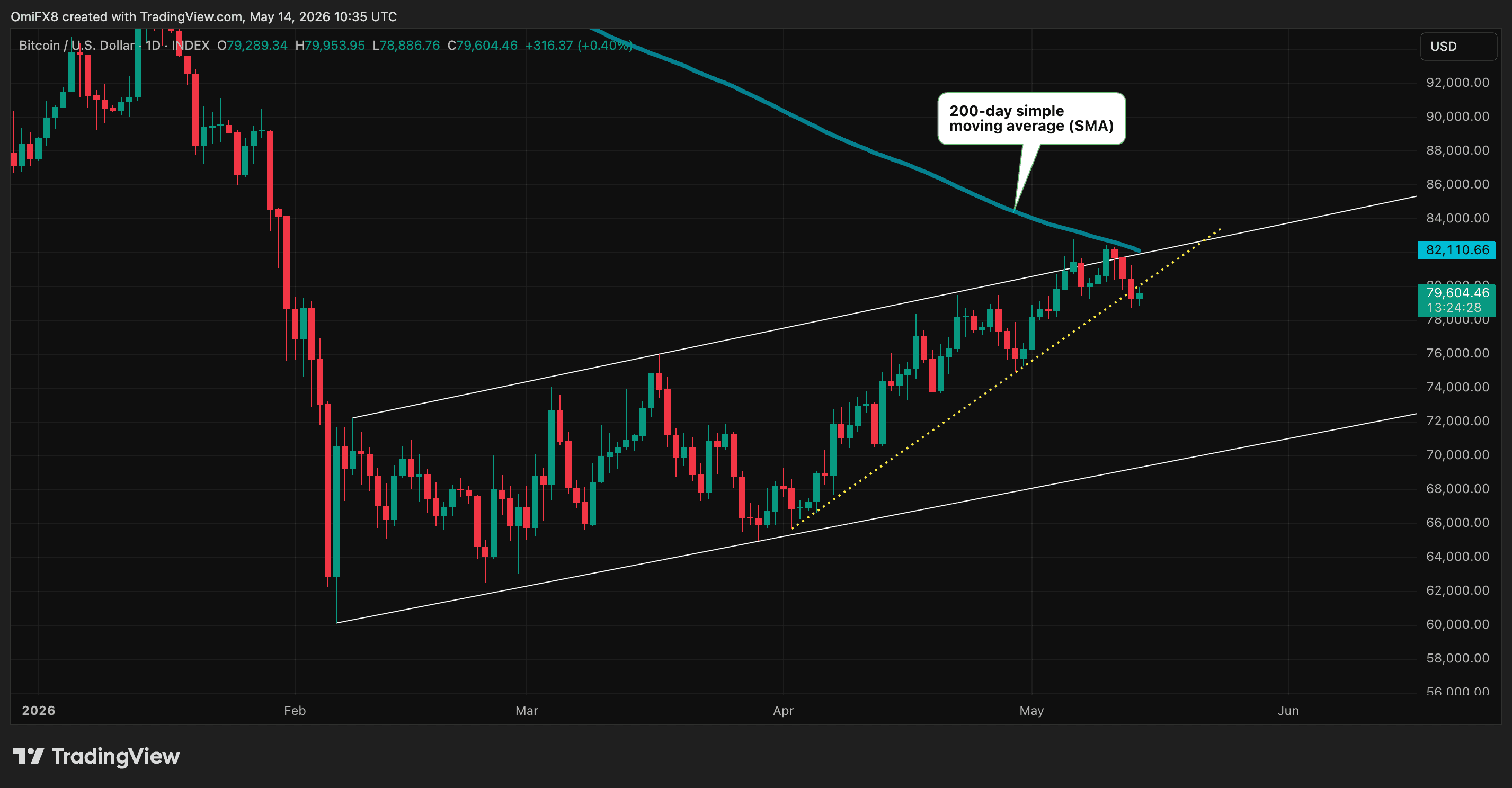
Technical signals suggest bitcoin's recovery from February lows has stalled. The price has backed away from the confluence of the 200-day simple moving average — sitting just above $82,000 — and the upper boundary of the rising channel that defined the rebound.

Frequently asked questions
-
What is the Clarity Act and what would it do?
The U.S. Clarity Act is a sweeping digital-asset bill set for Senate markup on May 14, 2026. The May 11 draft would ban interest on stablecoin balances, impose penalties up to $5 million, and add the Treasury as a rule-making authority alongside the SEC and CFTC.
-
Why is bitcoin not reacting to the Clarity Act markup?
Block Scholes notes that short-dated BTC options are trading at a year-to-date-low implied volatility of 30%, with no event risk priced in for the markup. Traders appear to view the legislative process as already anticipated rather than binary.
-
What are the biggest risks to the Clarity Act passing?
Noelle Acheson warned that "there is still much that could go wrong tomorrow." The bill needs bipartisan committee support to advance, and Polymarket puts the chance of passage this year at roughly 60% — meaning failure or significant amendment could move that number sharply.
-
Where is bitcoin's key technical level right now?
The 200-day simple moving average sits just above $82,000 and is the level to beat to revive the bullish setup. A failure there raises the risk of momentum-driven selling toward $75,000 or lower, with the short-term uptrend from April's lows already pierced.
-
What is the Coinbase (COIN) options market signaling?
Block Scholes flagged an embedded implied-vol premium in the COIN May-15 contract, which covers the markup date. Traders are pricing the Clarity Act as a catalyst for companies that benefit from regulatory clarity, but not for BTC itself.
 WatcherGuru
 Crypto News
 Benjamin Cowen
 CoinTelegraph
 Crypto Capital Venture
 CryptoSlate