








 CryptoSlate
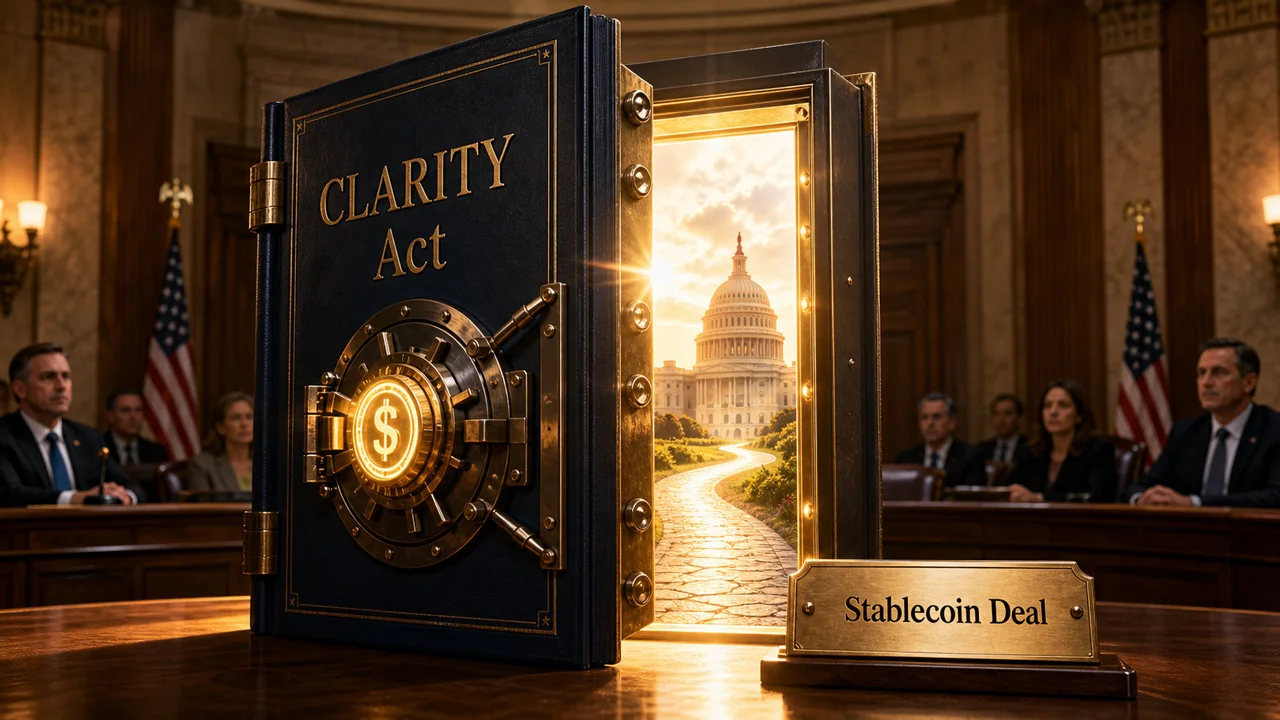
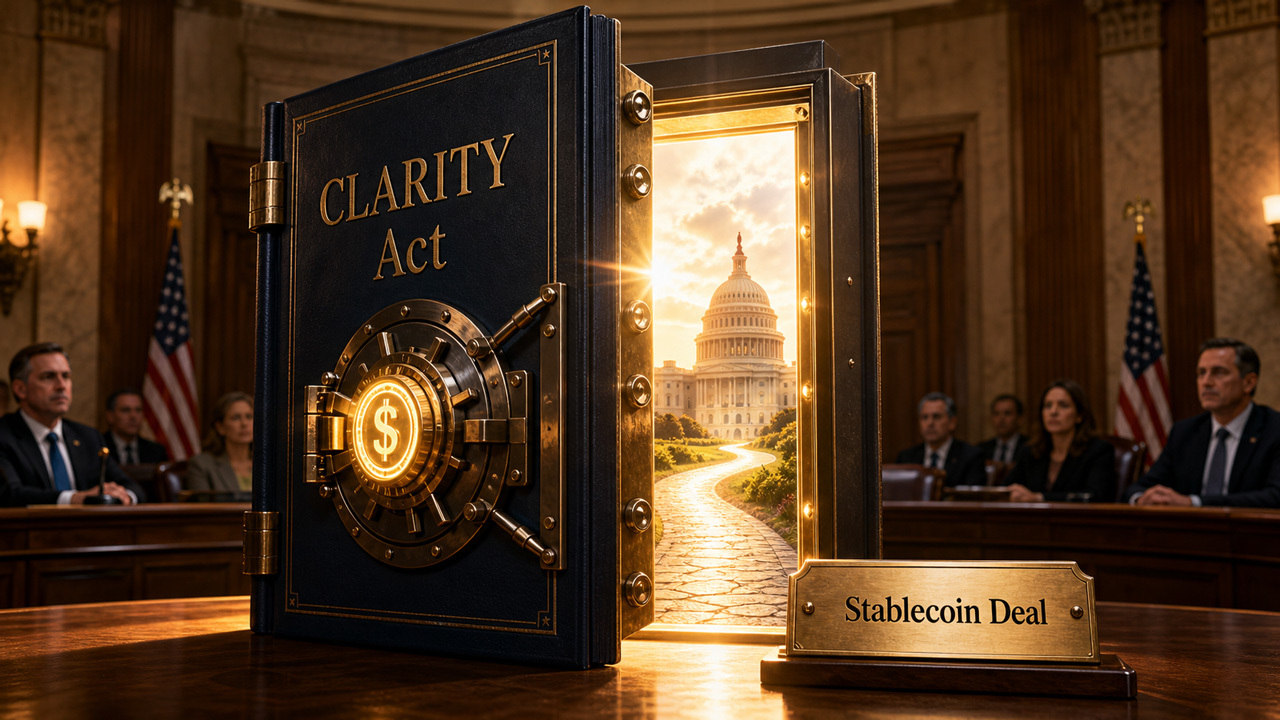

Senate Banking Committee negotiators Sens. Thom Tillis and Angela Alsobrooks released compromise language on stablecoin rewards, opening a narrow window for the committee to take up the Digital Asset Market Clarity Act — the CLARITY Act — as soon as the week of May 11. The text preserves a prohibition on rewards economically or functionally equivalent to bank-deposit interest while still allowing Americans to earn incentives tied to actual use of crypto platforms and networks.
Galaxy Digital head of research Alex Thorn called the publication of the language a positive signal that a markup can be scheduled soon, even though the committee had not posted a May markup to its public calendar as of Monday. Coinbase chief policy officer Faryar Shirzad framed the draft as a win for the industry: "We protected what matters – the ability for Americans to earn rewards, based on real usage of crypto platforms and networks."
Why it matters
The bill had been stalled since January over the rewards question, with banks arguing that yield-like products could pull deposits from regulated lenders and crypto firms countering that a broad ban would shield banks from competition. The new draft brokers that fight by giving banks stronger language against yield-equivalent products while directing regulators to write disclosure rules and a list of permitted reward activities. Coinbase, one of the loudest opponents of the January text, has now reversed — removing a visible industry obstacle even if Democratic support is not guaranteed.
The legislative sequence is what turns a committee vote into a clock problem. After a Senate Banking markup, the bill still needs full Senate passage, reconciliation with the Senate Agriculture Committee, alignment with the House-passed version, and presidential approval. Sen. Cynthia Lummis has warned that failure this year could push comprehensive market-structure legislation into 2030 if midterm results shift committee control in 2027.
Market impact
The banking lobby is not standing down. The American Bankers Association and 52 state bankers' associations submitted a joint letter to the Office of the Comptroller of the Currency pressing for an airtight prohibition on stablecoin yield under the earlier GENIUS Act, including an expansion of the "related third party" definition to capture distribution partners and exchanges. That dual-track pressure — Congress negotiating the bill while regulators tighten the rule underneath it — is the policy fight most likely to bleed into market-structure negotiations.

Frequently asked questions
-
What is the CLARITY Act and what would it do?
The Digital Asset Market Clarity Act defines which regulator — the SEC or CFTC — oversees which crypto market participants and activities. It is the main US market-structure bill for digital assets and has been stalled in the Senate Banking Committee since January over stablecoin rewards.
-
Why did stablecoin rewards become the central fight?
Banks argued stablecoin rewards function like deposit interest and would pull funding from regulated lenders. Crypto firms said a broad ban would protect banks from competition and block ordinary customer incentives tied to payments, loyalty programs, and platform use.
-
What did the Tillis-Alsobrooks compromise actually change?
The draft keeps a prohibition on rewards economically or functionally equivalent to bank-deposit interest, but allows Americans to earn incentives tied to actual use of crypto platforms and networks. It also directs regulators to write disclosure rules and a list of permitted reward activities.
-
Why is the week of May 11 being treated as a deadline?
A markup during that week would leave a narrow path to Senate floor consideration in late May or June. A slip past mid-May pushes the bill into the August recess and the midterm campaign calendar, when the House-Senate reconciliation becomes much harder to finish.
-
What happens to the bill if Congress misses this window?
Sen. Cynthia Lummis has warned that failure to pass the bill this year could push comprehensive market-structure legislation into 2030, particularly if midterm results shift committee control in 2027 or if the election calendar crowds out floor time.
 WuBlockchain
 CoinDesk
 CoinTelegraph
 WatcherGuru