








 WatcherGuru
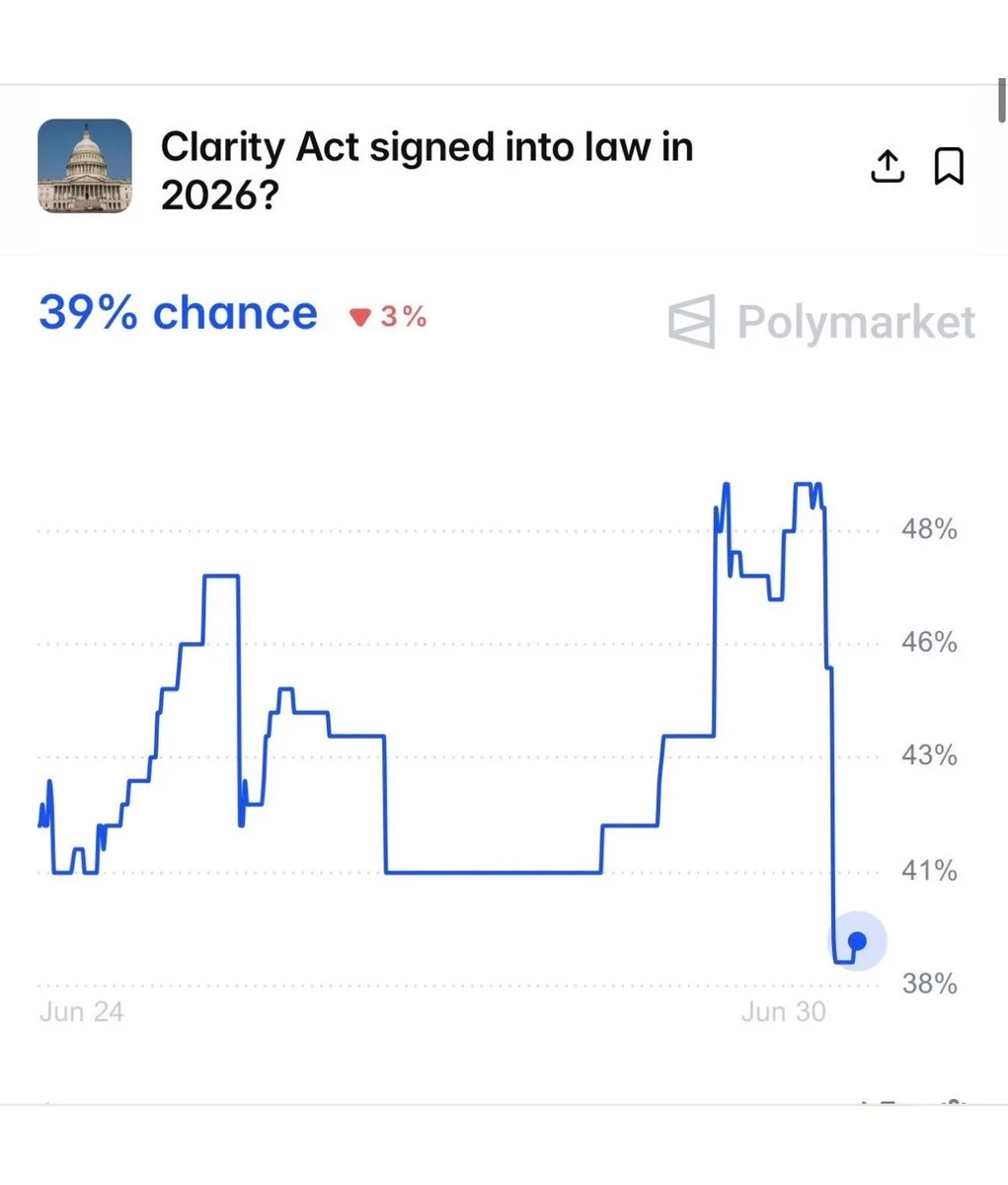
The Crypto Clarity Act, the centerpiece US digital-asset market-structure bill of 2026, is no longer projected to reach President Trump's desk before year-end, according to the latest whip count. The bill would have formally split oversight of digital assets between the SEC and the CFTC and clarified the path for token issuers, exchanges, and custodians operating in the US.
Why it matters
The bill had been the single biggest near-term regulatory catalyst the US crypto market was positioning around. Without a clean rule book, spot crypto ETFs, stablecoin issuer registrations, and exchange-side disclosures remain stuck in a case-by-case regime that the SEC and CFTC have run by enforcement for the last three years. The slippage is bearish for any issuer, exchange, or ETF sponsor that had been banking on a 2026 compliance window, and it pushes the timing question into an election-year Senate calendar that is unlikely to clear it any faster.
Market impact
Spot BTC and ETH ETF issuers now face another quarter of operating under interim guidance rather than a finalized framework, which keeps the compliance drag on new product launches in place. Token issuers that had been queuing to register under the Clarity regime are likely to wait rather than file into an uncertain regime, and the CFTC's spot-margin authority over non-security tokens stays unresolved. Watch the Senate Agriculture Committee markup schedule over the next four weeks; that is the procedural gateway the bill would have to clear before any floor vote is even possible.


Frequently asked questions
-
What would the Crypto Clarity Act have done?
It would have formally split oversight of digital assets between the SEC and the CFTC, set a clear path for token issuers, exchanges, and custodians, and given spot crypto ETF sponsors a finalized compliance regime to operate under.
-
Why does the slippage matter for spot BTC and ETH ETFs?
Without a finalized framework, existing spot ETF issuers keep operating under interim guidance for another quarter, and any new product launches face the same compliance drag they have been navigating since launch.
-
Does this change SEC or CFTC enforcement posture?
No. Both agencies continue to operate under the case-by-case enforcement regime that has defined US crypto oversight for the last three years, since Clarity was the legislation that was supposed to replace it.
-
What is the procedural path left for the bill this year?
The Senate Agriculture Committee markup over the next four weeks is the only realistic gate. Without a committee vote, there is no path to a floor vote before the calendar closes on the 2026 session.
-
What is the next catalyst to watch?
The Senate Agriculture Committee markup schedule is the immediate one. Beyond that, any movement of standalone stablecoin or market-structure language attached to a must-pass vehicle is the fallback the industry is likely to track.
 WuBlockchain
 CryptoSlate
 Altcoin Daily
 CoinDesk
 CoinTelegraph
 Crypto News