








 Lookonchain
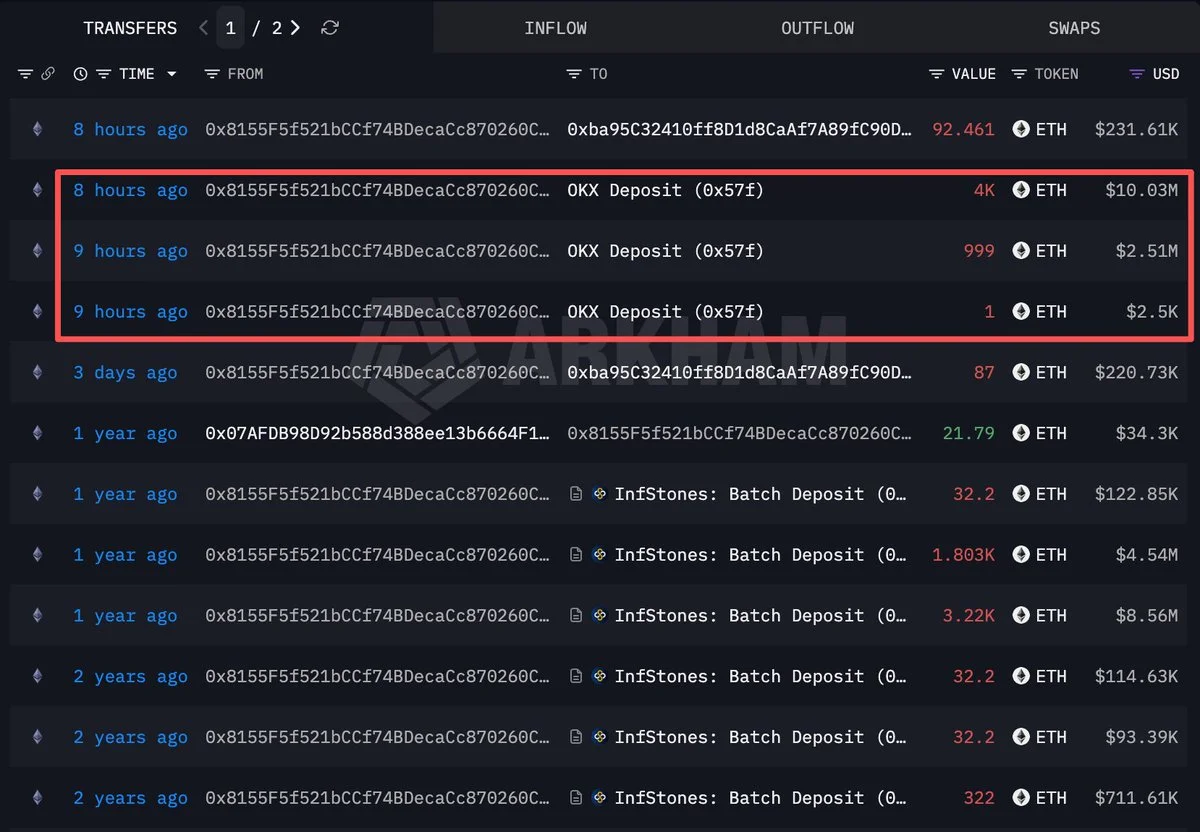
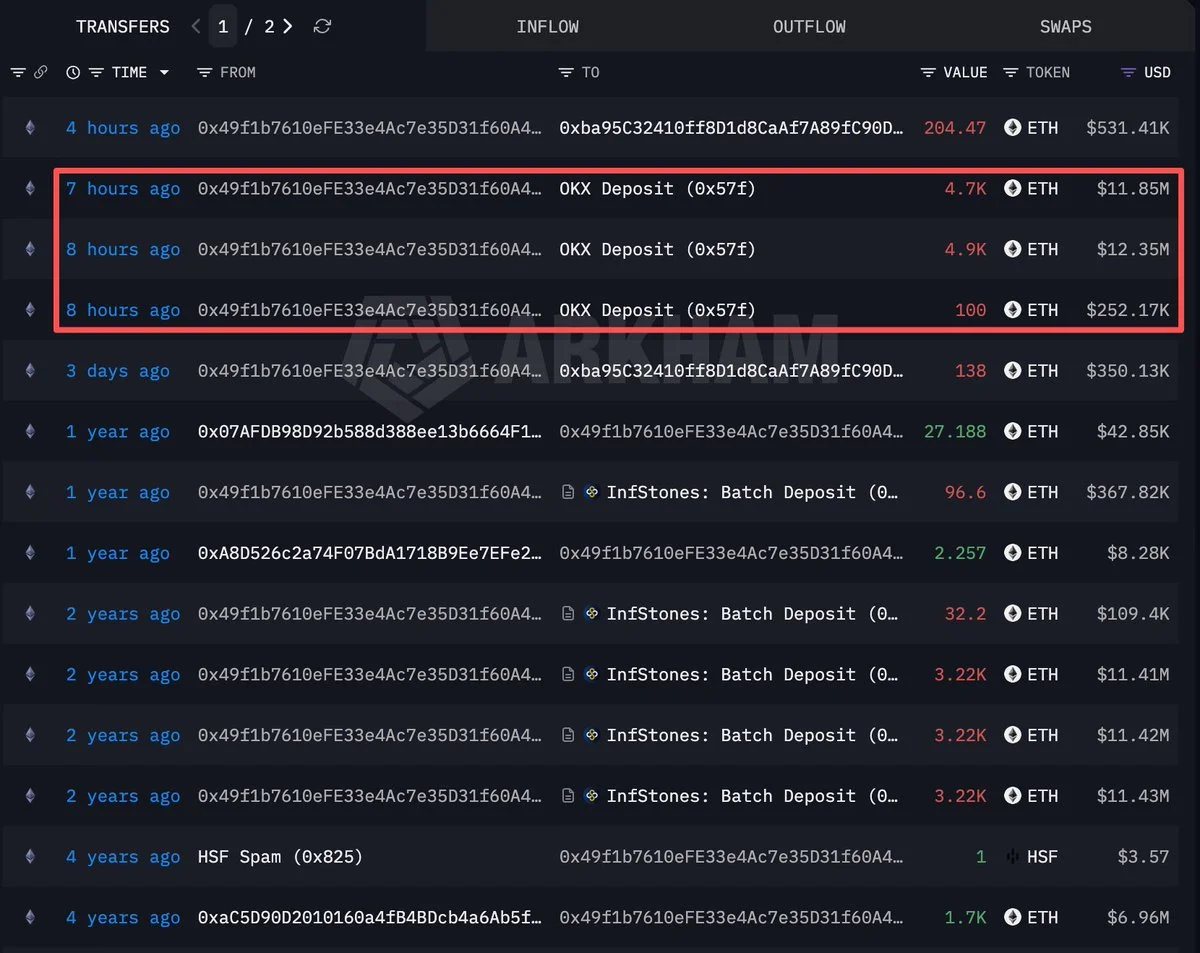
Two wallets that had been dormant for over a year deposited 14,700 ETH ($36.94M) into OKX over a nine-hour window on Friday, blockchain data shows. On-chain analysts have flagged the two addresses as potentially belonging to the same whale, based on the timing and the synchronized move after extended inactivity.
Why it matters
Dormant-wallet deposits landing on a centralized exchange are a classic precursor signal: holders returning from long cold storage to an exchange are typically positioning for one of three outcomes, OTC sale, market sale, or a swap into another asset via the venue's rails. A year-plus dormancy adds weight to the read, since the wallets ignored the prior ETH rally before choosing to move now.
Market impact
The $36.94M move is mid-sized by whale standards and unlikely to move spot ETH on its own, but the exchange destination (a top-five CEX by volume) and the synchronized timing across two addresses are what analysts will be watching for follow-through. A return to cold storage would neutralize the signal; further deposits to OKX or any other centralized venue would confirm distribution intent.

Frequently asked questions
-
How much ETH was deposited into OKX?
Two wallets deposited a combined 14,700 ETH, worth about $36.94 million at the time of the move.
-
Why are these deposits considered notable?
The two wallets had been dormant for over a year before the synchronized deposit, and on-chain analysts flagged them as potentially belonging to the same whale.
-
What could the whale be planning to do?
Deposits from long-dormant wallets to a centralized exchange typically precede OTC sale, market sale, or a swap into another asset.
-
Will this move the price of ETH?
A $36.94M move is mid-sized by whale standards and unlikely to move spot ETH on its own, though the exchange destination matters for sentiment.
-
What should traders watch next?
Follow-up deposits to OKX or another CEX would confirm distribution intent; a return to cold storage would neutralize the signal.
 WatcherGuru
 CoinDesk
 WuBlockchain
 CryptoSlate
 TheBlock
 Crypto Capital Venture