








 CryptoSlate
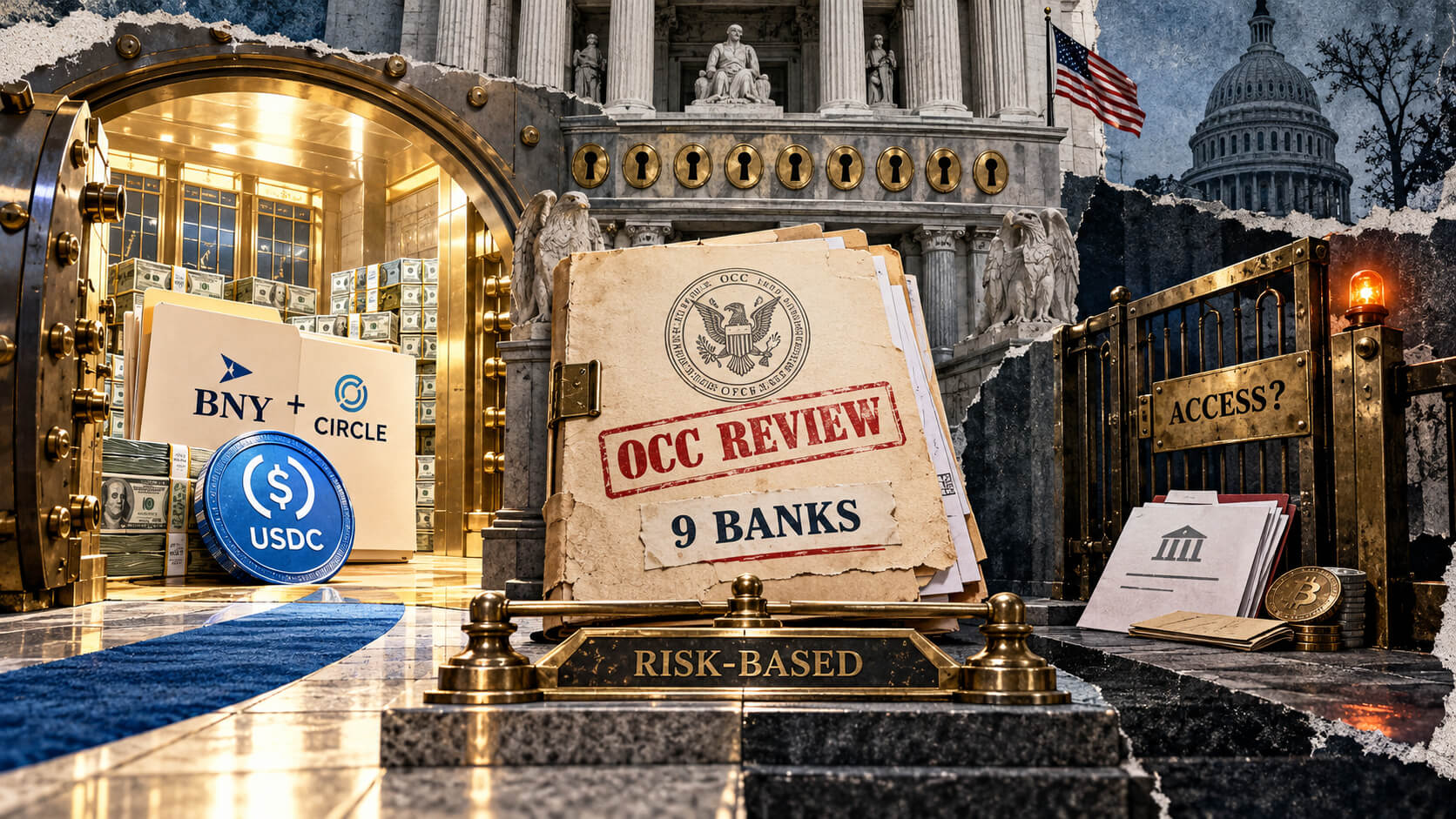


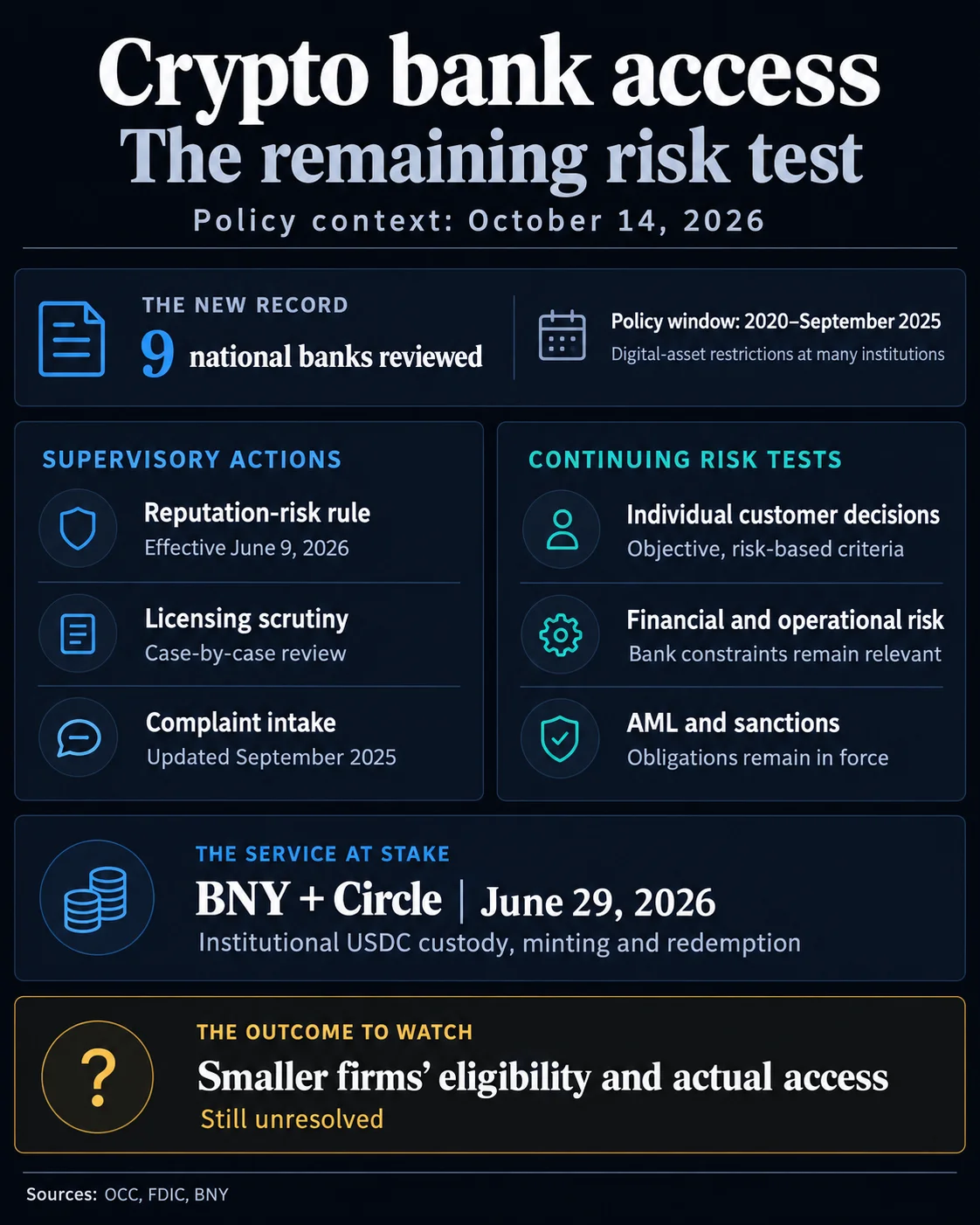
The OCC’s Oct. 14 findings identify historical restrictions on digital-asset businesses at many of the nine largest national banks it supervises. The review covers policies from 2020 through September 2025 and draws on nearly 100,000 complaints and about 50,000 documents totaling roughly 420,000 pages. Comptroller Jonathan Gould says banks can still decline individual customers using objective, risk-based criteria.
Why it matters
The policy line is between a restriction grounded in a bank’s financial, operational or compliance risks and exclusion based on a business being unpopular. The OCC and FDIC’s reputation-risk rule, effective June 9, limits supervisory pressure based on public-perception concerns, while preserving anti-money-laundering enforcement and sanctions obligations. The rule also bars supervisors from using AML concerns as a pretext for reputation-risk supervision.
That does not guarantee crypto firms a bank account. The OCC says restrictions ranged from categorical prohibitions to additional reviews and approvals, and individual refusals remain case-specific. Licensing reviews, Community Reinvestment Act ratings and customer complaints are among the tools the agency can use to examine banks’ practices.
Market impact
BNY’s institutional USDC service illustrates the banking functions at stake: eligible clients can hold USDC in BNY custody and instruct Circle through BNY to mint USDC from dollars or redeem it for dollars. The offering connects custody with stablecoin issuance and redemption, but does not settle whether smaller issuers or exchanges will qualify for comparable access.
The practical test is whether OCC scrutiny produces usable services for more crypto businesses while banks continue to assess financial, operational, AML and sanctions risks. The agency says further regulatory and supervisory changes remain under consideration.

Frequently asked questions
-
What period do the OCC’s findings cover?
The findings cover bank policies from 2020 through September 2025 and examine digital-asset restrictions at many of the nine largest national banks supervised by the OCC.
-
Does the OCC’s approach require banks to serve every crypto business?
No. Banks may decline individual customers using objective, risk-based criteria, and eligibility remains a case-by-case decision.
-
What does the reputation-risk rule change for bank supervision?
The OCC and FDIC rule limits supervisory pressure based on public-perception concerns. It preserves AML enforcement and sanctions obligations and bars using AML concerns as a pretext for reputation-risk supervision.
-
How does BNY’s USDC service work for institutional clients?
Eligible clients can hold USDC in BNY custody and instruct Circle through BNY to mint USDC from dollars or redeem it for dollars.
-
What remains unresolved for smaller crypto companies?
Whether smaller issuers and exchanges will qualify for services comparable to BNY’s institutional USDC custody and minting or redemption arrangements remains unresolved.
 WuBlockchain
 WatcherGuru
 CoinDesk
 CoinTelegraph
 Benjamin Cowen
 Crypto News