








 CoinDesk
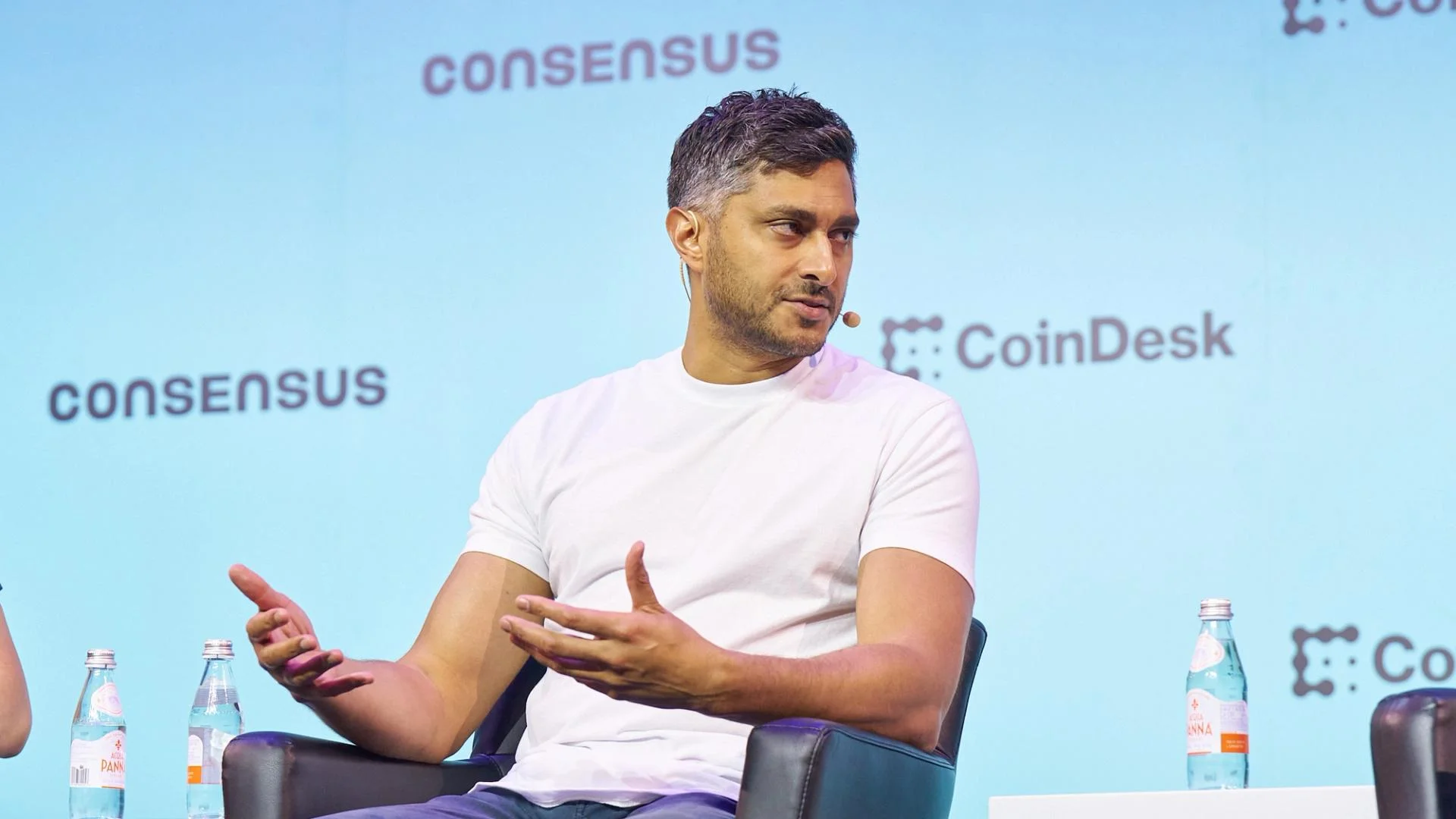
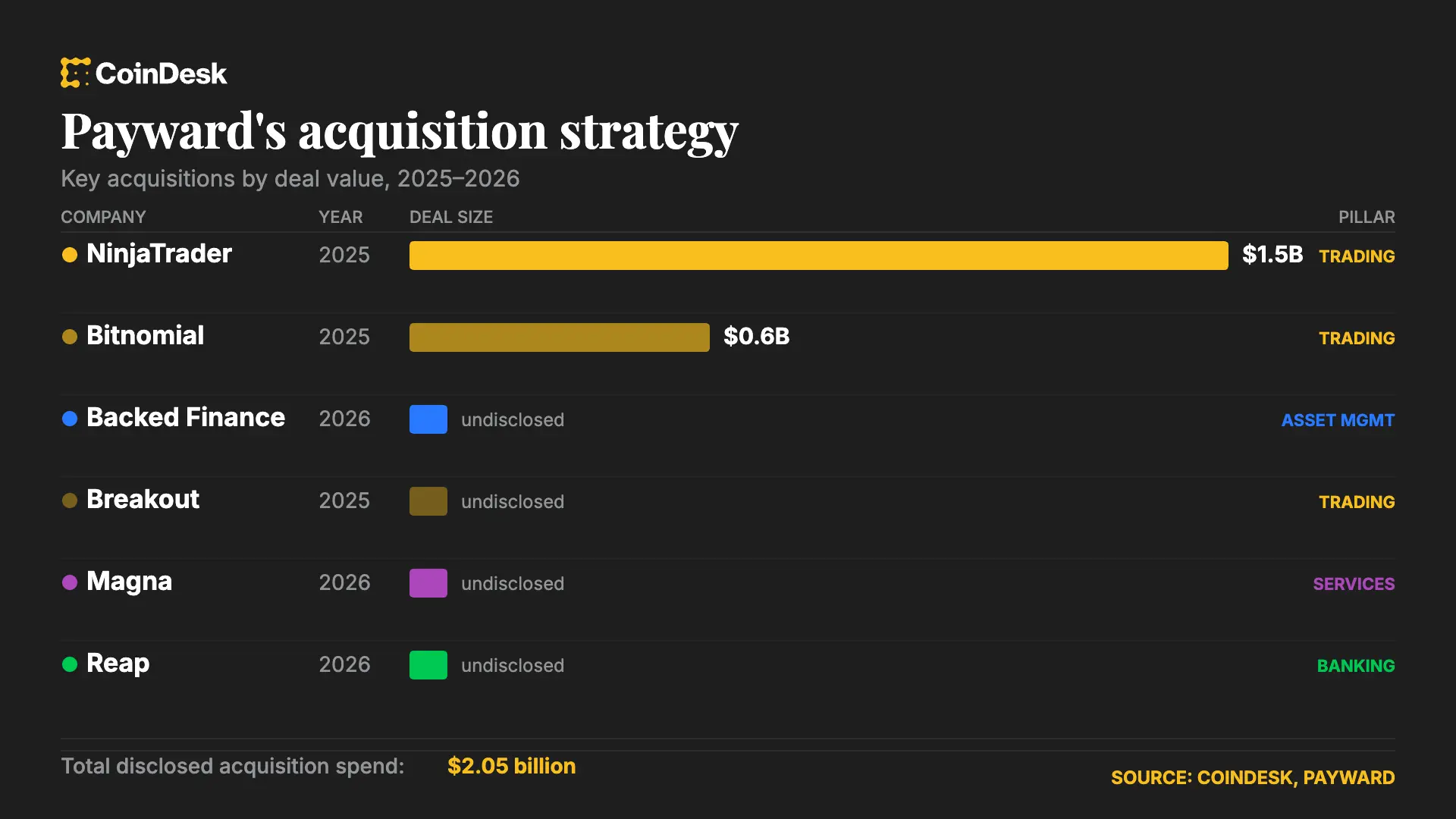


Kraken parent Payward has spent billions buying capabilities in futures, derivatives and banking as it builds a financial platform spanning trading, payments, asset management and institutional services. Co-CEO Arjun Sethi describes the model as “one platform, one balance sheet, one regulatory stack,” with a shared ledger intended to move money and assets across products.
The company paid $1.5 billion for NinjaTrader and $550 million for Bitnomial, adding U.S. futures brokerage and regulated derivatives infrastructure. Sethi also said Payward is about to buy a bank in Europe, without naming the target. Payward reported $508 million in adjusted revenue for the second quarter of 2026, up 17% year over year, and Sethi said the company is profitable and can fund investments from its balance sheet.
Why it matters
Payward’s bet is that shared infrastructure can connect services that traditional finance runs through separate institutions and records. Its four pillars are Kraken trading, banking, asset management and Payward Services, which offers custody, liquidity, compliance, risk management, payments and settlement to other businesses through APIs. At least 25 companies are building products on those services and are expected to launch this year, Sethi said.
The strategy combines acquisitions with partnerships rather than relying on a single consumer-facing exchange. Nasdaq agreed to invest $100 million in Payward and work with it on equity tokens and market surveillance. The companies expect to launch Nasdaq Equity Tokens in the second quarter of 2027. The London Stock Exchange is separately exploring tokenized public equities with Payward, with a planned 2027 listing on its forthcoming LSE 24 venue subject to regulatory approval.
Market impact
For crypto and financial-infrastructure firms, Payward’s expansion signals a push to sell regulated trading, settlement and custody capabilities beyond Kraken’s own customer base. Sethi said Kraken has about 6.6 million funded accounts holding between $40 billion and $50 billion in assets across more than 190 countries and territories, giving the company a base to build services around.
Payward has confidentially filed for an IPO, but Sethi said it is in no rush to list and declined to give a timetable beyond public disclosures. CoinDesk reported that a listing is not planned before the second quarter of 2027 at the earliest. The company’s ability to finance expansion internally means the timing of a public offering is not presented as a prerequisite for its infrastructure strategy.

Frequently asked questions
-
What does Payward mean by “one platform, one balance sheet, one regulatory stack”?
The company aims to connect trading, banking, asset management and institutional services on shared infrastructure, using a common ledger to move money and assets between products.
-
Which major acquisitions has Payward made to expand its infrastructure?
Payward paid $1.5 billion for NinjaTrader, adding U.S. futures brokerage capabilities, and $550 million for Bitnomial, adding regulated derivatives infrastructure.
-
How is Payward building business beyond Kraken customers?
Payward Services offers external companies capabilities including custody, liquidity, compliance, payments and settlement through APIs. At least 25 companies are building products on the infrastructure.
-
What are Nasdaq and the London Stock Exchange doing with Payward?
Nasdaq agreed to invest $100 million and collaborate on equity tokens and market surveillance. The London Stock Exchange is separately exploring tokenized public equities with Payward, subject to regulatory approval.
-
Does Payward need an IPO to fund its expansion?
Sethi said Payward is profitable and can finance investments from its balance sheet. He said the company is in no rush to go public.
 CryptoSlate
 Lookonchain
 CoinTelegraph
 WuBlockchain
 TheBlock