








 CoinDesk
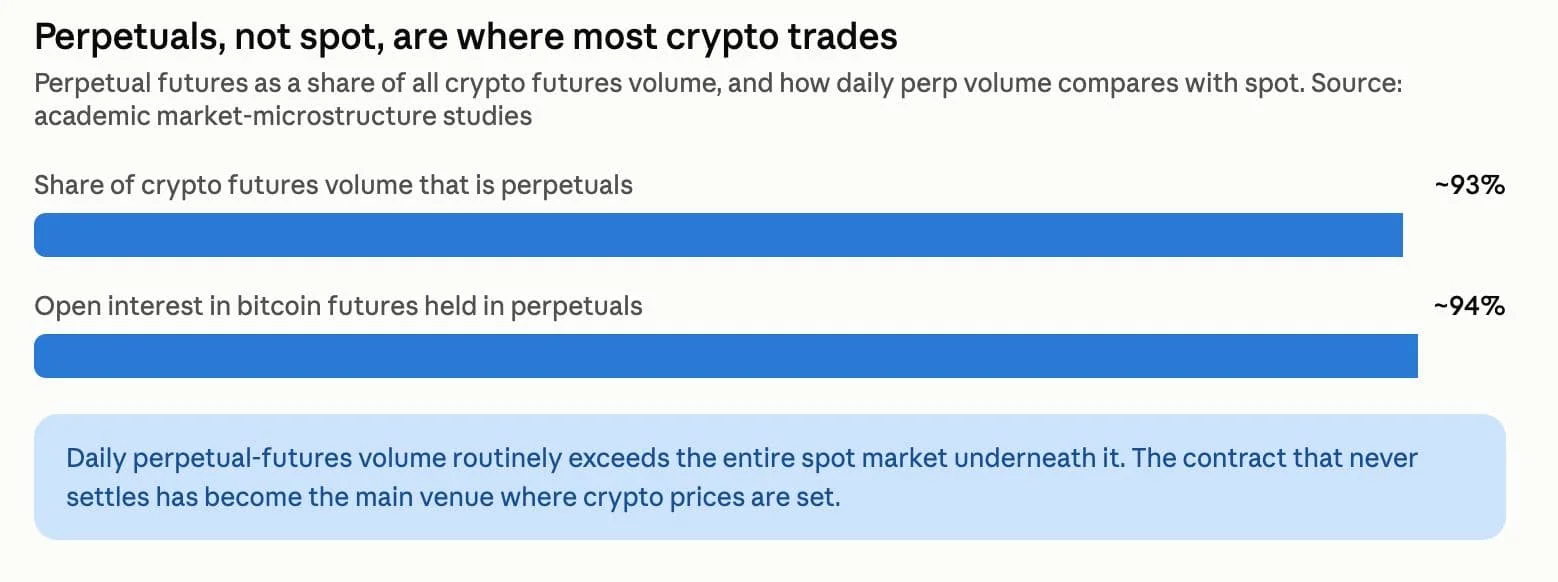
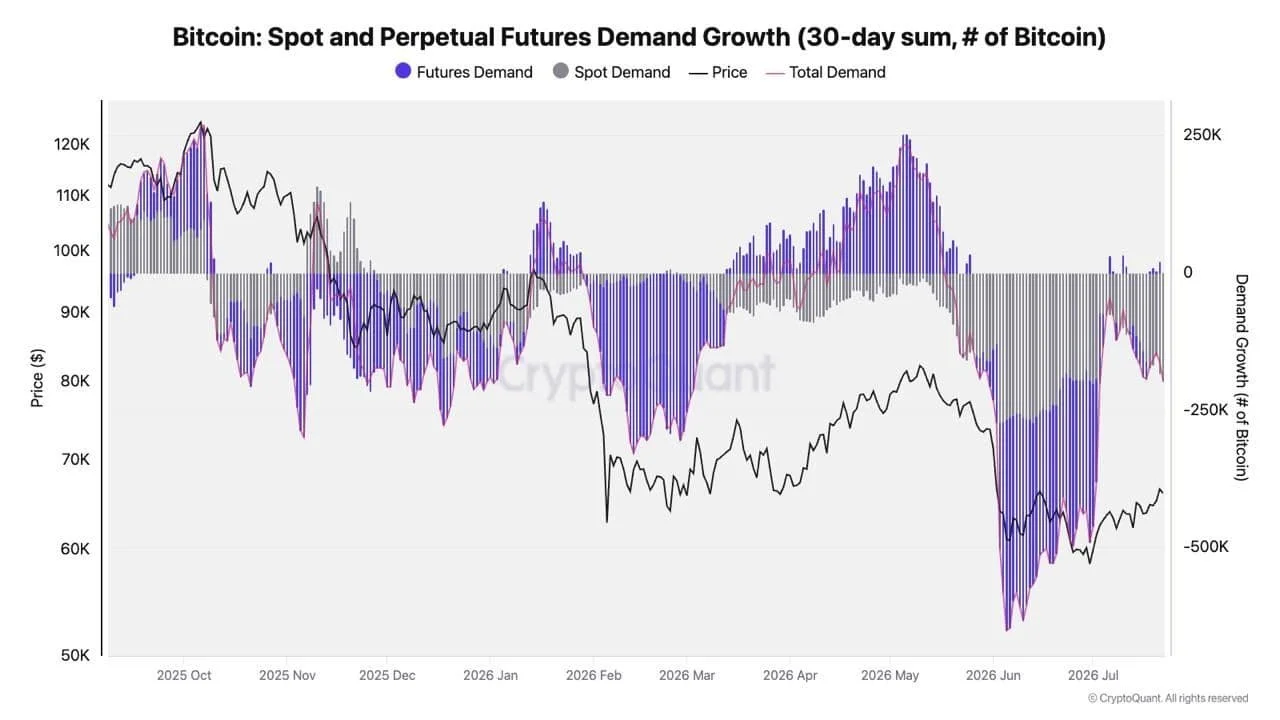
Perpetual futures now account for roughly 93% of all crypto futures volume, with daily perp turnover routinely exceeding the spot market underneath it. A growing body of market-microstructure research, including a Journal of Financial Markets paper by Carol Alexander and co-authors, finds that unregulated perpetual swaps on venues like Binance are the strongest instruments for bitcoin price discovery, with regulated futures and U.S. spot exchanges reacting to, rather than leading, those moves.
The funding rate is the mechanism. Because a perpetual contract has no settlement date, nothing forces its price back to spot. Every few hours, whichever side of the trade is crowded pays the other, which both anchors the contract to the underlying and serves as a live readout of positioning.
Why it matters
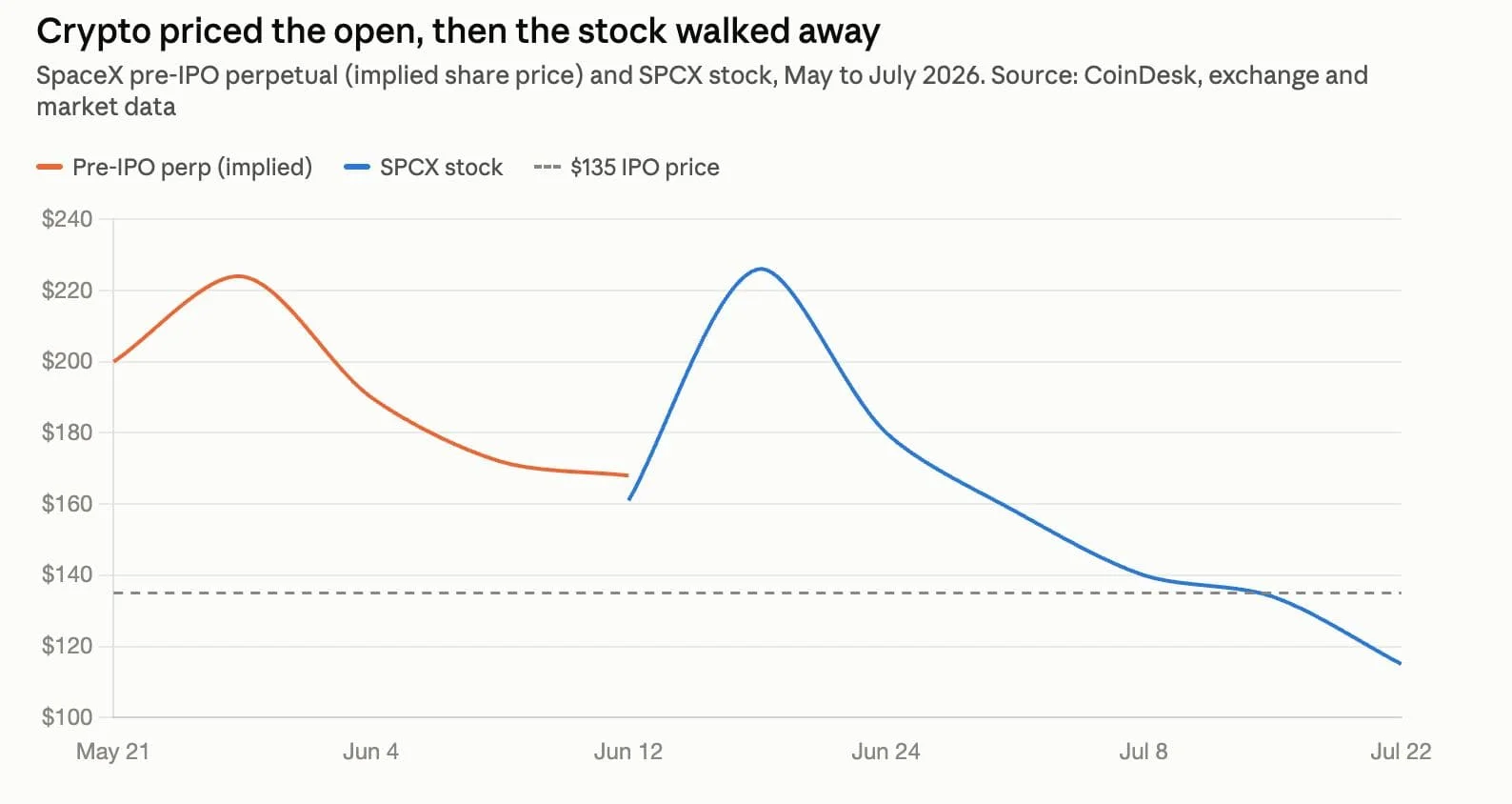
The SpaceX IPO became a real-world test of that thesis. Hyperliquid listed a synthetic SpaceX perpetual on May 18, Binance followed on May 21, and Coinbase, BitMEX, Bitget and OKX added their own contracts in the weeks before the listing. None of these markets required SpaceX shares to exist. The contracts tracked an implied valuation and were built to automatically switch over to the real share price once the stock began trading.
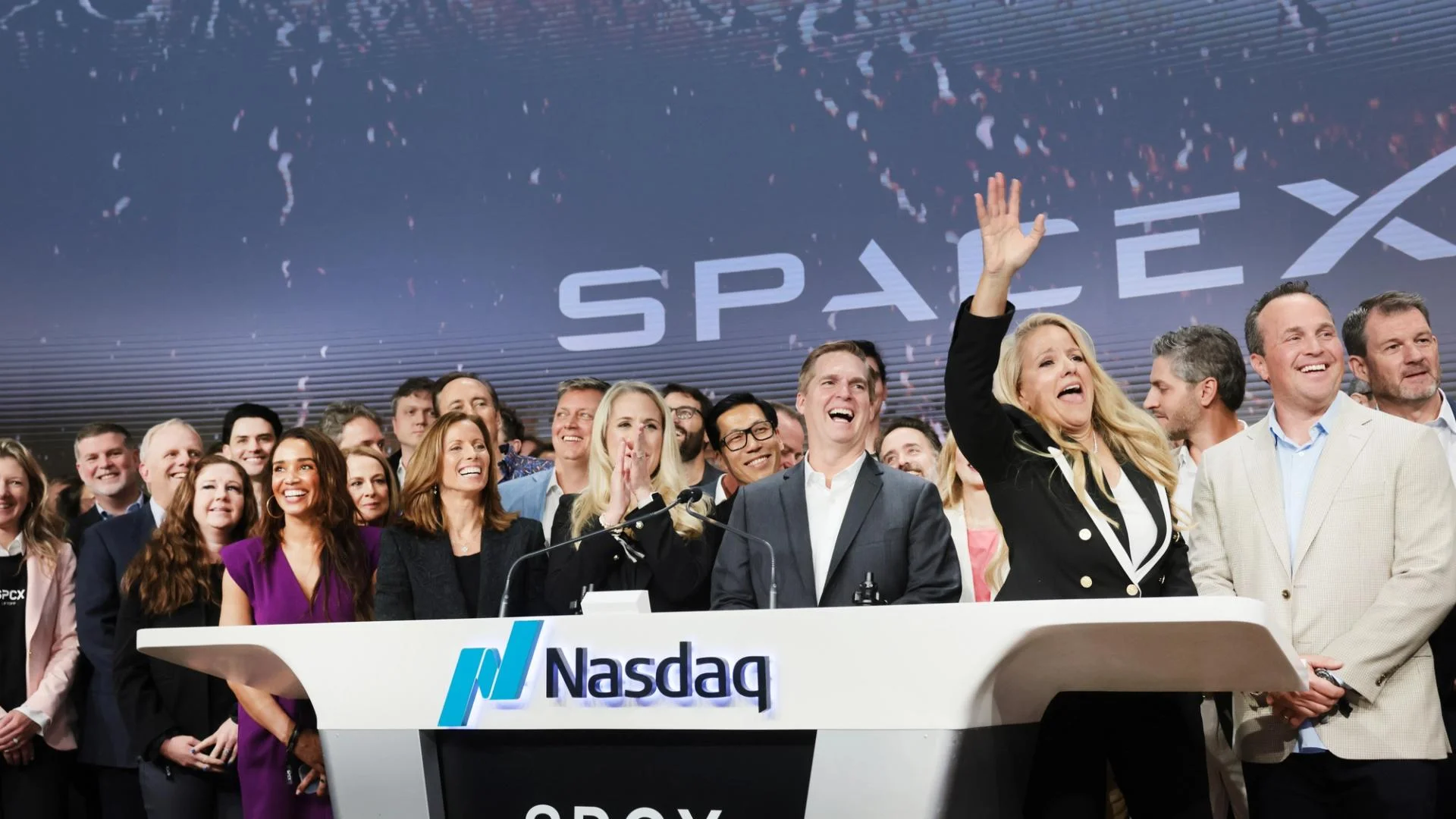
On the night before SpaceX listed on Nasdaq under the ticker SPCX at a $135 offer price on June 12, perpetuals on Hyperliquid and Binance were quoting the equivalent of roughly $170 a share. SPCX opened, hit an intraday high above $176, and closed its first session at $161, up 19%. A market dominated by leverage-seeking retail traders had read first-day demand more accurately than the banks that spent months building the offering price.
Market impact
The thesis holds for demand and breaks on supply. SPCX has fallen more than 40% from its June peak, sliding from the $135 IPO price to about $115, as roughly 900 million locked-up insider shares become eligible to sell starting around August 6. Perps are excellent at pricing demand and blind to supply, which is worth remembering every time a bitcoin rally or a flush starts in the funding rate before it reaches spot.


Frequently asked questions
-
What share of crypto futures volume do perpetual contracts now represent?
Perpetual futures account for roughly 93% of all crypto futures volume, with daily perp turnover routinely exceeding the spot market underneath it.
-
How does a perpetual futures contract stay anchored to spot without an expiry?
Every few hours, whichever side of the trade is more crowded pays the other through the funding rate, which both nudges the contract back toward the underlying price and serves as a live readout of positioning.
-
Where does bitcoin price discovery actually happen?
A Journal of Financial Markets paper by Carol Alexander and co-authors finds unregulated perpetual swaps, particularly on Binance, are the strongest instruments for bitcoin price discovery, with regulated futures and U.S. spot exchanges reacting to, rather than leading, those moves.
-
How accurately did crypto perps price SpaceX's IPO debut?
On the night before SpaceX listed on Nasdaq at a $135 offer price on June 12, perpetuals on Hyperliquid and Binance were quoting roughly $170 a share. SPCX opened, hit an intraday high above $176, and closed its first session at $161, up 19%.
-
Why has SpaceX's stock fallen more than 40% since its June peak?
Roughly 900 million locked-up SpaceX insider shares become eligible to sell starting around August 6. Perps are excellent at pricing demand and blind to supply, so the insider unlock was a factor the synthetic contracts could never have priced.
 Lookonchain
 CryptoSlate
 WuBlockchain
 Whale Alert
 Crypto Rank News