








 CoinDesk
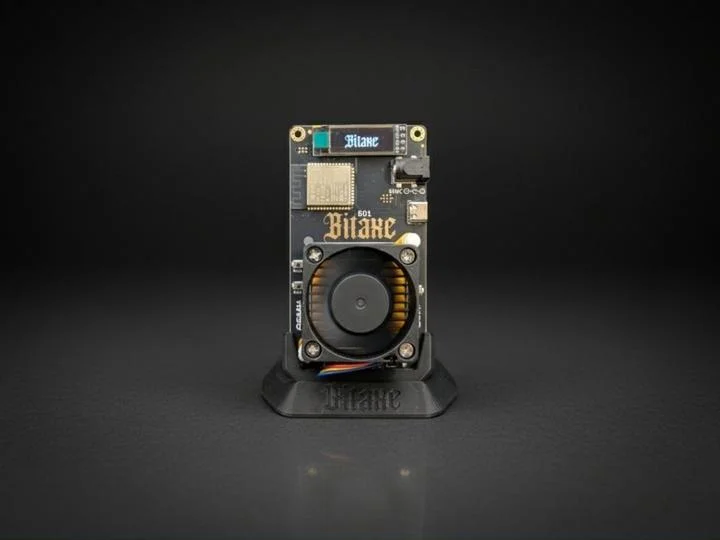
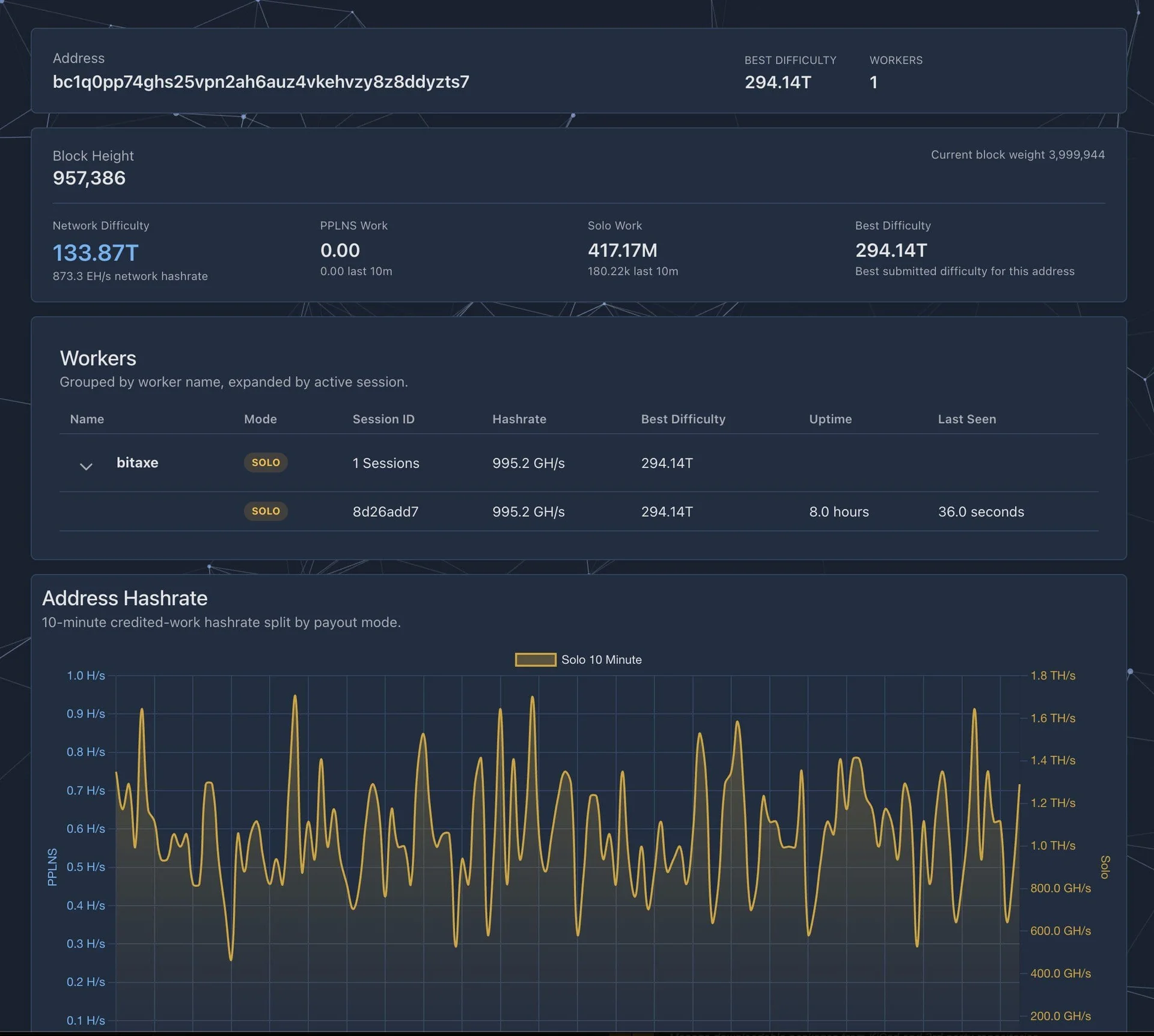


A solo Bitcoin miner running a credit-card-sized Bitaxe device for just eight hours through the Public Pool service struck block 957,382 and collected 3.1382 BTC, worth roughly $200,000. The rig hashed at about 995 GH/s, near the lower end of the Bitaxe Gamma's 1 to 1.3 TH/s range, while drawing only 15 to 21 watts of power.
The Bitaxe is an open-source ASIC miner built around the same Bitmain BM1370 chip used in industrial Antminer S21 machines, and units sell for between $60 and $150. The feat marks the second time a single Bitaxe has solo-mined a block on Public Pool, an outcome the operator itself flagged on X.
Why it matters
The block landed despite odds the solo miner beat that were estimated at roughly one in 18,000 years at that hashrate, framing the event as a pure probability event rather than a steady income stream. The story is less about the dollar payout and more about what a working class of hobbyist hardware can do when the network is open enough to let a single 1 TH/s device occasionally win the full block reward.
Solo mining is no longer a fringe curiosity. Public Pool data shows 12 blocks found by solo miners already in 2026, including 3.16 BTC won on Solo CKPool on June 29 and a 14-device Canaan Nano cluster hitting a block on Braiins Solo on May 31. Across the past 12 months solo miners have claimed 24 blocks, a 41% jump year over year, taking home a combined 75.44 BTC.
Market impact
The win does not change Bitcoin's network economics, but it does highlight a sharp divergence inside the mining sector. While hobbyists post lottery-style wins from bedroom rigs, institutional miners face compression: Bitcoin mining difficulty dropped 5% to 127.17 trillion on July 12 after plunging more than 10% in mid-June, and several listed miners are pivoting into AI data center infrastructure to defend margins. The Bitaxe story is the bright edge of a tightening industry.
CEX trading volumes rose for the first time in five months in June, with spot climbing 15.3% to $1.11T and RWA perpetual volumes hitting a record $311B.

Frequently asked questions
-
What is a Bitaxe and how much does it cost?
The Bitaxe is an open-source, credit-card-sized ASIC miner built around the same Bitmain BM1370 chip used in industrial Antminer S21 machines. The Gamma version delivers 1 to 1.3 TH/s at 15 to 21 watts and sells for $60 to $150.
-
What did the solo miner actually win?
The miner running a Bitaxe on Public Pool found Bitcoin block 957,382 and collected 3.1382 BTC, worth roughly $200,000, after roughly eight hours of hashing at about 995 GH/s.
-
How rare is a solo block win on a Bitaxe?
Odds at that hashrate are estimated at roughly one in 18,000 years per block, making the win a pure probability event. It is the second time a single Bitaxe has solo-mined a block on Public Pool.
-
How often are solo miners finding Bitcoin blocks in 2026?
Solo miners have already found 12 blocks in 2026, including 3.16 BTC won on Solo CKPool on June 29 and a 14-device Canaan Nano cluster that hit a block on Braiins Solo on May 31.
-
Is solo mining activity growing versus last year?
Yes. Over the past 12 months solo miners have claimed 24 blocks, a 41% increase year over year, and have taken home a combined 75.44 BTC in payouts across that window.
 CryptoSlate
 TheBlock
 Crypto News
 Crypto Rank News
 WuBlockchain