








 WuBlockchain
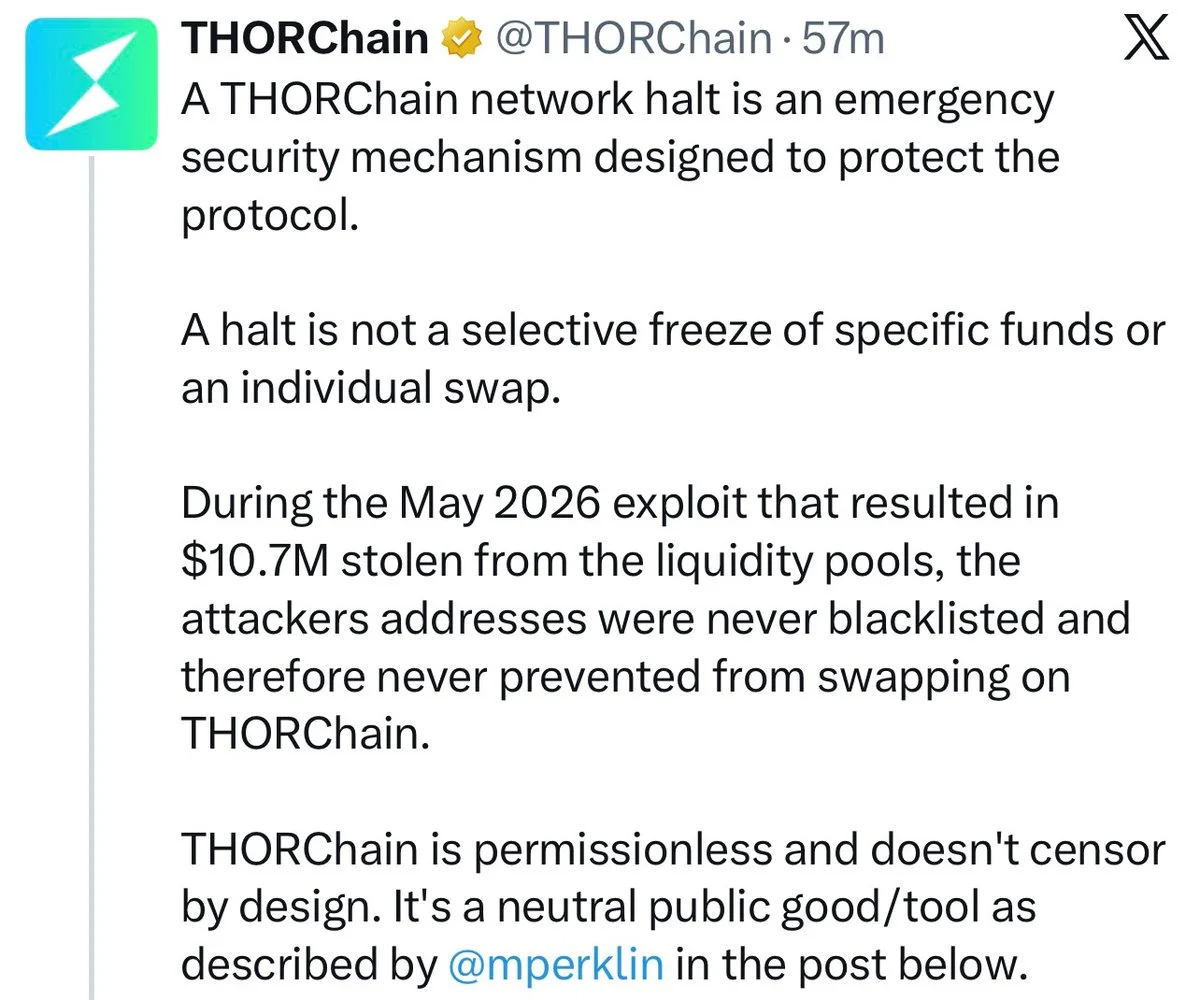

THORChain rejected Bitget CEO Gracy Chen’s call to refuse service to addresses linked to attackers in Bitget’s September 24 security breach, which involved about $387.5 million in stolen assets. The protocol said its network halt mechanism protects the system as a whole, not individual addresses or swaps.
Why it matters
The response draws a line between halting a network-wide threat and selectively blocking users. THORChain said its permissionless design does not include targeted address freezes.
Market impact
THORChain also cited its own $10.7 million exploit in May, saying attacker addresses were not blacklisted then either. The exchange and protocol’s differing positions spotlight the security and control trade-offs facing permissionless infrastructure.

Frequently asked questions
-
What did Bitget CEO Gracy Chen ask THORChain to do?
Chen called on THORChain to refuse service to addresses linked to attackers in Bitget’s September 24 security breach.
-
How much was involved in Bitget’s security breach?
The breach involved about $387.5 million in stolen assets.
-
Why did THORChain reject the request to block specific addresses?
THORChain said its halt mechanism protects the protocol as a whole and is not designed to freeze individual addresses or swaps.
-
What precedent did THORChain cite?
The protocol said attacker addresses were not blacklisted after its own $10.7 million exploit in May.
-
What broader issue does the dispute raise?
It highlights the tension between targeted intervention after a breach and maintaining permissionless access to decentralized infrastructure.
 WatcherGuru
 TheBlock
 CoinTelegraph
 Lookonchain
 Crypto News
 CoinDesk