


 CryptoSlate
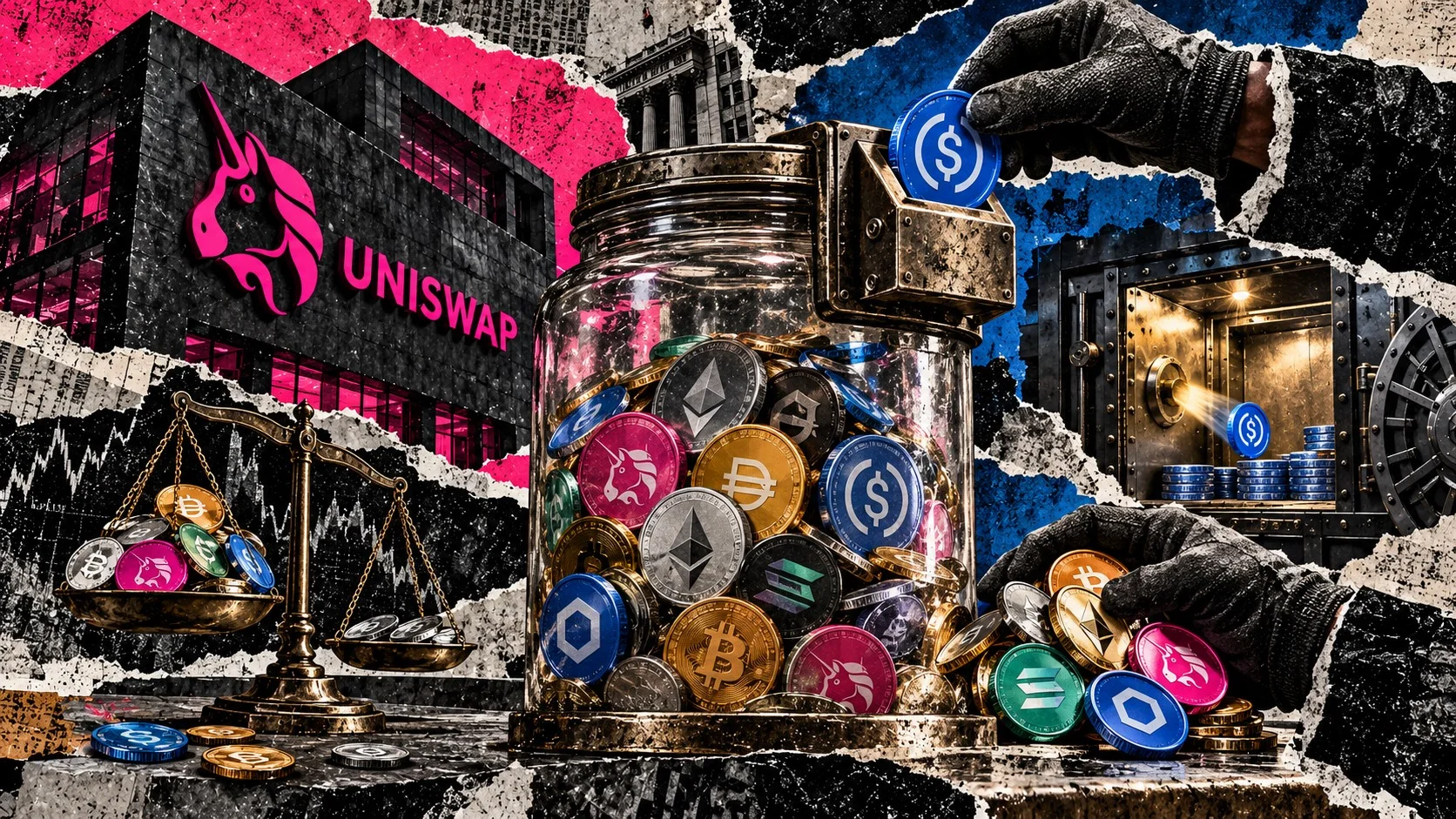


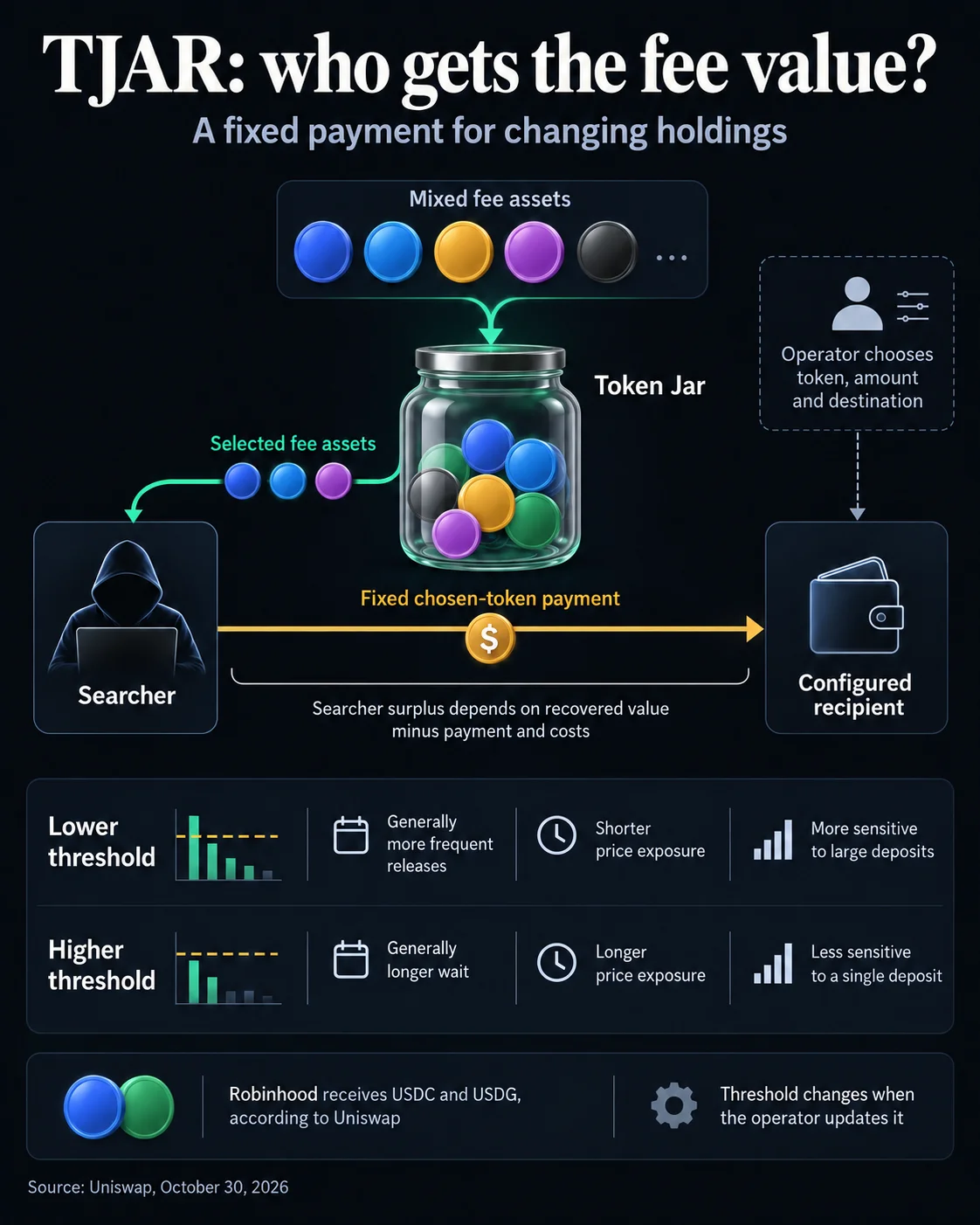
Uniswap opened its Token Jar (TJAR) fee converter to other apps on Oct. 29 and said Robinhood already uses it to receive USDC and USDG fees collected through the Uniswap API. The system lets outside searchers exchange a fixed payment for selected fee assets held in an on-chain jar.
An app operator configures the payment token, amount and destination through a Releaser contract. The jar does not value its contents or adjust the payment against market prices. Searchers pay the full release amount even if they select only some assets, and receive the entire balance of each asset they name. Unselected assets remain in the jar.
Why it matters
Searchers have an incentive to act when the recoverable value of selected assets exceeds the payment and execution costs. That can turn fee conversion into a source of surplus for searchers, but profit is not guaranteed: competition can narrow the margin, and prices can move before a release.
Robinhood’s setup sends stablecoin receipts to its configured destination. That differs from Uniswap’s protocol-fee deployment, which uses UNI sent to a burn address. TJAR allows other operators to choose where the payment goes. The documentation says its optional protocol fee is currently unset, with the Uniswap DAO controlling that parameter.
Market impact
Uniswap’s pricing example shows the trade-off. A jar holding $950 of assets has a release price of 1,000 USDC. A $500 fee deposit lifts the holdings to $1,450 without changing the fixed price, creating a potential gap for a searcher to capture at the operator’s expense.
Lower release thresholds can clear jars more frequently and shorten exposure to token-price moves, but a large deposit can leave more value above the payment. Higher thresholds can make individual deposits less significant relative to the payment, while keeping assets in the jar longer. Operators are balancing faster receipts against price exposure and the surplus available to searchers.



Frequently asked questions
-
How does Uniswap’s TJAR fee converter work?
An operator sets a payment token, amount and destination. Searchers pay that fixed amount to take selected fee assets held in an on-chain Token Jar.
-
Why can searchers capture surplus from a TJAR release?
The jar does not value its holdings or adjust the fixed payment to market prices. If selected assets are worth more than the payment and execution costs, a searcher may capture the difference.
-
What does Uniswap’s $950-to-$1,450 example show?
A jar starts with $950 in assets and a 1,000 USDC release price. A $500 deposit raises its holdings to $1,450 without changing the payment, potentially creating surplus for a searcher.
-
What is the trade-off between lower and higher TJAR thresholds?
Lower thresholds can clear jars more frequently and shorten exposure to price moves, but large deposits can leave more value above the payment. Higher thresholds can reduce each deposit’s relative impact while assets wait longer.
-
How does Robinhood’s TJAR setup differ from Uniswap’s protocol-fee deployment?
Robinhood receives USDC and USDG through its configured destination. Uniswap’s protocol-fee deployment uses UNI sent to a burn address; TJAR operators can choose their destination.
 Whale Alert
 TheBlock
 WuBlockchain
 Lookonchain