








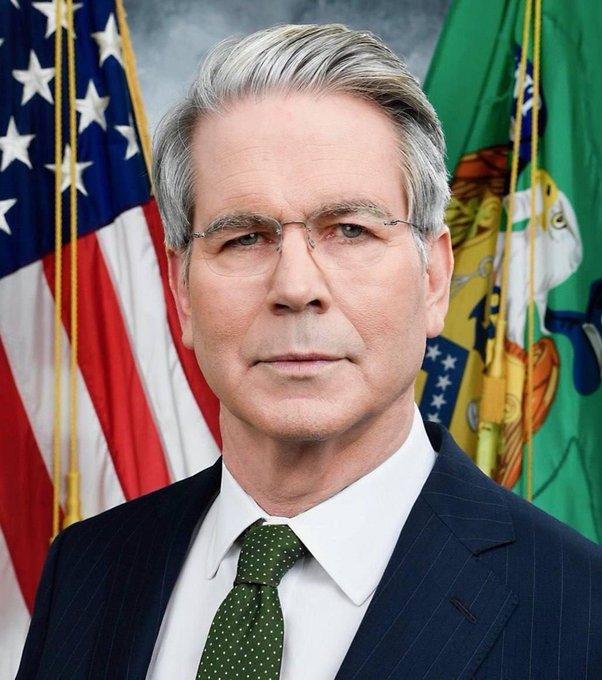
The United States and China will hold formal AI talks in September, with Treasury Secretary Scott Bessent leading the US delegation, Reuters reported. The meeting marks a diplomatic channel for the two powers to coordinate on artificial intelligence policy, an area that has grown increasingly entangled with national security and trade.
Why it matters
Treasury's lead role elevates AI from a working-level technology dialogue to a financial and economic statecraft forum. The scheduling follows months of escalating US export controls on advanced chips and manufacturing equipment to China, and Beijing's tit-for-tat restrictions on rare earths. Putting Bessent at the head of the table signals Washington wants compute supply chains, capital flows, and dual-use technology on the agenda, not just safety commitments.
Market impact
Semiconductor names with heavy China exposure, including NVIDIA, AMD, and the foundry complex, will read the talks as a signal that the operating environment is being negotiated rather than unilaterally imposed. A successful September meeting could open the door to selective licensing relief; a breakdown would harden the current bifurcation between US and Chinese AI stacks. Watch for any pre-meeting posture from Beijing on chip export quotas, which historically telegraph the room for compromise.
Frequently asked questions
-
When are the US-China AI talks scheduled to take place?
The talks are scheduled for September, according to a Reuters report cited by the channel.
-
Who is leading the US delegation to the AI talks?
Treasury Secretary Scott Bessent will lead the US delegation, signaling that the talks are framed as economic and financial statecraft rather than a purely technical exchange.
-
Why is Treasury's involvement in the AI talks significant?
Treasury's lead role elevates AI from a working-level technology dialogue to a forum on compute supply chains, capital flows, and dual-use export controls, areas that have driven recent US-China economic friction.
-
What topics are expected on the agenda for the September AI talks?
Export controls on advanced chips and manufacturing equipment, rare-earth supply chains, and broader dual-use technology coordination are widely expected to be on the table.
-
How could the talks affect semiconductor stocks with China exposure?
A successful meeting could open the door to selective licensing relief for NVIDIA, AMD, and the foundry complex, while a breakdown would harden the current bifurcation between US and Chinese AI stacks.

 WatcherGuru
 WuBlockchain
 CryptoSlate
 Lookonchain
 Crypto News
 TheBlock