








 WatcherGuru
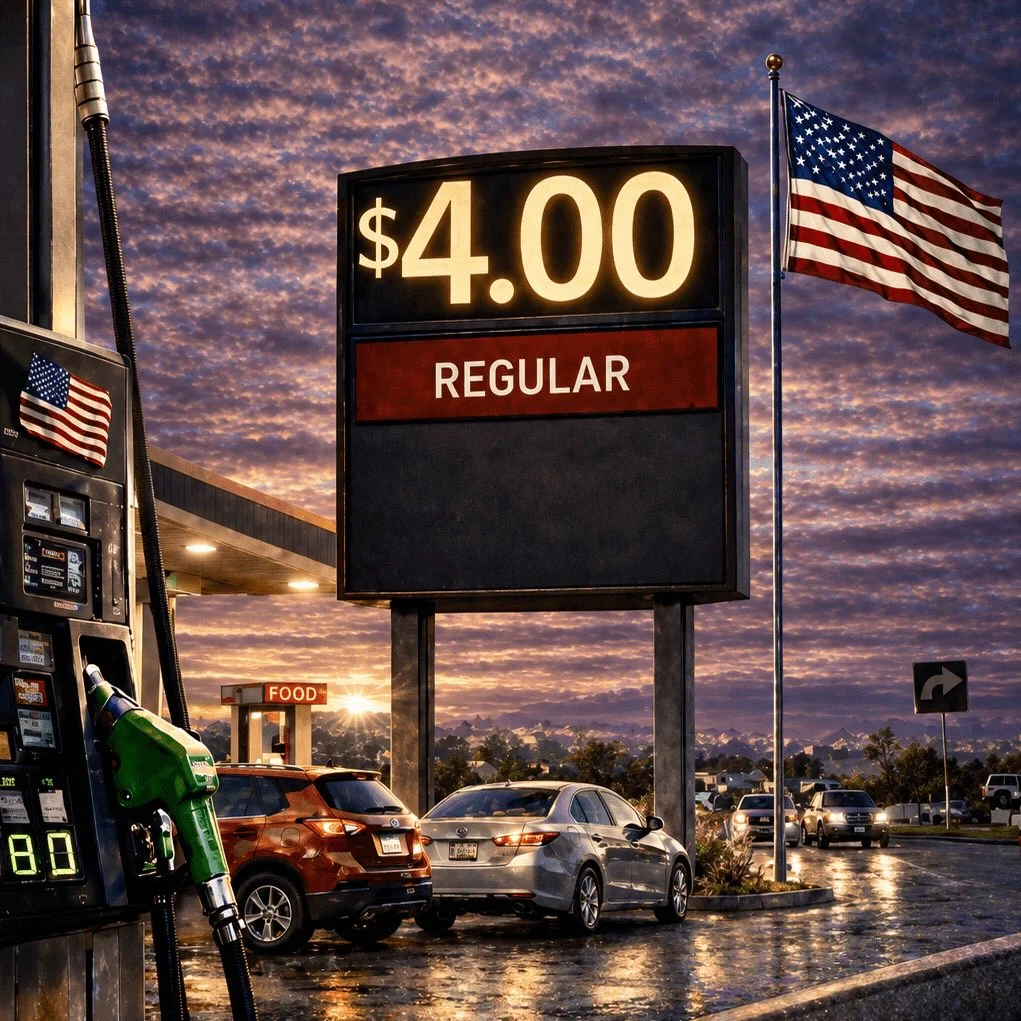

The US national average for regular gasoline has climbed back to $4.00 per gallon, a level that puts the cost of filling a typical sedan north of $60 and that historically rattles consumer sentiment within weeks.
The pump-price move lands in the same week that oil futures pushed higher after reports that hostilities with Iran have resumed. Even a few cents of gasoline inflation tends to feed into the next CPI print, and the round-number $4.00 mark is the threshold that gets cited in political and Fed-watching coverage.
Why it matters
Gasoline is the single most visible line item in household budgets, and $4.00 is the level at which retail-driven inflation narratives typically re-ignite. The Trump administration has spent months pointing to cheaper energy as a core economic win, so a return to $4.00 undercuts that message and revives the cost-of-living critique that defined the 2024 cycle.
Market impact
Crude already moved on the headlines out of the Middle East, but the gasoline pass-through lags wholesale by two to four weeks, which is why pump prices are only now catching up. Risk-off flows tend to follow consumer-facing energy spikes more than headline crude, because it is the pump number, not the Brent print, that drives rate-cut expectations in the political conversation.
Frequently asked questions
-
Why are US gas prices hitting $4.00 a gallon now?
The move coincides with oil futures pricing higher on reports that US-Iran hostilities have resumed. Wholesale gasoline typically takes two to four weeks to pass through to retail, which is why pump prices are only now catching up to crude's move.
-
How does a $4.00 pump price affect inflation?
Gasoline is the most visible household line item, and pump spikes tend to feed into the next CPI print within weeks. Even modest retail-energy inflation shifts consumer-sentiment readings and revives cost-of-living narratives in political coverage.
-
What is the political significance of $4.00 gas?
It is the round-number threshold at which consumer-inflation critiques reliably return in US political coverage. The administration has pointed to cheaper energy as a core economic win, so a return to $4.00 undercuts that message.
-
How long until pump prices reflect crude moves?
The pass-through from wholesale gasoline to retail typically takes two to four weeks. That lag is why a geopolitical oil shock can show up at the pump well after headline crude has already moved.
-
What indicators should investors watch next?
The AAA daily pump survey, the DOE weekly gasoline inventory print, and any Brent response to ceasefire headlines. A retracement below $3.90 likely requires actual de-escalation rather than rhetoric.
 CoinTelegraph
 Crypto Capital Venture
 Crypto Rank News
 TheBlock
 CryptoSlate