








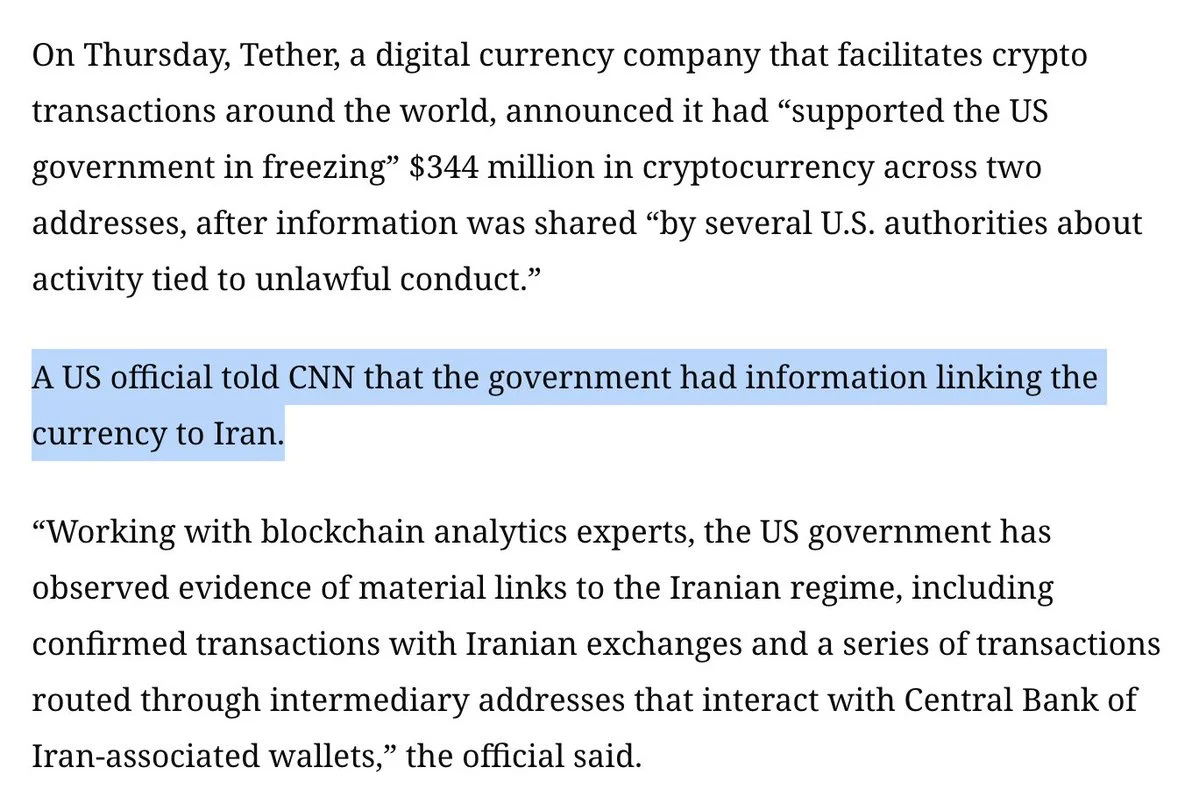
A U.S. official has confirmed that the 344 million USDT frozen by Tether is connected to Iran, shedding light on one of the largest single stablecoin freezes on record.
The disclosure follows Tether's action yesterday, which drew immediate attention across crypto markets given the scale of the freeze. U.S. sanctions enforcement against Iran extends to digital assets, and this case underscores that stablecoin issuers remain active participants in compliance efforts.
The episode reinforces the dual reality of permissioned stablecoins: their programmable freeze capability is a powerful compliance tool, but also a reminder that USDT balances are ultimately subject to issuer control.

Frequently asked questions
-
What are the implications of Tether's USDT freeze for compliance in the crypto industry?
The freeze highlights how stablecoin issuers like Tether are involved in compliance with U.S. sanctions, showcasing the importance of regulatory adherence in the digital asset space.
-
How does the freeze of USDT relate to U.S. sanctions on Iran?
The frozen 344 million USDT is linked to U.S. sanctions enforcement against Iran, illustrating the reach of these regulations into digital assets.

 Crypto News
 CoinTelegraph
 WatcherGuru
 CoinDesk
 WuBlockchain
 CryptoSlate