








 Lookonchain
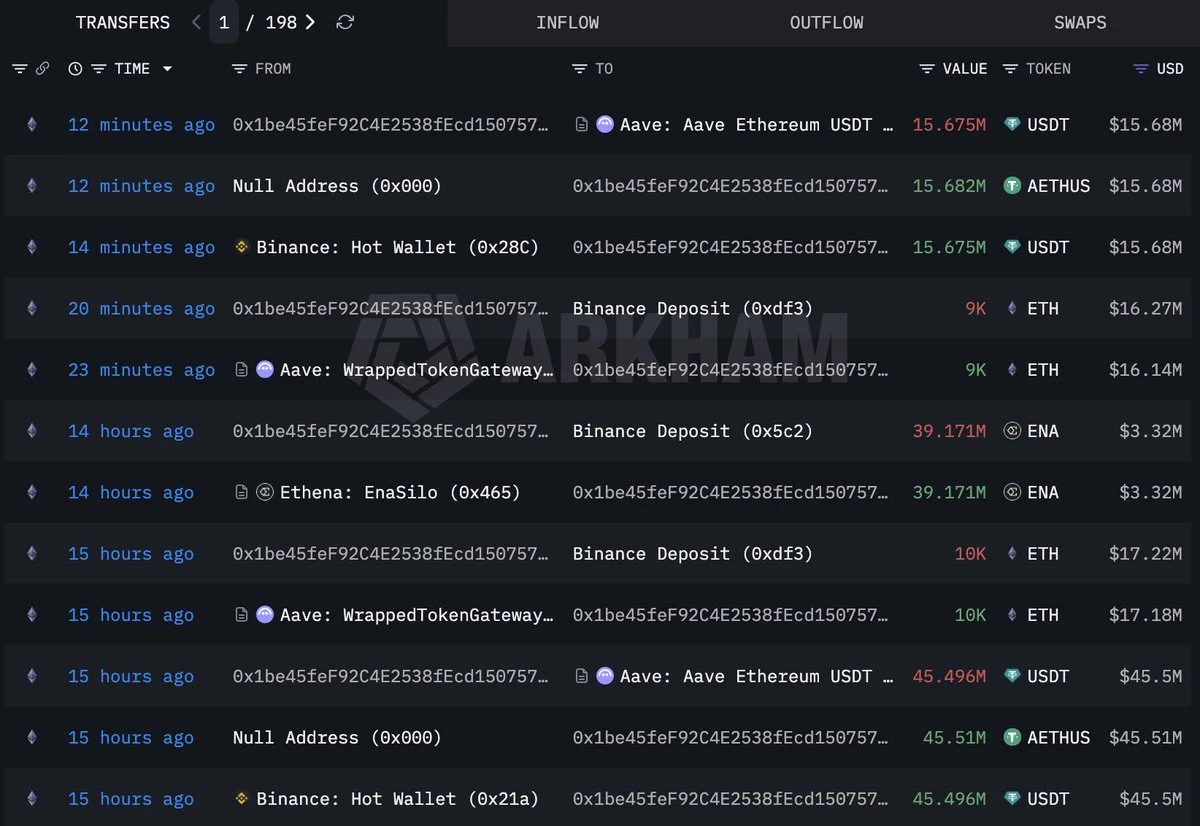
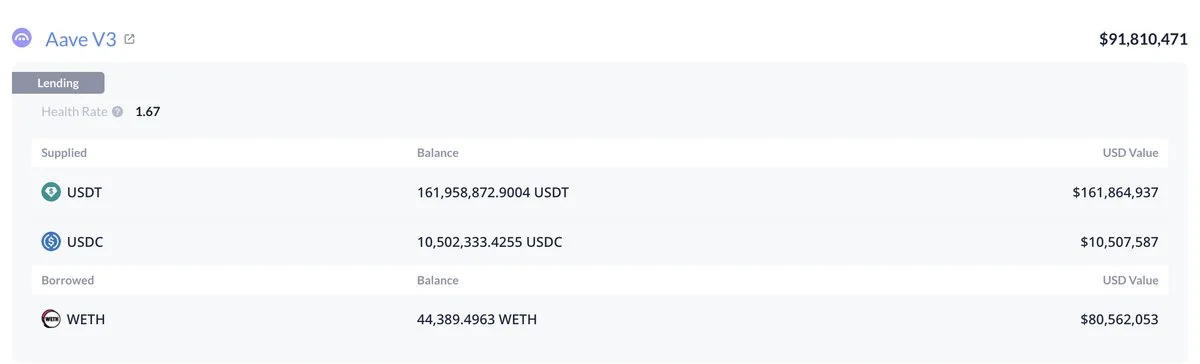
An Ethereum whale borrowed another 19,000 ETH (~$33.5M) from Aave on Tuesday and is using the proceeds to sell into the rebound, on-chain data shows. The fresh draw brings the wallet's cumulative borrow from the protocol to 44,389 ETH (~$80.6M), all routed toward spot selling rather than long-side repositioning.
Why it matters
Selling into a rally — rather than into a weak tape — is the read here. The pattern points to a holder with strong conviction on the short side: building inventory at Aave's variable rate requires paying interest, which only makes sense if the expected price drawdown exceeds the borrow cost. With ETH recovering off recent lows, the timing of the latest 19,000 ETH draw is the deliberate tell.
Market impact
Whale sells into Aave borrow are a recurring friction on spot ETH — the protocol's ETH-denominated debt is one of the more-watched on-chain gauges for institutional-grade distribution. Watch for further borrow additions; the wallet flagged the position as one it may still add to, which would extend the supply overhang the rebound is currently absorbing.


Frequently asked questions
-
Who is the Aave whale selling ETH?
The seed does not name the wallet. It is identified only by its on-chain behavior — borrowing large amounts of ETH from Aave and routing the proceeds to spot sales.
-
How much ETH has the whale borrowed in total?
The wallet has drawn 44,389 ETH (~$80.6M) cumulatively from Aave, all of it earmarked for selling rather than long-side repositioning.
-
Why borrow ETH on Aave to sell instead of selling existing holdings?
Borrowing lets the seller short the asset without first needing to acquire the spot tokens to dump — they receive ETH from Aave, sell it, and later buy back to repay the loan at a lower price if the trade works.
-
Does this whale activity affect ETH price?
Large spot sells funded by Aave borrows add supply pressure to ETH, but the price impact depends on the size of the sales, the depth of the order book, and whether other market participants absorb the flow.
-
What is the cost of borrowing ETH on Aave?
Aave's ETH borrow rate is variable and set by utilization; the whale is paying interest while short, so the trade only pays if ETH's expected decline exceeds that running cost.
 Glassnode
 CryptoSlate
 TheBlock
 CoinDesk
 CoinTelegraph
 WatcherGuru
 Whale Alert