








 CoinDesk

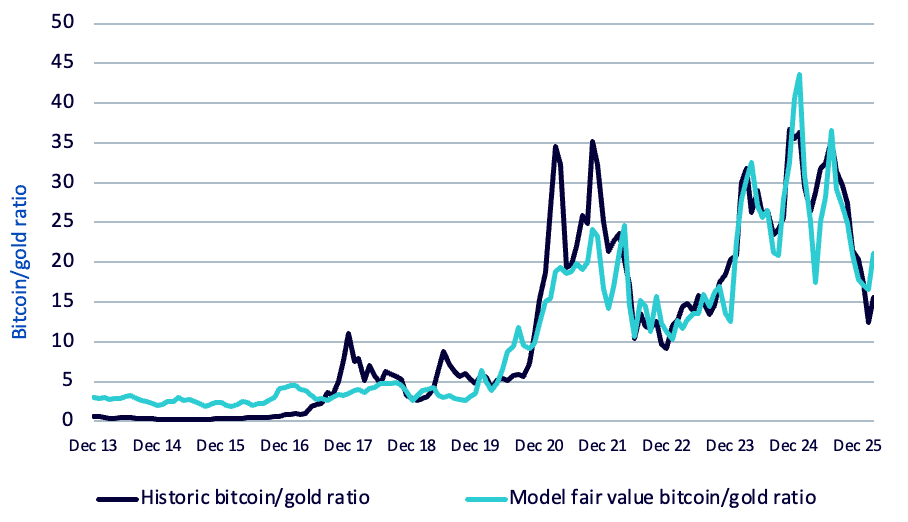
Bitcoin is trading at a 26% discount to its model-implied fair value against gold, according to WisdomTree's Bitcoin in Gold (BiG) framework, which reframes BTC as a monetary asset competing for the same macro allocation bucket as bullion rather than a high-beta risk expression.
As of March 31, 2026, the actual bitcoin-to-gold ratio stood at 15.6 against a model fair value of 21.1, a gap the firm attributes to current macro inputs — falling real yields, easier liquidity and a softer dollar mix that historically lifts the ratio above where it trades. The read is relative-value rather than directional: the model is signalling a dislocation, not a price target.
Why it matters
The BiG lens attempts to reframe bitcoin's analytical category. The dominant narrative treats BTC as a risk asset that rises with liquidity and falls in risk-off; the model argues the cleaner read is bitcoin as monetary expansion versus gold as monetary defensiveness, both sitting outside the traditional fiat system and both responding to inflation expectations, real yields and sovereign-currency confidence.
The practical output is a positioning tool. WisdomTree outlines three implementations: a long-bitcoin / short-gold relative-value trade, an allocation tilt that increases BTC weight when the gap is wide, and a macro overlay that combines the ratio with real yields, dollar trends and liquidity indicators. The edge, the model argues, comes from systematically leaning into dislocations and scaling back as they compress.
Market impact
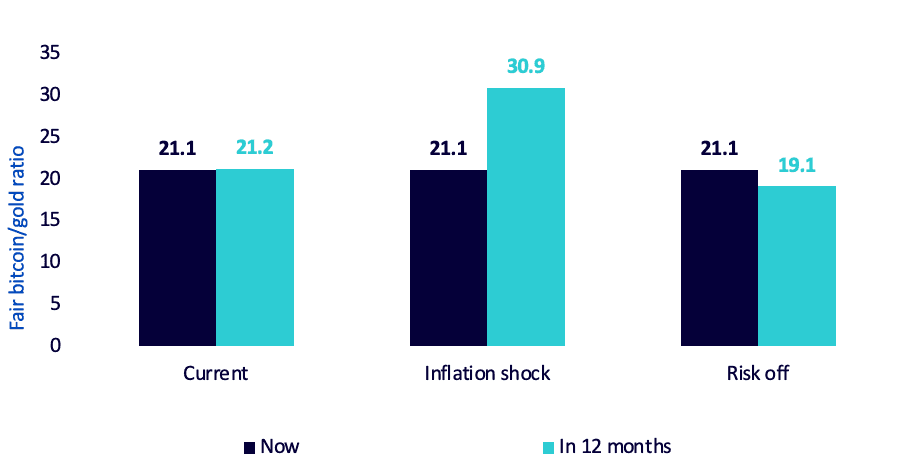
The framework's three forward 12-month scenarios converge on the same point: the path matters, but the gap is real. A continuation scenario implies gradual convergence to fair value; an inflation shock sees gold lead initially with bitcoin catching up; a risk-off regime with a stronger dollar favours gold. None of the paths call for a closing of the gap in a straight line.
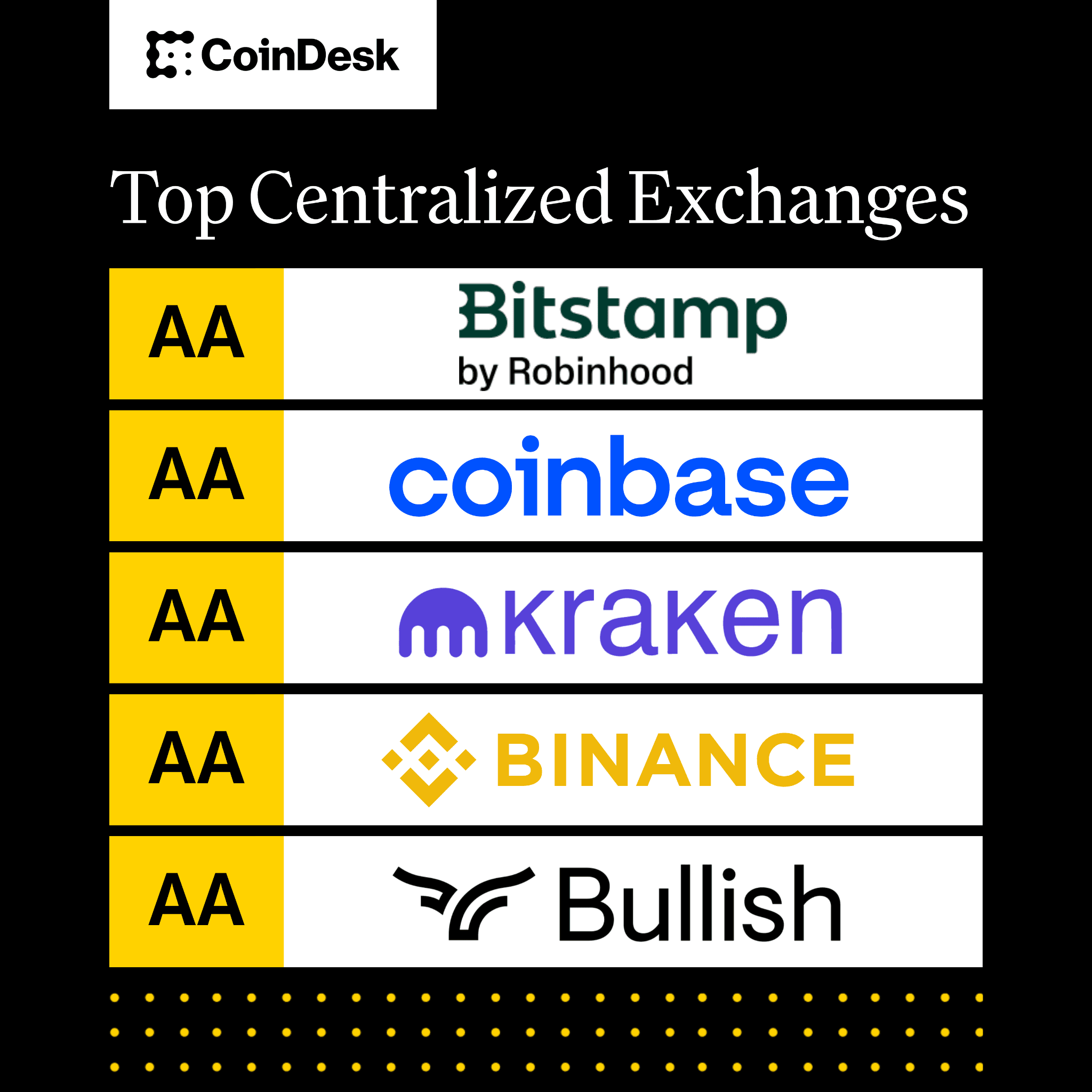
For investors, the BiG model sits alongside a separate piece of the same newsletter — CoinDesk Data's May 2026 Exchange Benchmark, which raised its AA grading threshold to 85, with Bitstamp by Robinhood taking the top spot at 90.26 and six venues clearing the new bar. Top-tier exchanges now command 59% of Q1 spot volume despite making up just 27% of rated venues, and the broader backdrop of institutional capital concentrating at higher-graded venues reinforces the relative-value framing: the bid for scarce, politically neutral stores of value is being routed through both BTC and the gold market for very different reasons.

Frequently asked questions
-
What is the Bitcoin in Gold (BiG) model and how does it work?
The BiG model from WisdomTree estimates a fair-value ratio between bitcoin and gold based on current macro inputs including real yields, the US dollar and inflation expectations. As of March 31, 2026, the model fair value was 21.1 against an actual ratio of 15.6, implying bitcoin is 26% undervalued relative to gold.
-
Why does WisdomTree frame bitcoin as a monetary asset rather than a risk asset?
The argument is that bitcoin sits outside the traditional fiat system alongside gold, responds to inflation expectations, real yields and sovereign-currency confidence, and competes for the same macro allocation bucket. Under that lens, gold represents monetary defensiveness and bitcoin represents monetary expansion.
-
What are the three scenarios the model projects for the next 12 months?
A continuation scenario with no shock implies gradual convergence to fair value; an inflation shock sees gold lead initially with bitcoin catching up later; and a risk-off regime with a stronger US dollar favours gold. Each path implies a different route for the ratio to close, not a straight-line outcome.
-
How can an investor implement the BiG model in practice?
WisdomTree outlines three implementations: a long-bitcoin / short-gold relative-value trade, an allocation tilt that increases BTC weight when the gap is wide, and a macro overlay that combines the ratio with real yields, dollar trends and liquidity indicators. The model is described as a positioning tool, not a price…
-
What does the 26% gap actually mean for bitcoin's price?
The model is signalling a dislocation between two monetary assets, not a directional forecast for BTC's price. The 26% gap reflects current macro inputs and is best read as a relative-value signal that the mispricing exists; the model does not specify a timeline or magnitude for convergence.
 WatcherGuru
 TheBlock
 WuBlockchain
 CryptoSlate
 CoinTelegraph