


 CryptoSlate
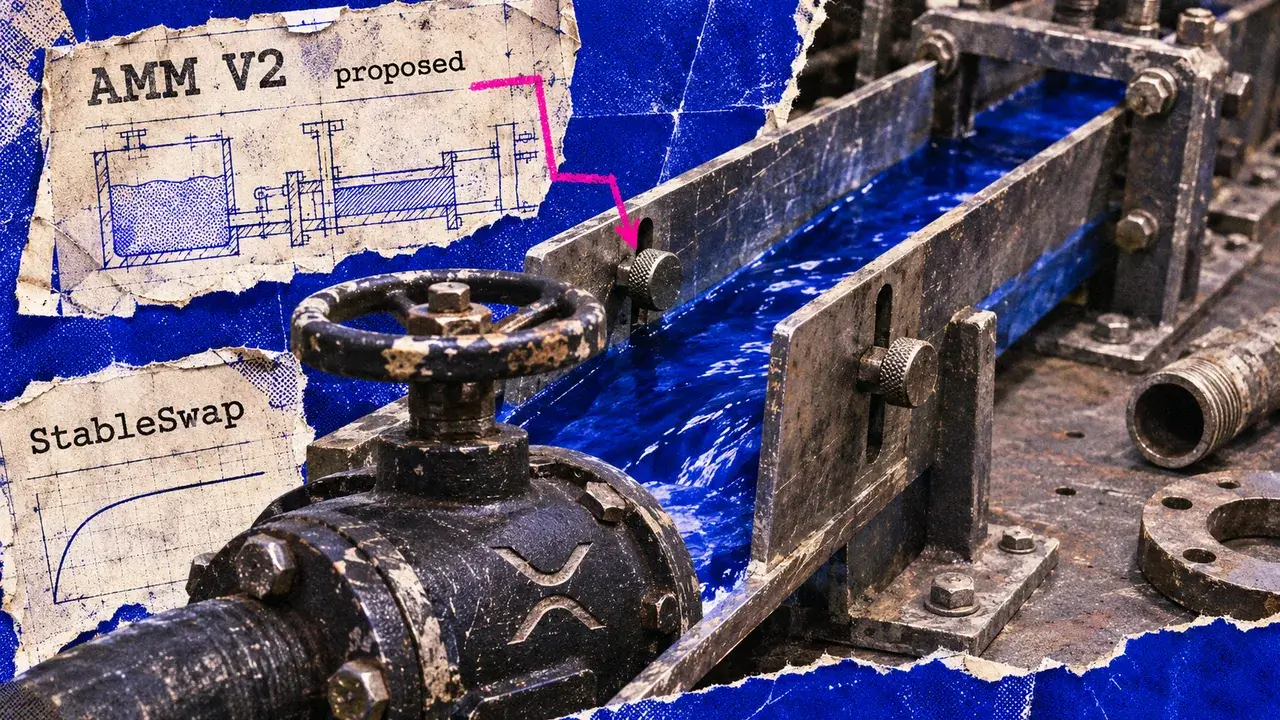

The XRP Ledger’s draft AMM V2 would let automated market makers choose among StableSwap, concentrated liquidity and binned liquidity, potentially creating more executable depth for each unit of deposited capital. An XRPSCAN snapshot taken at 13:15 UTC on Nov. 15 showed about 25,065 RLUSD and 25,068 USDC in the direct stablecoin pool, while the XRP/RLUSD pool held roughly 1.94 million XRP and 1.88 million RLUSD. Those reserves illustrate the central distinction: better stablecoin execution does not require XRP inventory, although more active XRP pairs could create demand for liquidity providers to hold the token.
Why it matters
XRPL currently uses a constant-product-style AMM design, which can spread liquidity across a broad price range. The proposed curves let providers concentrate effective depth around expected prices for correlated assets or define narrower ranges. Routing would also compare actual output after fees at the relevant trade size, giving order books and other AMM routes a chance to compete on execution rather than displayed marginal price alone.
The proposal could strengthen XRPL as a trading venue even without creating immediate demand for XRP. A direct RLUSD/USDC pool can improve stablecoin swaps without holding XRP as a trading asset, although users would still face XRP transaction costs and applicable account or trust-line reserve requirements. Reserve exemptions for current AMM ledger entries do not automatically extend to the new position entries proposed for AMM V2.
Market impact
Any claim of stronger XRP demand must distinguish capital efficiency from capital creation. Concentrated liquidity can support more executable depth with less XRP in a pool, while greater turnover may reuse the same inventory. A stronger holding-demand case would require persistent growth in XRP balances across funded pools and routes, with deposits, withdrawals and swaps separated so reserve movements are not mistaken for fresh buying.
Liquidity-provider returns also remain uncertain. Fee income belongs to providers rather than all XRP holders, and concentrated positions carry range-management and arbitrage risks.



Frequently asked questions
-
What changes under XRP Ledger’s proposed AMM V2?
The draft introduces StableSwap, concentrated liquidity and binned liquidity, while comparing routes using actual output after fees at the relevant trade size.
-
Why could AMM V2 improve trading without creating XRP demand?
A direct pool can hold two stablecoins, such as RLUSD and USDC, and deliver better execution without holding XRP. XRP transaction costs and applicable reserve requirements would still apply.
-
What would demonstrate stronger XRP holding demand?
The strongest evidence would be persistent additional XRP balances across funded pools and routes. Deposits, withdrawals and swaps would need to be separated to distinguish new capital from inventory moving elsewhere.
-
Are concentrated liquidity providers guaranteed to earn more?
No. LP returns still depend on fees, range management, arbitrage risk and market conditions. A position can become entirely one asset and stop earning fees outside its selected range.
-
What must happen before XRP Ledger activates AMM V2?
The proposal still requires further implementation work, review and audit. Validator approval is required, and the Foundation said no issuer, wallet, exchange or DEX front end had publicly committed to using the pools.
 CoinTelegraph
 WuBlockchain
 WatcherGuru
 CoinDesk
 Crypto News