








 Lookonchain
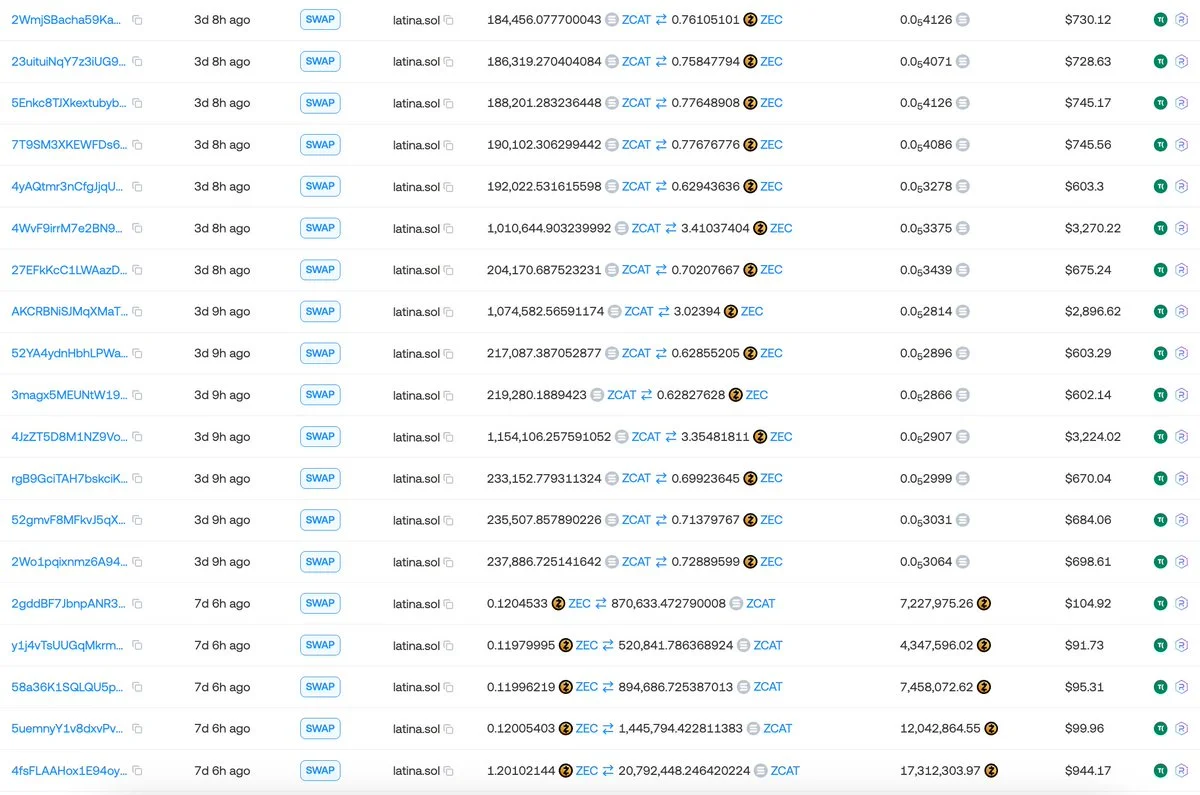
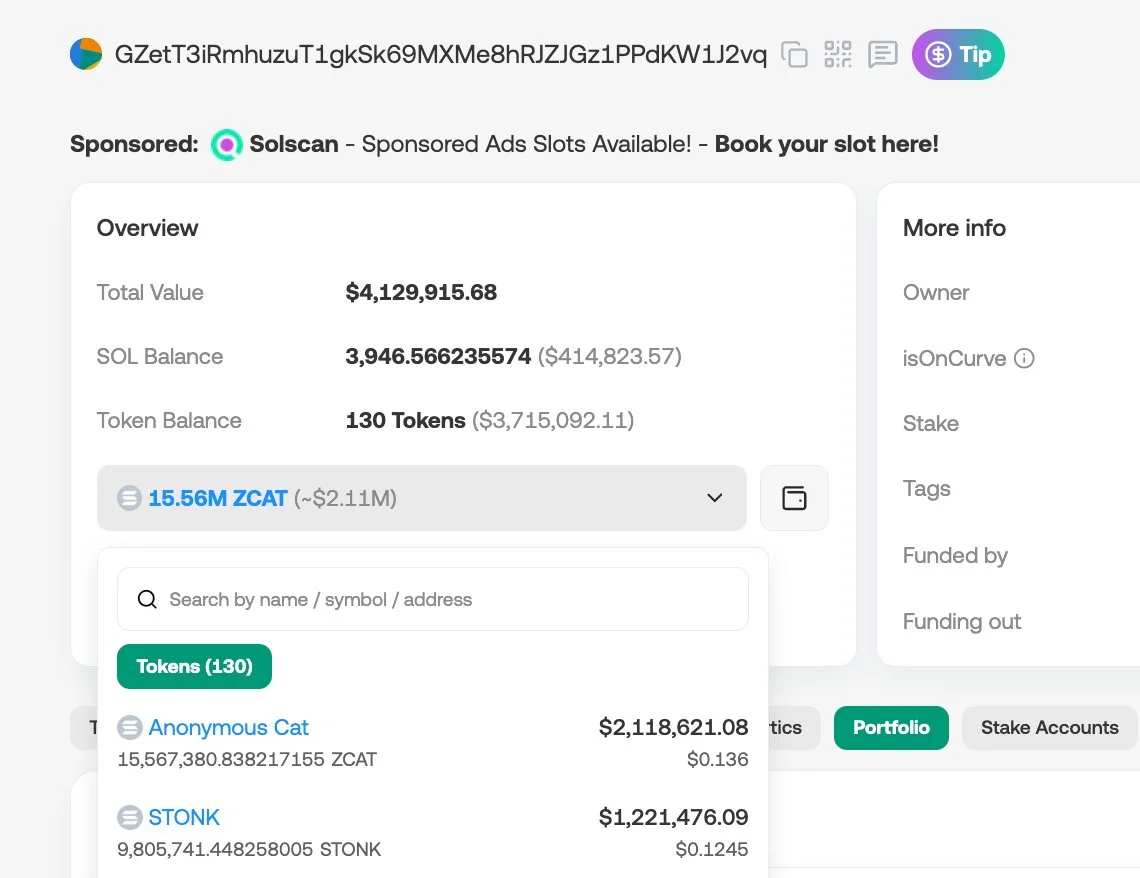
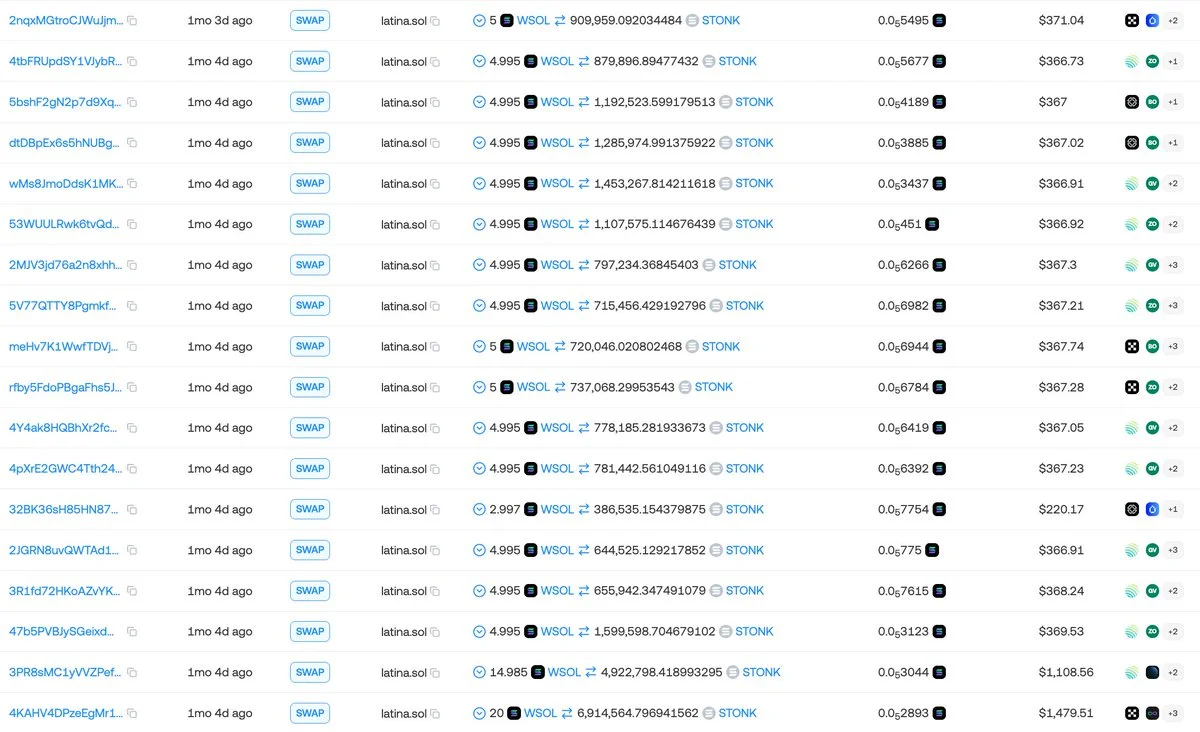
A single on-chain wallet turned roughly $21,000 in capital into $3.78 million in combined profit across two memecoins, $ZCAT and $STONK.
The $ZCAT position was bought for $1,300 and is now worth $2.17 million, a 1,626x return. The trader sold 8.96 million of 24.52 million tokens for $55,000 and still holds 15.57 million tokens valued at $2.12 million. The $STONK position was sized at $19,700 in cost basis and generated $1.61 million in profit on an 82x return, with 34.62 million of 44.43 million tokens already sold for $411,000 and 9.8 million still held at $1.22 million.
Both positions remain partially open. Outcomes of this scale are rare but structurally possible in memecoin markets, where thin floats and limited liquidity let small positions compound disproportionately when a token catches a speculative rotation.


Frequently asked questions
-
How did this trader profit $3.78M from memecoins?
A single on-chain wallet deployed roughly $21K across two thin-float memecoins, $ZCAT and $STONK, producing one position up 1,626x and the other up 82x after partial sales.
-
What is $ZCAT and how did it return 1,626x?
$ZCAT is a memecoin the trader bought for $1.3K, then sold part of the position for $55K while holding tokens now worth $2.12M, producing $2.17M in profit at a 1,626x return.
-
How much of the $STONK position is still held?
The trader still holds 9.8 million $STONK tokens valued at $1.22M, after selling 34.62 million of the original 44.43 million for $411,000.
-
Are returns like this common in memecoin trading?
Returns of this magnitude are rare and depend on a token catching speculative flow while liquidity is still thin, conditions that let small positions compound disproportionately.
-
What signal does this outlier give about memecoin markets?
Outlier wins on thin-float tokens are the references that keep rotating new retail capital into memecoins, even as most participants in the sector lose money.
 Whale Alert
 WatcherGuru
 CoinDesk
 Crypto Rank News