








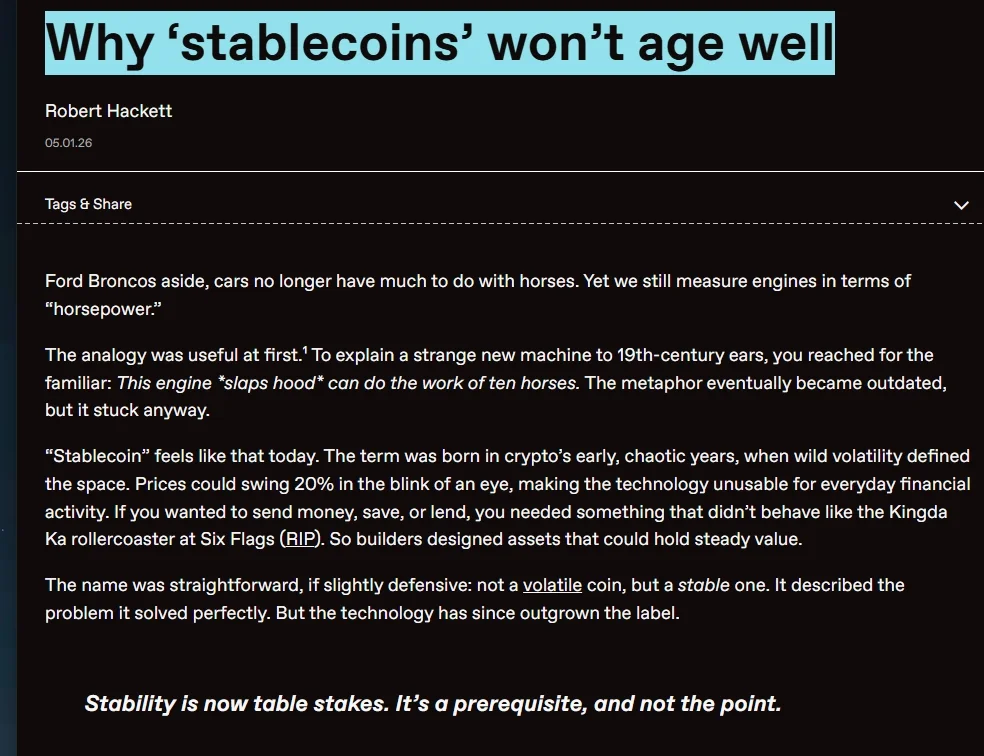
According to a16z crypto, the term "stablecoin" may eventually become outdated. The argument: stablecoins were originally built to soften crypto volatility, but stability is now a baseline feature rather than the headline pitch.
Why it matters
The bigger shift, a16z says, is that stablecoins are quietly becoming financial infrastructure — powering instant cross-border transfers, real-time settlement, direct ownership, and embedded payments. Money, in this framing, is starting to "run like software."
Market impact
If the vocabulary ages out, the labels likely won't: "digital dollars," "digital euros," or generic onchain assets are the candidates a16z flags. The practical signal for issuers and banks is that the competition shifts from peg-keeping to rails — whoever owns the settlement layer owns the next decade of money movement.
Frequently asked questions
-
What is a16z crypto's argument about the word 'stablecoin'?
a16z crypto argues the term will eventually become outdated because stablecoins were built to soften crypto volatility, but stability is now a baseline feature rather than the main selling point.
-
What does a16z say stablecoins are evolving into?
According to a16z, stablecoins are becoming financial infrastructure for instant cross-border transfers, real-time settlement, direct ownership, and embedded payments.
-
What new terms might replace 'stablecoin'?
a16z suggests the label could give way to 'digital dollars,' 'digital euros,' or generic onchain assets as the technology matures.
-
Why does a16z say money is 'running like software'?
a16z uses the phrase to describe how stablecoins enable programmable, real-time movement of value across borders, similar to how software operates.
-
How could the stablecoin rebrand affect issuers and banks?
If the vocabulary shifts, competition moves from peg-keeping to owning the settlement rails, meaning issuers and banks would compete on infrastructure rather than stability features.

 CryptoSlate
 CoinDesk
 TheBlock
 CoinTelegraph
 Crypto News