








 CoinDesk
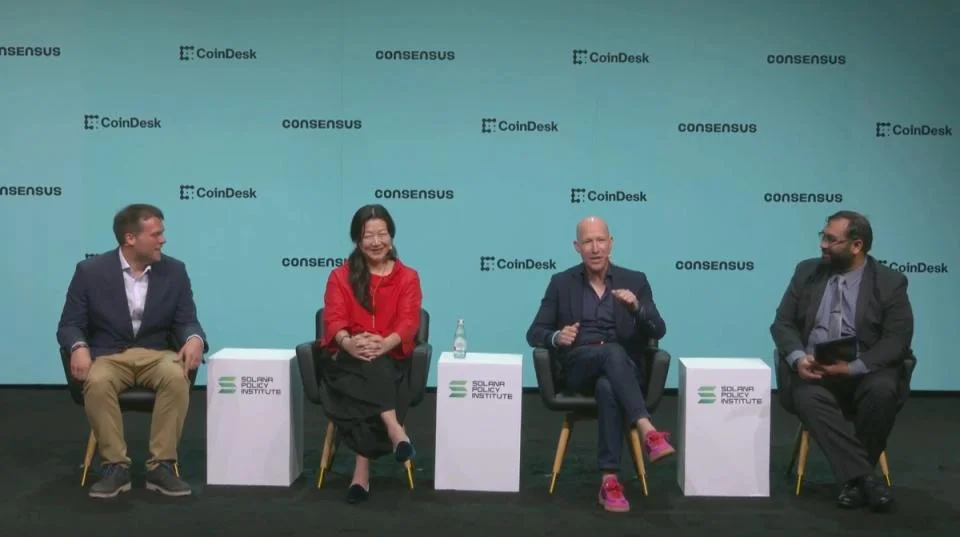



Aave Labs is fundamentally reshaping how the protocol assesses and lists collateral assets in the wake of April's KelpDAO bridge exploit, the largest DeFi incident of 2026. Chief legal and policy officer Linda Jeng told Consensus Miami 2026 that future listings on Aave will be evaluated on cybersecurity posture, interoperability, and technical architecture — not just financial risk and price volatility — and that Aave will publish a formal minimum-standards playbook for issuers.
The catalyst was an attack on KelpDAO's cross-chain bridge that minted 116,500 unbacked rsETH tokens worth roughly $293 million. The attacker deposited them as collateral on Aave and borrowed out real wrapped ether, leaving the protocol holding hundreds of millions in impaired debt. Jeng, a former regulator during the 2008 financial crisis, said the resolution was markedly different from the bank bailouts she once worked on: an industry coalition called DeFi United — backed by Lido, EtherFi, Ethena, and others — mobilized to plug the collateral gap rather than waiting on a government backstop.
Why it matters
Aave's risk framework, until now, evaluated collateral almost entirely through the lens of liquidity, volatility, and oracle reliability. The KelpDAO episode exposed a category of risk that lives one layer down — in the smart-contract and bridge surface of the asset being used as collateral, not in the collateral itself. By folding cybersecurity and architecture into the listing test, Aave is effectively saying the legal wrapper and code path of a token now sit on the same checklist as its market depth.
The planned minimum-standards playbook is the more industry-shaping piece. Aave is the largest on-chain lending market in crypto, and any asset denied listing there loses a meaningful share of its addressable liquidity. A published threshold for cybersecurity and architectural review effectively becomes a soft standard the rest of DeFi inherits — the same way Aave's existing risk parameters have been borrowed by forks and copycats for years.
Market impact
The near-term read is structural rather than directional.


Frequently asked questions
-
What happened in the KelpDAO exploit that triggered Aave's collateral overhaul?
An attacker exploited KelpDAO's cross-chain bridge in April 2026, minting 116,500 unbacked rsETH tokens worth roughly $293 million. Those tokens were deposited as collateral on Aave and used to borrow real wrapped ether, leaving the protocol with hundreds of millions in impaired debt.
-
What new criteria will Aave use to list collateral assets?
Going forward, Aave will evaluate every listing on cybersecurity posture, interoperability, and underlying technical architecture — not only on financial risk and price volatility. Aave Labs also said it will publish a formal minimum-standards playbook for asset issuers.
-
What is DeFi United and how did it cover the KelpDAO shortfall?
DeFi United is an industry coalition launched to plug the collateral gap left by the KelpDAO exploit. It drew commitments from major DeFi protocols including Lido, EtherFi, and Ethena, and covered the shortfall without a government backstop — a contrast Aave's Linda Jeng drew explicitly to the 2008 bank bailouts.
-
Will Aave's new listing standards apply to already-listed assets?
The announced framework targets future collateral listings. Aave Labs said it will also begin examining systemic interconnections across protocols, but the immediate gatekeeping change applies to new assets seeking to be listed on the protocol.
-
Why does Aave's collateral overhaul matter for the rest of DeFi?
Aave is the largest on-chain lending market in crypto, and any asset denied listing there loses a meaningful share of its addressable liquidity. A published cybersecurity-and-architecture threshold effectively becomes a soft industry standard, much as Aave's existing risk parameters have been copied by forks and rival…
 Lookonchain
 CryptoSlate
 TheBlock
 WuBlockchain
 CoinTelegraph