









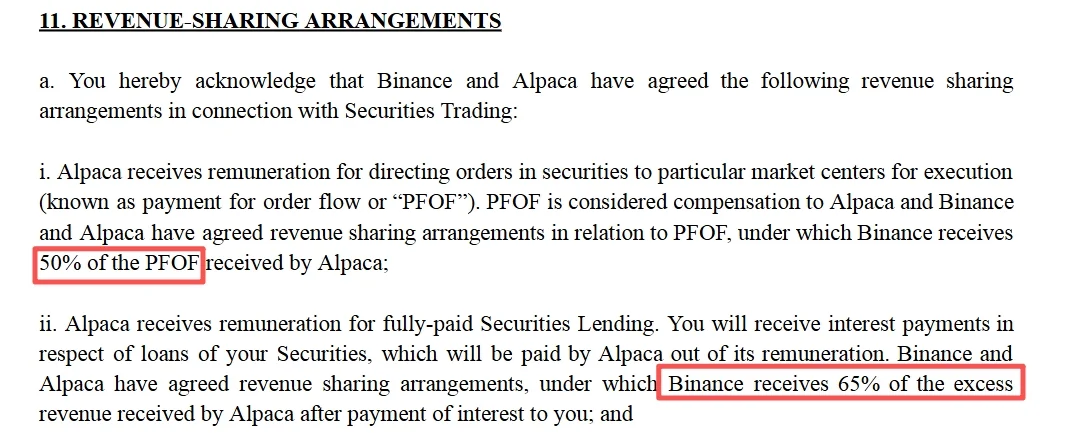
Binance disclosed a minority stake in Alpaca, the brokerage infrastructure provider that holds roughly 94% market share in the custody of tokenized US stocks and ETFs. The two firms have signed a partnership under which Binance routes its US stock and ETF trading through Alpaca's stack.
The revenue split is the structural tell: Binance receives 50% of Alpaca's Payment for Order Flow fees generated through the integration, plus 65% of the remaining profit from user stock lending after interest paid out to users. Alpaca keeps the residual. For an exchange best known for spot and derivatives crypto volume, the economics resemble a prime-brokerage arrangement more than a white-label listing deal.
Why it matters
Alpaca has spent four years building API-first brokerage infrastructure and now sits underneath a meaningful slice of the tokenized-equity custody stack. Binance's stake is a bet that tokenized US equities move from a niche product to a default funding rail for offshore retail — and that the broker layer, not the chain, captures the durable margin.
Market impact
The PFOF + lending split aligns Binance's incentives with order flow and balance-sheet deployment on Alpaca's books, not with trading fees on Binance's own books. Watch for follow-on integrations: any other exchange that wants tokenized US stock and ETF exposure now has a structural reason to evaluate Alpaca alternatives — or to negotiate against this template.
Source: [JavaScript is disabled](https://www.binance.com/en/about-legal/terms-securities-trading)
Frequently asked questions
-
What stake does Binance hold in Alpaca?
Binance disclosed a minority stake. Alpaca itself is the brokerage infrastructure provider that holds roughly 94% market share in the custody of tokenized US stocks and ETFs.
-
How does the Binance-Alpaca revenue split work?
Binance receives 50% of Alpaca's Payment for Order Flow fees generated through the integration, plus 65% of the remaining profit from user stock lending after interest is paid to users. Alpaca retains the residual.
-
Why does Alpaca's 94% custody share matter?
It makes Alpaca the default infrastructure rail for tokenized US equities. Binance's stake and partnership effectively buys into that rail rather than building a competing custody stack.
-
What is Payment for Order Flow in this context?
PFOF is the compensation Alpaca receives from market makers for routing retail equity orders to them. Binance's 50% share of those fees is the largest single revenue line in the partnership.
-
What does the deal signal for tokenized US stocks?
It positions the broker layer — not the underlying blockchain — as where durable margin sits in tokenized equities, and sets a template other exchanges will likely negotiate against when they add the same product.

 CryptoSlate
 CoinTelegraph
 CoinDesk
 TheBlock