








 CoinDesk
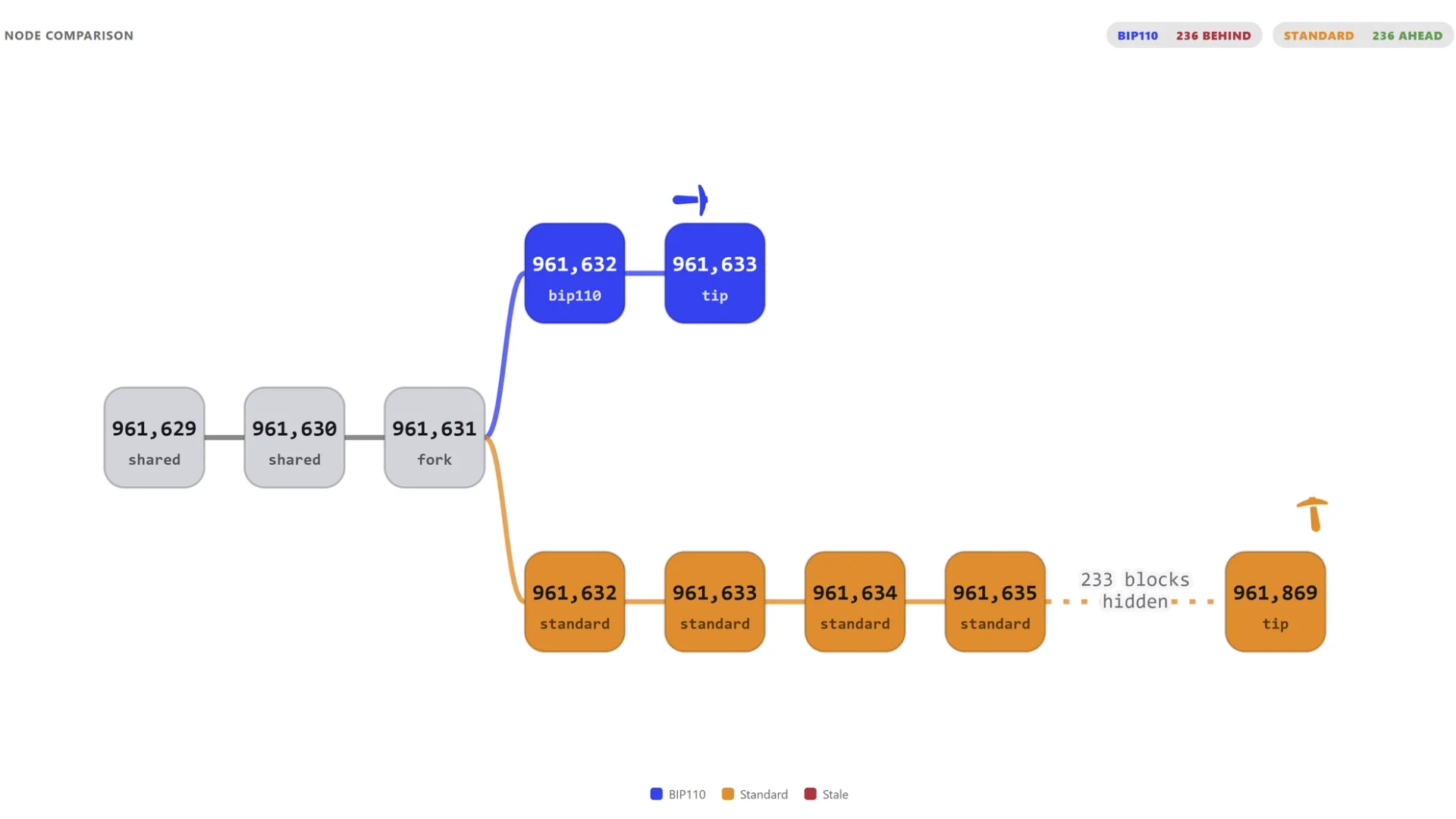


Bitcoin's BIP-110 episode played out as a near-perfect demonstration of decentralized market forces at work. The proposal, which sought to restrict non-financial data like Ordinals inscriptions from the blockchain, failed to secure broad developer support and was rejected through distributed consensus, with no regulator or central committee involved in the decision.
Supporters of the proposal exercised their right to fork, splitting from the original chain at block 961,632 to implement their preferred rules. The new chain inherited Bitcoin's massive mining difficulty, but attracted only a tiny fraction of hashpower, produced just two blocks, and then ground to a halt. The original Bitcoin network continued without interruption, retaining virtually all activity, liquidity, and security.
"Bitcoin worked exactly as designed," Michael Saylor, founder of Strategy (MSTR), said on X.
Why it matters
The episode illustrates something traditional economies rarely manage: a genuine free-market resolution with no political override. When corporate profitability falls in conventional economies, electoral pressures often block the natural adjustment. When inflation spikes, governments issue subsidies that prop up demand and deepen the problem. Bitcoin's governance model allowed the market to speak directly through miner incentives, and the answer was unambiguous.
Market impact
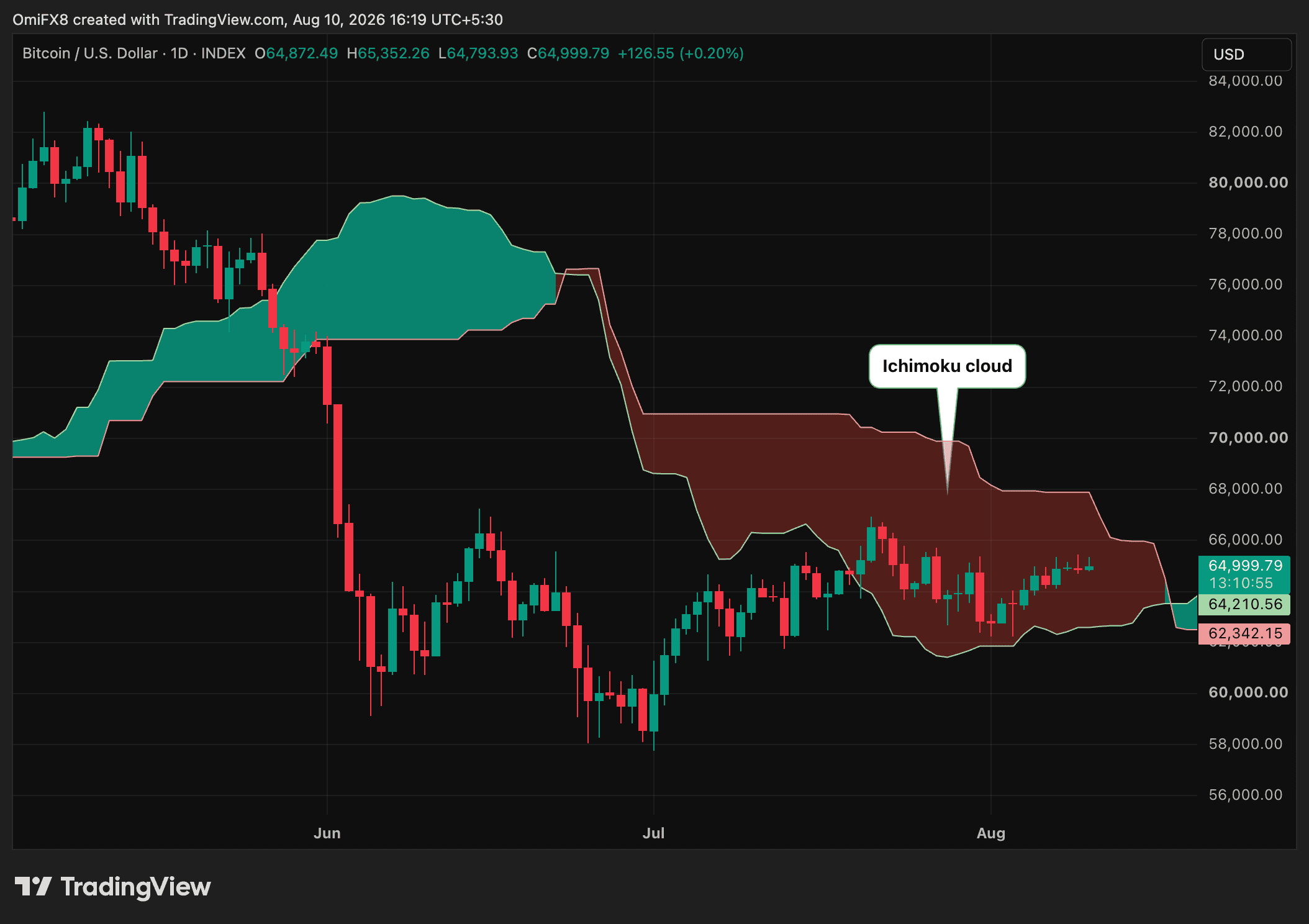
$BTC continues to trade near $65,000 with sustained demand for downside protection. Hedge funds on the CME have shifted net long in a rare positioning move, suggesting professional traders are increasingly betting on a rally. This week's U.S.

Frequently asked questions
-
What was BIP-110 and why did it fail to gain support?
BIP-110 proposed limiting non-financial data such as Ordinals inscriptions on the Bitcoin blockchain to free up block space. It failed to secure broad developer support and was rejected through distributed consensus, with no regulator or central authority involved in the decision.
-
What happened to the BIP-110 fork chain after it split from Bitcoin?
The fork launched at block 961,632 but inherited Bitcoin's massive mining difficulty. It attracted only a tiny fraction of hashpower, produced just two blocks, and then halted entirely, while the original Bitcoin network continued without interruption.
-
Why did miners choose the original Bitcoin chain over the BIP-110 fork?
Miners chose the original chain because it was more profitable. With virtually all hashpower, liquidity, and activity remaining on the original network, the economic incentive to mine the fork was negligible.
-
What is Bitcoin's price doing and what is the next key catalyst?
Bitcoin is trading near $65,000 and remains inside the Ichimoku Cloud, a consolidation signal. U.S. inflation data due this week is the next key variable expected to influence price trajectory, with hedge funds on the CME having shifted to a rare net long position.
-
How does the BIP-110 episode compare to governance failures in traditional economies?
Unlike traditional economies where governments often block natural market adjustments through subsidies or political intervention, Bitcoin's distributed consensus allowed miners to resolve the dispute directly through economic incentives, producing an immediate and unambiguous outcome.
 Altcoin Daily
 WuBlockchain
 WatcherGuru
 TheBlock
 Crypto News
 CoinTelegraph