








 CryptoSlate
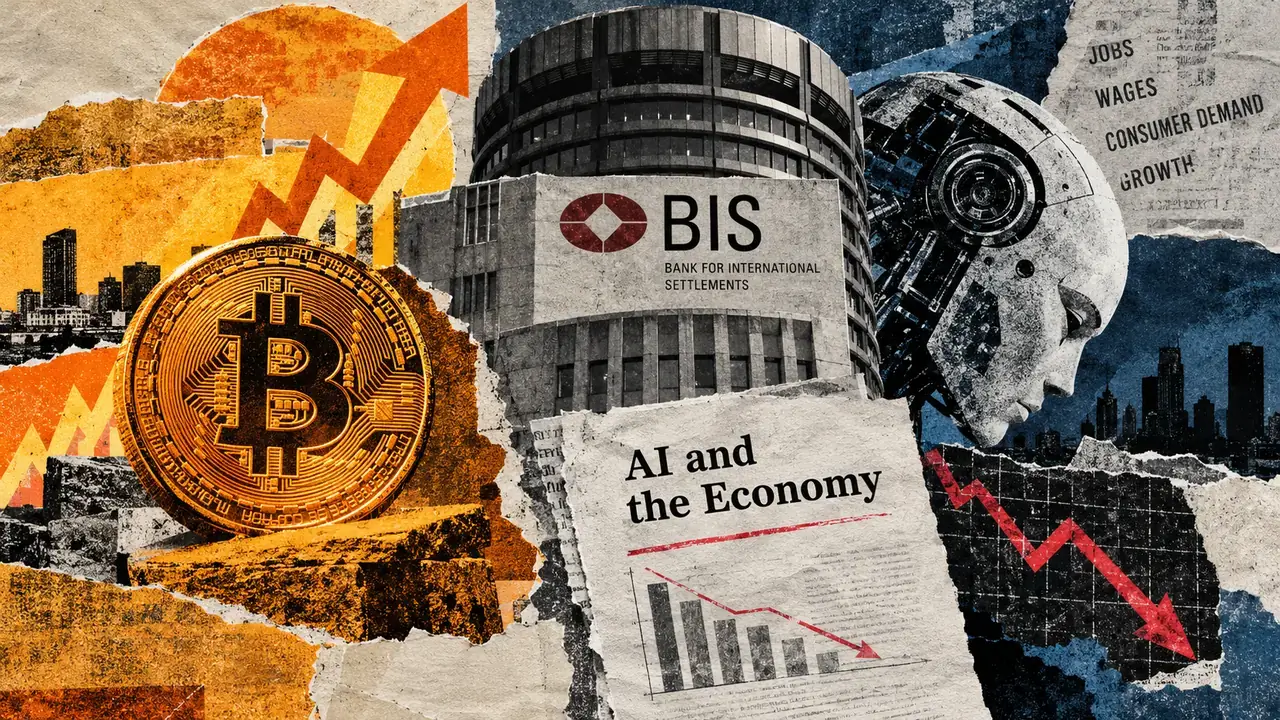


A BIS working paper models a risk missing from Bitwise CIO Matt Hougan's bullish Bitcoin scenarios: AI can boost output while automation weakens worker incomes and consumer demand. In the paper's calibrated case, consumption falls from 69% to 62.1% of output, long-run sustainable growth slips from a 2% pre-AI baseline to about 1.6%, and real wages settle about 15% below the path they would otherwise have followed.
Why it matters
Hougan's three paths all ultimately support Bitcoin: AI abundance raises the value of scarce assets, a burst investment bubble prompts monetary expansion, or modest productivity gains sustain adoption and ETF demand. Each depends on new demand reaching Bitcoin. The BIS paper adds a fourth possibility: investment and output rise as AI automates work, but households' share of the gains shrinks until weaker consumption makes further innovation less profitable.
That imbalance can make an investment boom look stronger than its consumer base. In the paper's example, output rises 10% while consumption's share falls from 69% to 62.1%; the consumer market index slips from 69 to 68.31. The model also finds labor's share of tasks could fall from 60% to 15%-50% over three decades, though its results depend on assumptions about labor supply, tasks and wages.
Market impact
Bitcoin has fixed supply, but demand depends on purchasing power and liquidity. Concentrated AI gains could sustain buying by wealthy investors and institutions even as household capacity to save weakens. Conversely, softer consumption could weigh on earnings and liquidity, while higher real yields could compete with Bitcoin.
The Fed's Beige Book reported headcount reductions or expectations of fewer jobs linked to AI productivity in 5 of 12 districts, while consumer spending was broadly flat. These observations do not confirm the BIS feedback loop. ETF subscriptions, worker income and AI credit conditions are key signals: continued flows could support Bitcoin despite weak consumption, while stalled flows alongside ongoing AI investment would sharpen the demand-bottleneck concern.

Frequently asked questions
-
What demand risk does the BIS paper identify for Bitcoin?
AI could raise output while automation weakens wages and consumer spending. That may reduce household capacity to save and invest, including in Bitcoin.
-
How does consumption change in the BIS paper's calibrated case?
Consumption falls from 69% to 62.1% of output. In that scenario, long-run sustainable growth declines from a 2% pre-AI baseline to about 1.6%.
-
What does the paper estimate about real wages?
In its demand-bottleneck calibration, real wages settle about 15% below the path they would have followed without that level of automation. The result depends on the model's assumptions.
-
What early US evidence does the article cite about AI and jobs?
The Fed's Beige Book reported that businesses in 5 of 12 districts reduced headcount through attrition, delayed hiring or expected fewer jobs as AI productivity gains arrived.
-
Which market signals could help test the Bitcoin demand thesis?
ETF subscriptions, worker income and AI credit conditions are key signals. Continued ETF flows could support Bitcoin, while stalled flows alongside ongoing AI investment would sharpen the demand-bottleneck concern.
 Crypto News
 CoinDesk
 WuBlockchain
 CoinTelegraph