


 CoinDesk
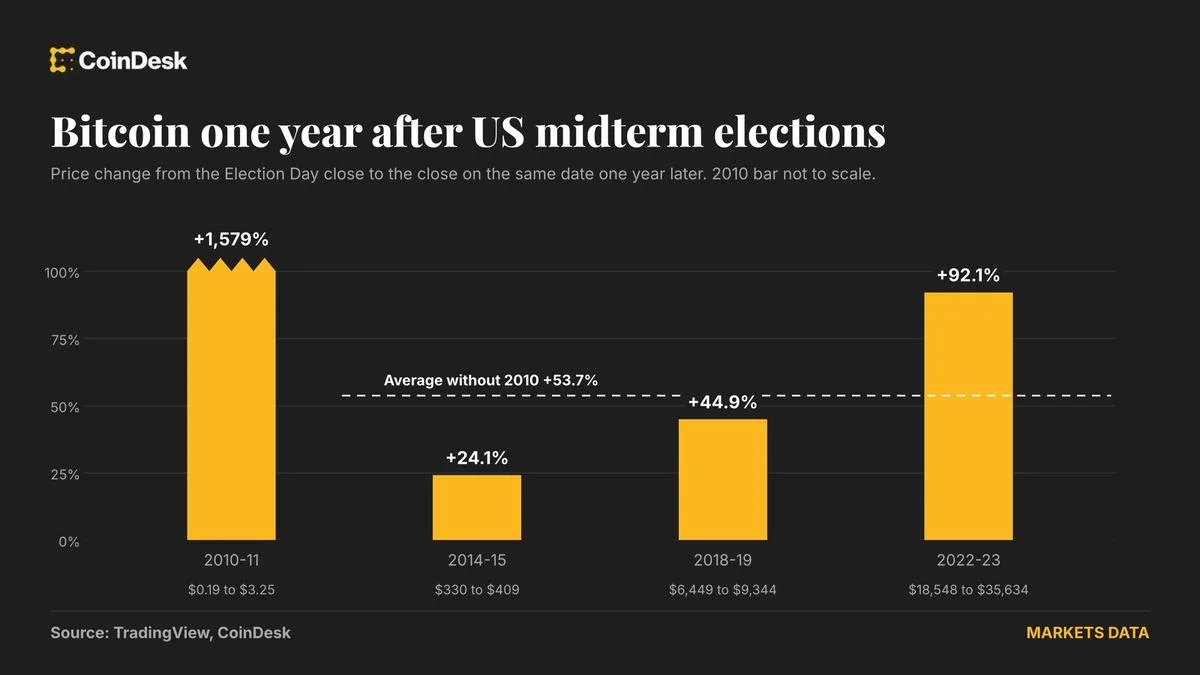
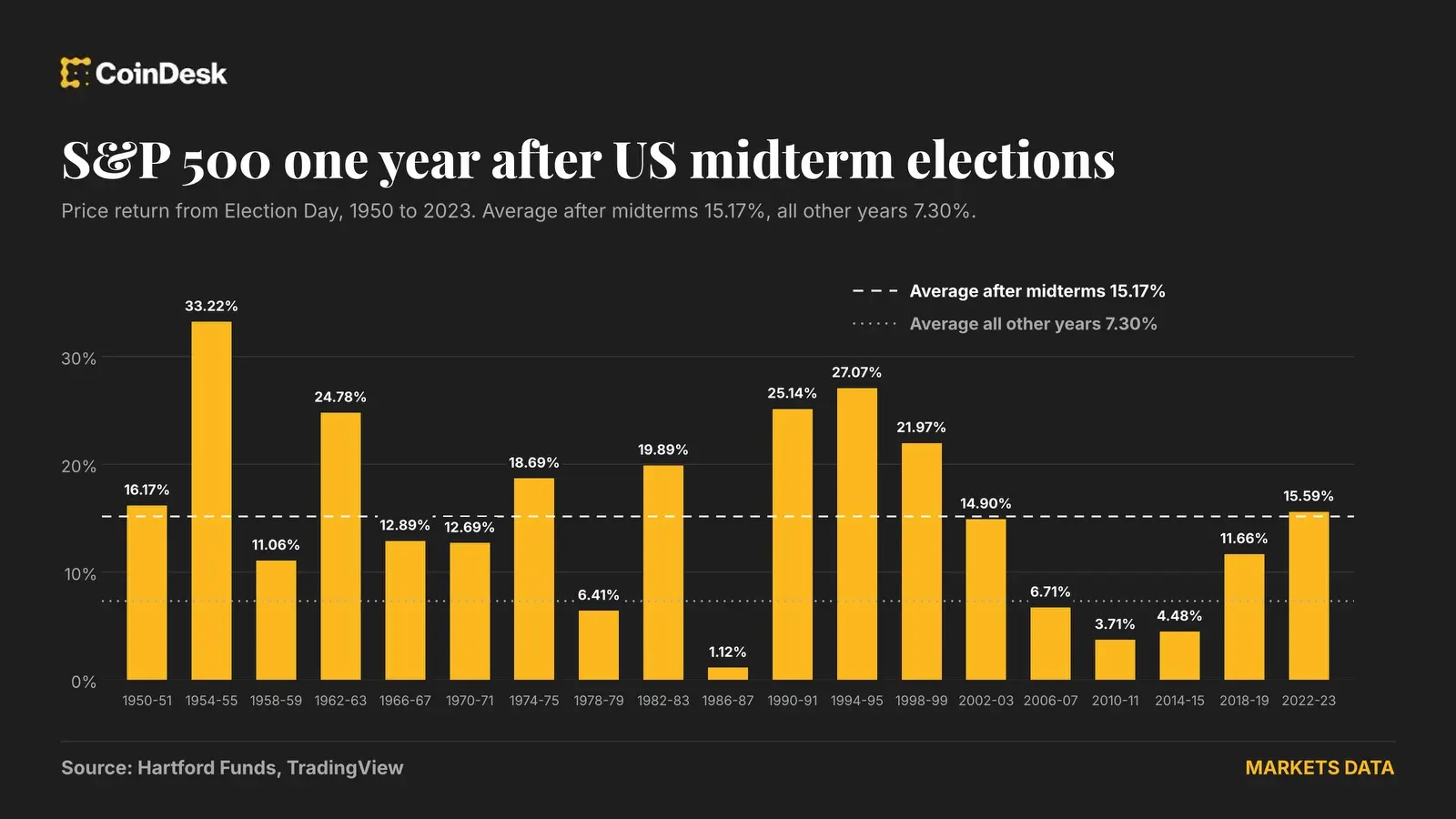


Bitcoin gained an average of 53.7% in the 12 months after the past three U.S. midterm elections, excluding 2010, while the S&P 500 returned an average of 15.17% in the year after midterms since 1950. Both assets have historically posted gains in the following year, but Bitcoin’s shorter record makes the pattern less conclusive.
Why it matters
The November 3 midterms could shift the political landscape for President Donald Trump’s final two years in office. A Democratic takeover of one or both chambers could intensify disputes over federal debt, defense spending and scrutiny of Trump’s crypto ties. Markets have largely priced in divided government, with Democrats expected to retake at least one chamber.
Bitcoin’s post-election record also overlaps with its four-year halving cycle. The four halvings to date have each preceded sharp rallies, with peaks 12 to 18 months later; the subsequent bear markets fell in midterm years: 2014, 2018, 2022 and 2026. That timing makes it difficult to separate an election effect from a recurring market cycle.
Market impact
The S&P 500’s longer record offers a broader risk-asset reference point: its average gain in the year after midterms was more than double its 7.30% average return in other years, according to Hartford Funds. Bitcoin’s average is based on only three post-midterm periods, and its 1,579% gain after the 2010 election is excluded because the market was too small and early-stage to make that result reliable.
Bitcoin has recently traded around $80,000 and rebounded more than 35% from a June low below $60,000. Those moves do not establish that another rally will follow the midterms. The election’s policy implications and the halving-cycle explanation remain key context for investors weighing the historical pattern.

Frequently asked questions
-
How does Bitcoin’s post-midterm return compare with the S&P 500?
Bitcoin gained an average of 53.7% in the 12 months after the past three midterms, excluding 2010. The S&P 500 averaged a 15.17% gain in the year after midterms since 1950.
-
Why is Bitcoin’s 2010 post-midterm gain excluded from the average?
Bitcoin surged 1,579% in the 12 months after the 2010 midterm, but its market was then considered too small and early-stage for that result to be reliable.
-
How could Bitcoin’s halving cycle affect the post-midterm pattern?
Bitcoin’s four-year halving cycle overlaps with midterm years. The four halvings to date were followed by sharp rallies, and the ensuing bear markets occurred in 2014, 2018, 2022 and 2026.
-
What could a Democratic congressional win mean for crypto policy?
A Democratic takeover of one or both chambers could increase scrutiny of Trump’s crypto ties. The article also notes that markets have largely priced in divided government.
-
What was Bitcoin’s recent price context in the report?
Bitcoin had recently traded around $80,000 and rebounded more than 35% from a June low below $60,000. The article does not present that move as a guarantee of further gains.
 Whale Alert
 CoinTelegraph
 Lookonchain
 Glassnode
 WuBlockchain